
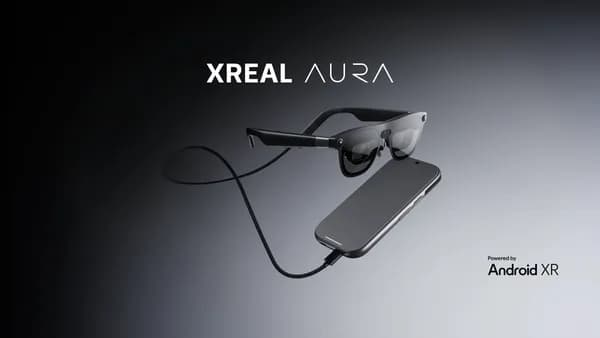
XREAL AURA Reservations Are Now Open: The Future of XR Is Here
The augmented and extended reality landscape just got a major shake-up. At AWE 2026, one of the most anticipated announcements of the year finally became a reality: reservations are now officially open for the XREAL AURA, XREAL's first tethered XR glasses built in collaboration with Google for the Android XR platform. Whether you're a tech enthusiast, a developer, or simply someone who's been watching the XR space closely, this is the moment you've been waiting for.
AWE — the Augmented World Expo — has long been the premier gathering for XR innovators, and AWE 2026 delivered in a big way. Between major product reveals and forward-looking discussions about the future of spatial computing, XREAL's announcement stood out as one of the most exciting developments of the entire event. Here's everything you need to know about the XREAL AURA and what its arrival signals for the broader XR ecosystem.
What Is the XREAL AURA?
The XREAL AURA is a tethered XR headset — meaning it connects to a host device for processing power rather than running entirely on its own internal hardware. This design philosophy allows for a significantly lighter form factor on the user's face while still delivering a rich, immersive extended reality experience powered by the host device's computational muscle.
What makes the AURA particularly compelling is that it has been built specifically for Android XR, Google's dedicated platform for extended reality devices. This isn't an accessory that bolts Android functionality onto an existing design — it's a device built from the ground up with Android XR at its core, which means deep integration with Google's ecosystem of apps, services, and developer tools.
This collaboration between XREAL and Google marks a significant milestone. XREAL has established itself as one of the most credible consumer XR hardware companies in recent years, known for sleek designs and accessible price points. Combining that hardware expertise with Google's software and platform power creates a product that could genuinely appeal to mainstream consumers, not just early adopters.
Why Android XR Changes Everything
Google's Android XR platform was announced as a dedicated operating system layer designed to power next-generation spatial computing devices. Unlike earlier attempts to adapt traditional Android for headsets and glasses, Android XR is purpose-built for immersive experiences. It supports both fully immersive environments and see-through augmented reality, giving developers and users incredible flexibility.
For the XREAL AURA, this means access to a growing library of Android XR-optimized applications, seamless integration with Google services like Google Maps, Google Assistant, and YouTube, and a development ecosystem that millions of Android developers can immediately start building for. The platform essentially gives AURA users an enormous software library from day one — a challenge that has historically hobbled new XR hardware launches.
This is precisely why the XREAL and Google partnership matters so much. Hardware without software is just an expensive accessory. By launching on Android XR, XREAL AURA enters the market with a platform that already has industry momentum and developer support behind it.
Tethered Design: A Smart Tradeoff
Some consumers may initially be surprised by the tethered nature of the XREAL AURA. In a world where truly wireless everything seems to be the goal, why go tethered? The answer comes down to a few key engineering realities that the XR industry is still navigating.
- Weight and comfort: Packing a powerful processor, battery, and display system into a wearable that sits on your face for extended periods is extraordinarily difficult. By offloading compute to a tethered device, AURA can remain lightweight and comfortable enough for long-term wear.
- Thermal management: High-performance chips generate significant heat. In a standalone headset, managing that heat while keeping the device on someone's head is a persistent engineering challenge. Tethering elegantly sidesteps this problem.
- Battery life: A tethered device draws power from the host, which can itself be a larger battery or even a plugged-in device, extending usability far beyond what a compact self-contained headset can achieve.
- Cost: Removing the need for an onboard processor and independent battery can make the device significantly more affordable, lowering the barrier for mainstream adoption.
Rather than viewing tethering as a limitation, it's worth recognizing it as a deliberate design strategy that prioritizes the actual user experience — comfort, endurance, and performance — over the marketing appeal of being wire-free.
How to Reserve Your XREAL AURA
With reservations now open, prospective buyers can secure their place in line for the XREAL AURA ahead of its wider release. Reserving early is always advisable for high-demand XR devices, particularly those that arrive with significant platform backing and developer interest. XREAL has historically managed strong demand at launch, and the AURA — given the Google partnership and Android XR integration — is expected to generate even greater consumer interest than previous XREAL products.
To reserve your unit, visit XREAL's official website where reservation details, pricing tiers, and availability windows are listed. Keeping an eye on official XREAL and Google Android XR channels is also recommended, as additional specifications and launch details are expected to roll out in the weeks following AWE 2026.
What AWE 2026 Tells Us About the XR Industry
The buzz surrounding XREAL AURA at AWE 2026 reflects a broader inflection point for the XR industry. After years of promises, prototypes, and products that captured developer imaginations but struggled with mainstream appeal, the hardware and software ecosystems are finally maturing simultaneously. Platform players like Google are committing serious resources to XR infrastructure. Hardware companies like XREAL are delivering polished, consumer-ready devices. And developer communities are beginning to build the killer applications that will drive adoption.
AWE 2026 made one thing abundantly clear: extended reality is no longer a niche experiment. With the XREAL AURA now available for reservation and Android XR providing the software foundation, the era of accessible, meaningful XR experiences for everyday users has genuinely begun.
Final Thoughts
The XREAL AURA represents more than just a new gadget. It represents a convergence of capable hardware, a robust software platform, and a genuine industry-wide commitment to making XR work for real people in real situations. The collaboration between XREAL and Google signals that the next chapter of computing — spatial, immersive, and always contextual — is closer than many realized. If you've been waiting for the right moment to step into the world of extended reality, that moment may have just arrived.