
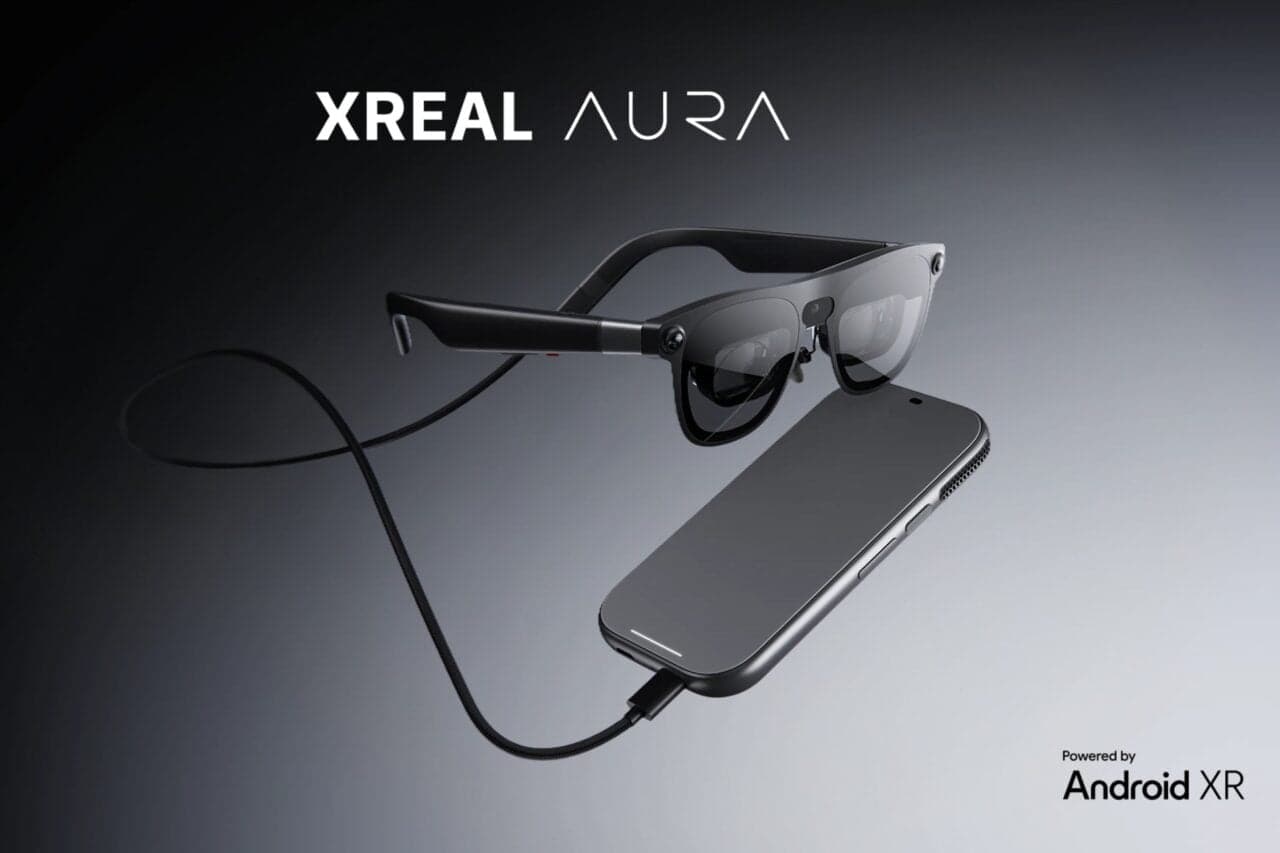
Google and Xreal Open Reservations for Project Aura XR Glasses
The future of augmented reality just got a whole lot more tangible — and it will only cost you $99 to stake your claim in it. Google and Xreal have officially opened reservations for their highly anticipated Project Aura XR glasses, allowing early adopters to put real money down ahead of a planned fall launch. For anyone who has been watching the XR space with growing excitement, this is the moment to move from the sidelines to the front of the line.
Project Aura represents one of the most closely watched collaborations in the wearable technology space. Pairing Google's deep software ecosystem and artificial intelligence capabilities with Xreal's proven track record in consumer-grade augmented reality hardware, this partnership has generated significant buzz since its initial announcement. Now, with a deposit option live and a seasonal window confirmed, the product is moving from concept to concrete reality faster than many expected.
What Is Project Aura?
Project Aura is a joint development effort between Google and Xreal aimed at producing a consumer-ready pair of XR — or extended reality — glasses. Unlike bulky VR headsets that fully occlude your view of the real world, XR glasses are designed to layer digital information and experiences over your natural field of vision, creating what is commonly known as an augmented reality experience.
Xreal is not new to this market. The company has previously released products like the Xreal Air and Xreal Air 2 series, which earned a reputation for sleek design and solid performance at a relatively accessible price point. Those earlier devices primarily functioned as personal display screens — think of them as a portable cinema for your face. Project Aura, however, appears to be a significant step forward in ambition, incorporating Google's software intelligence to create something that behaves more like a true smart glasses platform than a simple display accessory.
How the $99 Reservation Works
Securing your spot in line for Project Aura is straightforward. Interested buyers can place a $99 deposit to reserve a pair ahead of the fall launch. This kind of pre-order or reservation model has become increasingly common in the consumer tech world, particularly for products where demand is expected to significantly outpace initial supply.
The $99 figure serves a dual purpose. On one hand, it filters out purely casual interest and helps the companies gauge genuine demand. On the other, it gives early supporters a concrete stake in the product's launch, typically accompanied by priority access, potential pricing benefits, or exclusive early-adopter perks. While the full retail price of Project Aura has not yet been officially confirmed, the reservation fee itself is a signal that the product is targeting a mainstream consumer audience rather than an exclusively enterprise or developer market.
Why This Google and Xreal Partnership Matters
The collaboration between Google and Xreal is significant for reasons that go beyond a single product launch. Google has had a complicated history with augmented reality hardware. Google Glass, launched in 2013, was a pioneering effort that ultimately struggled to find mainstream acceptance due to a combination of high price, limited functionality, and significant public perception challenges. A subsequent enterprise edition found more success in industrial and professional settings, but a true consumer comeback remained elusive.
Teaming up with Xreal signals a different approach this time around. Rather than building hardware from the ground up alone, Google is leveraging a partner that has already navigated many of the engineering and manufacturing challenges inherent in lightweight AR wearables. Xreal brings the industrial design and optical expertise; Google brings the platform, the AI, and the brand recognition. It is a partnership that plays to both companies' respective strengths.
What to Expect from the Fall Launch
While detailed technical specifications for Project Aura have not been fully disclosed ahead of launch, several things can be reasonably anticipated based on what is known about both companies' priorities and existing technologies.
- Google AI integration: Expect deep ties to Google's artificial intelligence tools, potentially including real-time translation, contextual search, navigation overlays, and smart assistant functionality powered by Gemini.
- Lightweight form factor: Xreal's design philosophy has consistently prioritized wearability. Project Aura is expected to look and feel closer to conventional eyewear than previous-generation AR headsets.
- Android ecosystem compatibility: Given Google's involvement, seamless integration with Android devices, Google Maps, Google Lens, and other platform staples seems highly likely.
- A refined display experience: Building on the waveguide and optical technologies Xreal has developed in previous products, the display quality is expected to be a standout feature.
The Bigger Picture: XR Glasses in 2025 and Beyond
Project Aura is arriving at a moment when the augmented and extended reality landscape is becoming increasingly competitive. Meta has its Ray-Ban smart glasses line, Apple introduced the Vision Pro as a premium spatial computing device, and a growing list of startups and established players are jostling for position in what many analysts believe will become one of the defining technology categories of the next decade.
What makes the Google-Xreal pairing particularly interesting in this context is its potential to occupy a middle ground — more capable and software-rich than simple smart glasses with cameras and speakers, but more accessible and wearable than high-end spatial computing headsets. If the product delivers on its promise, it could help define what mass-market XR glasses actually look like in practice.
Should You Reserve a Pair?
For technology enthusiasts, early adopters, and anyone who has been curious about augmented reality in a practical, everyday form factor, placing a $99 reservation for Project Aura is a low-risk way to stay ahead of the curve. The deposit secures your position before a launch that is expected to generate significant demand, and it represents a relatively small financial commitment given the likely retail price of the finished product.
That said, as with any pre-release technology, it is worth tempering expectations until full specifications, pricing, and hands-on impressions are available. The fall launch window is close enough that the wait will not be long — and the reservation process keeps you in the loop as new details are confirmed.
Final Thoughts
Google and Xreal's Project Aura XR glasses represent one of the most genuinely exciting hardware collaborations in recent memory. With reservations now open for $99 and a fall launch on the calendar, the gap between concept and consumer product is closing fast. Whether you are a longtime AR enthusiast or simply someone curious about what the next generation of wearable computing looks like, Project Aura deserves a place on your radar — and perhaps a deposit to match.