
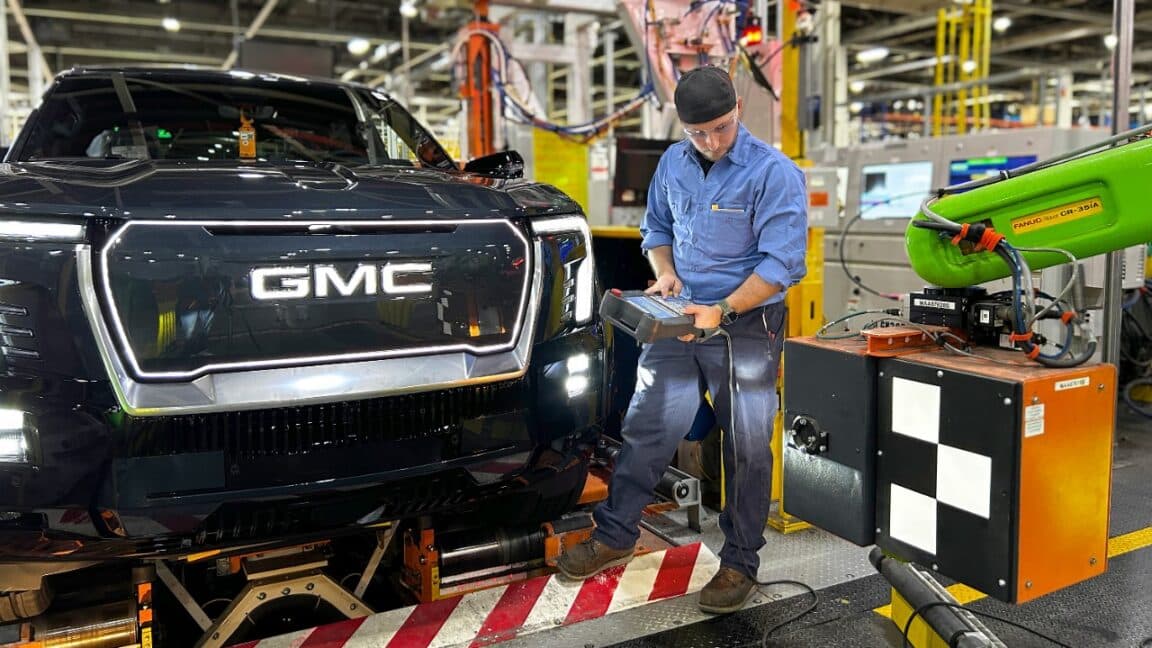
GM Installs 50 Robot Arms at EV Factory While Over 1,000 Workers Sit on Indefinite Layoff
General Motors has quietly expanded its automation footprint at one of its most high-profile manufacturing facilities — and the timing could not be more controversial. Dozens of new robot arms have been installed at GM's Factory Zero plant in Detroit, Michigan, even as more than 1,300 workers who were placed on what was described as a temporary layoff back in March have yet to be called back. The move has reignited one of the most pressing debates in the American auto industry: as electric vehicles reshape the production floor, where exactly do human workers fit in?
What Happened at Factory Zero?
According to reporting by Crain's Detroit Business, General Motors installed approximately 50 robot arms at its Factory Zero plant — the company's flagship electric vehicle manufacturing facility in Detroit. The robots were manufactured by FANUC, a prominent Japanese robotics company with deep ties to the global automotive industry. Their function on the assembly line is to help attach various components to vehicles as they move through production.
On the surface, automation in auto manufacturing is nothing new. Robotic arms have been a fixture on assembly lines for decades. What has made this particular installation so combustible is the context surrounding it: more than 1,000 UAW members remain on indefinite layoff at the same facility, waiting for a recall notice that has not come. The juxtaposition of new machines arriving while experienced human workers stay home has struck a nerve throughout the labor community.
UAW's Response: Anger and Alarm
Leaders at the United Auto Workers union — the primary labor organization representing American autoworkers — were swift and pointed in their response. James Cotton, president of UAW Local 22, told The Detroit News that the company had a clear choice and made the wrong one. Rather than investing in 50 robot arms, GM could have used that opportunity to bring some of the more than 1,000 displaced union members back to the plant floor.
Cotton's remarks reflect a broader anxiety that has been building within the UAW for years. The transition from internal combustion engine vehicles to electric vehicles fundamentally changes how cars are built. EVs require fewer parts, simpler drivetrains, and in many cases, more automation-friendly assembly processes. That structural shift means that even as EV production ramps up, the raw number of workers needed per vehicle could continue to decline.
For workers who were told their layoffs were temporary, the sight of robots filling their stations carries an unmistakable message — one the union is determined not to ignore.
The Broader Automation Debate in Auto Manufacturing
The situation at Factory Zero is not an isolated incident. Across the American auto industry, manufacturers are accelerating automation as part of their broader EV transition strategies. The economics are straightforward from a corporate perspective: robots do not require benefits, do not call in sick, and can operate continuously across multiple shifts. In a highly competitive global EV market where cost reduction is critical, automation represents one of the clearest levers available to manufacturers.
However, the human cost of that equation is significant. The auto industry has historically been one of the most reliable pathways to middle-class stability for workers without four-year college degrees. UAW jobs at plants like Factory Zero often come with strong wages, healthcare coverage, and retirement benefits — the kind of compensation package that is increasingly difficult to find in manufacturing.
When those jobs are replaced not by other jobs, but by machines, the economic ripple effects extend well beyond the factory floor. Local businesses, housing markets, and municipal tax bases in cities like Detroit are all downstream of the employment decisions made inside plants like Factory Zero.
GM's Position and What It Means Going Forward
General Motors has not publicly explained the timing of the robot installation in relation to the ongoing worker layoffs. The company has framed its broader automation and EV investments as necessary steps toward remaining competitive in a rapidly transforming global market. GM has faced pressure from investors and analysts to cut costs and close the gap with more automation-native EV manufacturers.
Yet the optics of the situation are difficult to manage. Installing 50 new robots while 1,300 union workers wait at home — workers who were explicitly told their layoffs were temporary — creates a credibility problem that goes beyond public relations. It raises legitimate questions about whether those "temporary" layoffs were ever intended to be reversed, or whether automation was always the longer-term plan.
Key Takeaways
- GM installed approximately 50 FANUC robot arms at Factory Zero, its flagship EV plant in Detroit, to assist with component assembly on the production line.
- More than 1,300 workers who were laid off in March — in what was described as a temporary measure — remain on indefinite layoff with no recall date announced.
- UAW Local 22 president James Cotton publicly criticized the move, arguing that GM should have recalled workers rather than adding robots.
- The incident highlights the growing tension between EV-era automation strategies and the job security of legacy autoworkers.
- The long-term implications for union membership, collective bargaining, and the future of American manufacturing jobs remain deeply uncertain.
A Defining Moment for Labor and the EV Transition
What is unfolding at Factory Zero may well be remembered as one of the defining early moments in the collision between the electric vehicle revolution and American labor. The UAW fought hard during recent contract negotiations to secure protections related to EV production and automation, but those agreements are only as strong as the willingness of manufacturers to honor their spirit — not just their letter.
For the more than 1,000 workers still waiting for that recall notice, the arrival of 50 robot arms is not an abstract policy debate. It is a concrete and deeply personal signal about their place in the future of American manufacturing. How GM, the UAW, and policymakers respond to that signal will shape labor relations in the auto industry for years to come.