
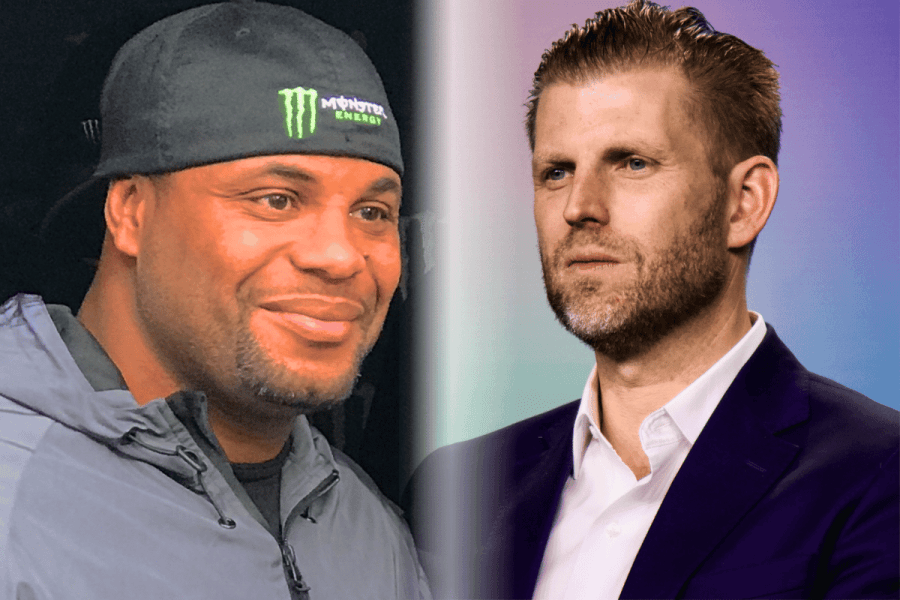
Eric Trump Calls Viral UFC Betting Screenshots "Completely Fake"
A new social media firestorm erupted across the MMA community on Sunday, June 14, 2026, after a set of screenshots began circulating online that purportedly showed Eric Trump — son of President Donald Trump — privately messaging UFC Hall of Famer Daniel Cormier. The alleged messages depicted Eric Trump asking Cormier about fighter injuries and whether any bouts on the upcoming UFC Freedom 250 card were "rigged." Within hours, both men had publicly denied any such exchange ever took place, but not before the images had already gone viral and sparked widespread debate about the integrity of professional MMA.
The controversy arrived at a particularly sensitive time. UFC Freedom 250 was scheduled as a marquee patriotic event with reported ties to the White House, making any suggestion of insider betting information or fight manipulation all the more politically charged. The screenshots, which circulated rapidly on X (formerly Twitter), were quickly amplified by MMA fans, bettors, and political commentators alike before either party had a chance to respond.
What the Screenshots Allegedly Showed
According to the viral images, Eric Trump had reached out to Daniel Cormier ahead of UFC Freedom 250 seeking information that could give bettors an edge. The alleged conversation reportedly included questions about specific fighter injuries that had not yet been publicly disclosed, as well as a more explosive line of inquiry asking whether any fights on the card had predetermined outcomes. The screenshots presented this exchange as a private direct message conversation, complete with profile photos and timestamps designed to lend them an air of authenticity.
The nature of the claims was significant. If real, they would imply that a prominent political figure connected to the White House was attempting to gain illicit advance knowledge for sports betting purposes — a serious allegation carrying potential legal and ethical consequences. The timing, right before a high-profile UFC event with overt patriotic branding, only amplified the story's reach.
Eric Trump Responds Swiftly on X
Eric Trump did not let the allegations linger. Taking to X shortly after the screenshots began spreading, he issued a direct denial, writing: "This is completely fake! I have never reached out to Daniel. In fact, this is scary." The post was brief but emphatic, framing the fabrication not just as a lie but as something genuinely alarming — an implicit acknowledgment that AI-generated or otherwise manipulated content is increasingly capable of deceiving the public at scale.
His use of the word "scary" resonated with many followers who saw it as pointing toward a broader problem: deepfakes and digitally fabricated screenshots have become sophisticated enough to fool casual observers and even some journalists. The episode raised immediate questions about what verification tools and processes media outlets and social platforms should employ before amplifying potentially fabricated political and sports content.
Daniel Cormier Also Denies the Alleged Exchange
Daniel Cormier, one of the most respected figures in UFC history and a prominent television analyst for the organization, also moved quickly to distance himself from the controversy. Cormier denied that any such private conversation had taken place, echoing Trump's characterization of the screenshots as fabrications. For Cormier, whose career has been built on his reputation as an honest, hard-working competitor and commentator, being associated with claims of fight-rigging or leaking insider information would be particularly damaging.
The UFC itself had not issued a formal statement at the time of publication, though the organization has consistently maintained rigorous oversight of its events through the Nevada State Athletic Commission and other regulatory bodies. Any credible evidence of fight manipulation or insider betting tip-offs would represent an extraordinary breach of those standards.
The Broader Problem of Fabricated Screenshots in Sports and Politics
The Eric Trump-Daniel Cormier episode is far from an isolated incident. Fabricated screenshots have become a recurring weapon in online discourse, used to defame public figures, manufacture political scandals, and manipulate public opinion. The intersection of sports, celebrity, and politics makes figures like Eric Trump and Daniel Cormier especially attractive targets, as false claims about them are likely to generate high engagement regardless of their veracity.
- Fabricated screenshots can be created in minutes using widely available editing tools or AI-based text generators.
- Once shared on social media, they often spread faster than any official denial can travel.
- Platform content moderation systems frequently struggle to identify and remove manipulated images before significant damage is done.
- High-profile targets in politics and sports face disproportionate exposure to this type of attack.
Experts in digital media literacy have long warned that the public needs better tools and habits for evaluating the authenticity of screenshots before sharing them. Reverse image searches, metadata analysis, and cross-referencing with official accounts are among the simplest steps users can take, yet the viral spread of this particular story showed that many skipped those checks entirely.
UFC Freedom 250 and the White House Connection
UFC Freedom 250 was already one of the most anticipated events of the summer before the screenshot controversy broke. The event's patriotic framing and its reported association with White House celebrations gave it an unusually high political profile even by UFC standards. That context made the fake screenshots more combustible — combining the worlds of elite combat sports, sports betting, and American political power in a single, easily shareable image.
For the UFC brand, any association with fight-rigging narratives is unwelcome. The organization has spent years building mainstream credibility, and its events regularly attract tens of millions of viewers globally. UFC Freedom 250 was expected to continue that trajectory, with a high-stakes card designed to appeal to both hardcore MMA fans and a broader patriotic audience.
What Happens Next
As of now, both Eric Trump and Daniel Cormier have denied the screenshots, and no credible evidence has emerged to support their authenticity. The episode serves as a timely reminder of how quickly fabricated content can spiral out of control when it touches on powerful combinations of celebrity, politics, and sports. Whether X or other platforms will take action against accounts that spread the images remains to be seen.
For fans and followers alike, the takeaway is straightforward: in an era when convincing fakes can be produced and distributed in seconds, skepticism and verification are not optional — they are essential. The story of Eric Trump, Daniel Cormier, and the viral UFC Freedom 250 screenshots may fade quickly, but the underlying challenge it represents is only going to grow more pressing as AI-generated content becomes ever harder to distinguish from the real thing.