
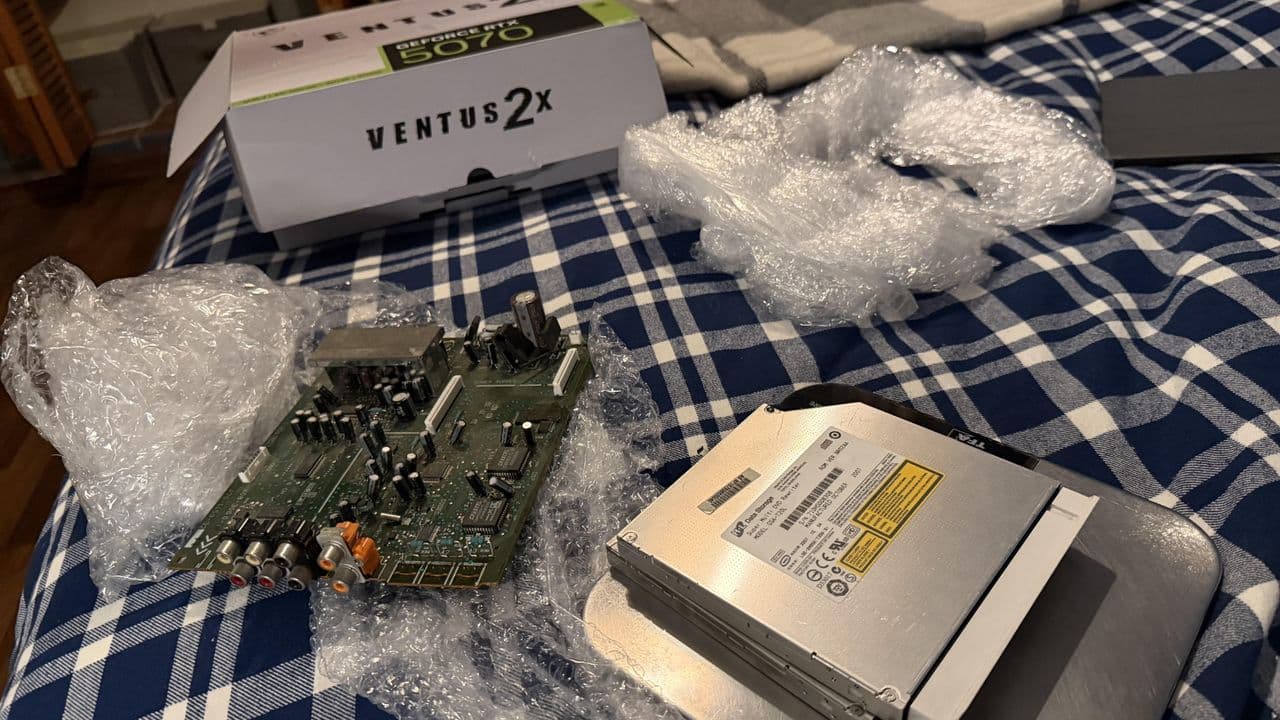
PC Builder Orders RTX 5070 from Amazon, Receives DVD Rewriter and a Broken Kenwood Logic Board Instead
Imagine saving up for one of the most anticipated graphics cards of the year, clicking "Buy Now" on Amazon, waiting anxiously for the package to arrive — and then opening the box to find a dusty DVD rewriter and a cracked logic board ripped out of a Kenwood AV receiver from the early 2000s. That is exactly what happened to one unlucky PC builder who ordered an RTX 5070 GPU and ended up with nothing more than a pile of worthless e-waste. The $700 graphics card was nowhere to be found.
This case is a jarring reminder that return fraud on major e-commerce platforms is not just alive — it is thriving, and even high-profile, high-demand products like NVIDIA's latest GPUs are not immune.
What Happened: The RTX 5070 That Never Was
The victim, an enthusiastic PC builder, purchased what appeared to be a legitimate RTX 5070 listing on Amazon. The order went through without issue, the shipping confirmation arrived, and the package showed up within the expected window. So far, so normal. But when the box was opened, instead of NVIDIA's newest mid-to-high-range graphics card, the buyer found a DVD rewriter — the kind of optical drive that was already going out of style twenty years ago — and a broken logic board stripped from a Kenwood home theater AV receiver, also dating back to the early 2000s.
The weight of these older components is thought to have been used deliberately to mimic the heft of an actual graphics card box, a common tactic in return fraud schemes designed to fool both automated warehouse systems and casual human inspectors alike.
How Amazon Return Fraud Actually Works
To understand what likely happened here, it helps to understand the mechanics of Amazon return fraud. This type of scam does not typically originate with Amazon itself or even with the seller at the point of sale. Instead, it usually unfolds something like this:
- A fraudster purchases an expensive item — in this case, an RTX 5070 — from a retailer, either online or in-store.
- The scammer removes the valuable product from the box and replaces it with junk of similar weight, such as old electronics components or even bags of rocks or sand.
- The resealed, counterfeit-filled box is then returned to Amazon for a full refund under a fabricated reason, such as "item not as described" or "defective product."
- Amazon's warehouse staff — dealing with thousands of returns daily — process the item and, in many cases, return it to active inventory without thoroughly inspecting the contents.
- The next unsuspecting buyer purchases what Amazon lists as a new or returned item, and receives the hollowed-out box packed with garbage instead.
The scammer walks away with both a full refund and the actual GPU. The victim is left holding decades-old e-waste and facing a customer service nightmare.
Why the RTX 5070 Is a Prime Target
NVIDIA's RTX 5070 sits in a particularly vulnerable spot in the GPU market. It is expensive enough — retailing in the $700 range — to make fraud financially worthwhile, but mainstream enough that it moves through Amazon's inventory in significant volume. High demand, limited stock, and eager buyers create the perfect storm for bad actors to exploit the returns system.
Graphics cards in general have long been a favorite target for return scammers precisely because they are dense, relatively uniform in size, and carry a high price-to-weight ratio that makes substituting equivalent-mass junk fairly easy. The RTX 5070, like its predecessors, checks all those boxes.
Amazon's Return Policy Problem
Amazon has faced mounting criticism for years over the way its returns system can be weaponized by dishonest buyers and resellers. The company's customer-first return policy, which generally extends a generous and largely hassle-free return window, is one of its most celebrated features — but it comes with an undeniable vulnerability. When returns are processed at scale by fulfillment centers handling millions of units, rigorous individual inspection of every returned item simply does not happen consistently.
High-value electronics that get returned and restocked without proper vetting are a ticking time bomb for the next buyer. Some sellers on Amazon's third-party marketplace are more diligent about this than Amazon's own fulfilled listings, but the problem is widespread across both.
What the Victim Can Do — and What You Should Do Too
If you ever find yourself in a similar situation, there are a few important steps to take immediately. Document everything before you touch or rearrange the contents of the box — photograph the packaging, the shipping label, the seal (or lack thereof), and whatever you found inside. This visual evidence is critical when filing a dispute.
Contact Amazon customer service right away and escalate the issue if the first response is unsatisfactory. For purchases of this value, filing a dispute with your credit card provider is also a strongly recommended parallel action. In cases involving clear fraud, your card issuer may be able to process a chargeback even while Amazon's internal investigation is ongoing.
It is also worth reporting the incident to your local consumer protection authority or, in the United States, to the FTC at reportfraud.ftc.gov, as organized return fraud rings are a federal concern.
How to Protect Yourself When Buying High-End GPUs Online
Prevention is always better than the headache of recovery. When buying expensive graphics cards or other high-value components online, consider the following precautions:
- Purchase directly from the manufacturer or from authorized brick-and-mortar retailers when possible, where you can inspect the box in person.
- If buying from Amazon, check whether the item is sold and fulfilled directly by Amazon or by a third-party seller, and read recent buyer reviews carefully for any red flags.
- Film yourself unboxing the product the moment it arrives. This video documentation can be the difference between a successful refund claim and a drawn-out dispute with no resolution.
- Check that factory seals are intact before accepting the package, and refuse delivery or document damage if the outer box shows obvious signs of tampering.
- Pay with a credit card that offers strong purchase protection and chargeback rights.
A Growing Problem With No Easy Solution
The story of one unlucky RTX 5070 buyer is far from an isolated incident. Cases like this surface regularly across PC building communities and tech forums, and they highlight a systemic weakness in how large e-commerce platforms handle returns at scale. Until Amazon and similar retailers implement stricter verification processes for returned high-value electronics — such as serial number checks, weight verification, or professional inspection before restocking — shoppers will continue to bear the risk.
For now, the best defense is an informed and cautious approach to every high-value online purchase. A $700 GPU is a significant investment. It deserves to arrive as a GPU — not as a DVD drive from 2003 and someone else's broken home theater system.