
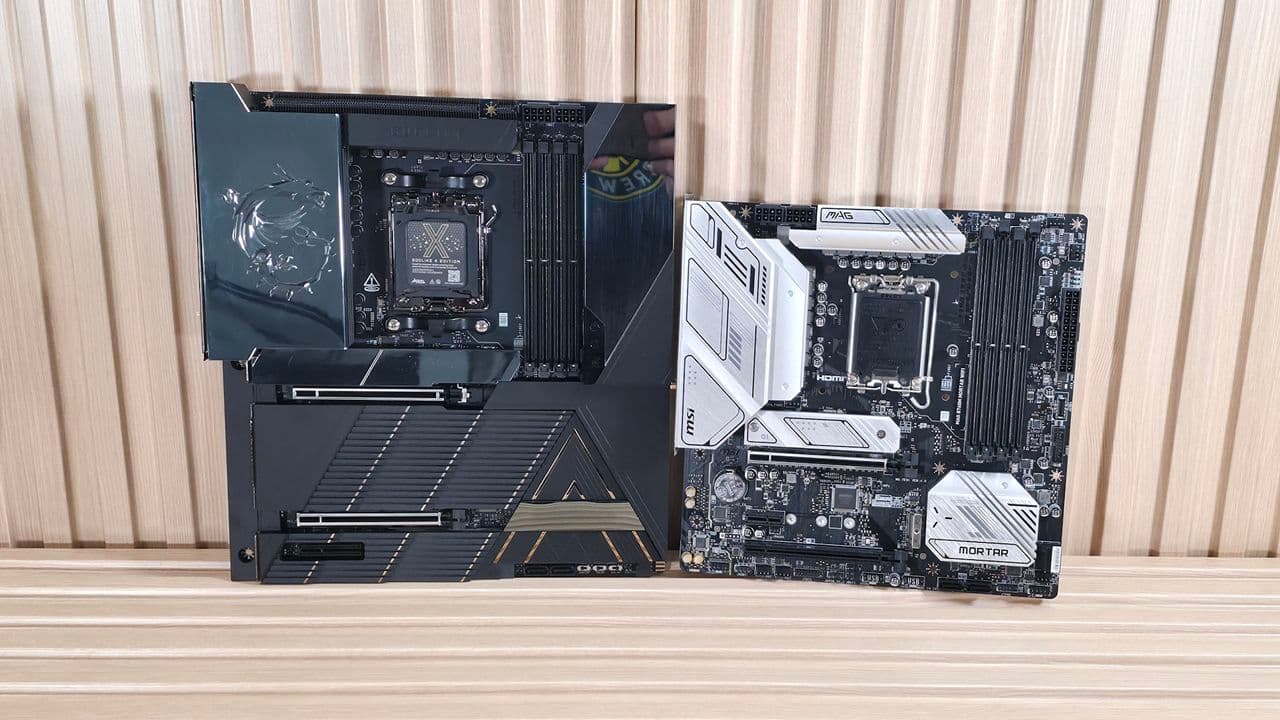
Flagship Motherboards Are Crashing in Price — And It Has Everything to Do With RAM
If you have been putting off a PC upgrade because of tightening budgets, the current motherboard market might be the best news you have heard all year. Flagship motherboards that normally command prices well above $400 are now selling at levels that would have seemed impossible just a few months ago. We are talking discounts of up to 57% on boards that represent the absolute pinnacle of consumer PC hardware. But before you rush to checkout, it is worth understanding exactly why these prices are falling so dramatically — and why this window of opportunity may not last long.
Why Are Motherboard Prices Dropping So Steeply?
The answer comes down to one word: RAM. Memory prices have been climbing sharply in 2025, and when the cost of RAM and SSDs rises, enthusiast PC builders pump the brakes. Building a high-performance desktop is a holistic investment — you need a CPU, a motherboard, memory, storage, and a graphics card all at once. When any one of those components becomes significantly more expensive, the entire build gets shelved until conditions improve.
The cascading effect on motherboard vendors has been severe. Industry data suggests that motherboard sales have dropped by as much as 37% compared to healthier market periods. That is an enormous dip for a category that already operates on relatively thin margins at the retail level. To move inventory and keep cash flowing, motherboard manufacturers and retailers have been forced into an aggressive discounting strategy that is producing some of the most dramatic price drops the enthusiast PC space has ever seen.
The timing of Amazon Prime Day has accelerated this trend even further, giving vendors a high-visibility platform on which to slash prices and attract bargain hunters who might otherwise be sitting on the sidelines. The result is a buyer's market for motherboards unlike anything we have seen in recent memory.
The ASRock Z890 Taichi: A Flagship Board at an Entry-Level Price
No single deal illustrates the current motherboard market collapse better than what is happening with the ASRock Z890 Taichi. This is not a mid-range or budget-oriented board. The Z890 Taichi is ASRock's true flagship for Intel's LGA 1851 platform, carrying the prestigious Taichi branding that the company reserves for its most feature-rich, most premium designs. Its standard retail price sits at $460 — and that price is thoroughly justified by what the board delivers.
Right now, however, you can purchase the ASRock Z890 Taichi for just $200. That is a $260 discount, representing a 56% reduction from its list price. To put that in perspective, the previous all-time low for this board was $300, which was itself considered a remarkable deal at the time. At $200, the Z890 Taichi is now priced comparably to entry-level and mid-range motherboards that offer a fraction of its capabilities.
What Makes the ASRock Z890 Taichi Worth Buying?
The Z890 Taichi is a flagship motherboard in every meaningful sense of the term. For anyone building or upgrading an Intel system around the LGA 1851 socket, this board brings an exceptional set of features to the table:
- Memory support up to 9600 MT/s: The Z890 Taichi supports extremely fast DDR5 memory speeds, giving you headroom to take full advantage of next-generation RAM kits as they become more affordable.
- Robust power delivery: Flagship-grade VRM configurations ensure that even the most demanding Intel processors are fed stable, clean power — critical for both performance and long-term system reliability.
- Dual Thunderbolt 4 ports: High-bandwidth connectivity for external devices, fast NVMe enclosures, daisy-chained displays, and docking stations is built right in, a feature typically reserved for workstation-class boards.
- Premium integrated audio: The onboard audio solution on the Z890 Taichi ranks among the best available on any consumer motherboard, making it an excellent choice for content creators and audiophiles who want to avoid a dedicated sound card.
- Comprehensive expansion and I/O: Multiple M.2 slots, extensive USB connectivity, and a thoroughly modern rear I/O panel round out a package designed to serve enthusiasts for years to come.
This is the same motherboard used by hardware reviewers for testing LGA 1851 processors — that level of confidence in a platform tells you a great deal about the board's stability and capabilities. Getting it for $200 is a deal that simply should not exist under normal market conditions.
Should You Buy a Motherboard Right Now?
The straightforward answer is yes — if you have been planning an upgrade at any point in the near future, now is the time to act on the motherboard portion of that build. The discounts currently available are a direct consequence of unusual market stress, and that stress will not last forever. Once RAM prices stabilize and enthusiast builders return to the market in larger numbers, demand for motherboards will recover. When that happens, vendors will have no incentive to maintain these historic discounts, and prices will climb back toward their normal levels.
Think of it this way: you may end up paying more for your RAM kit than you would like right now, but you can offset a significant portion of that added cost by locking in a flagship motherboard at a price that would normally buy you something far more modest. The savings on a board like the Z890 Taichi — up to $260 compared to list price — can effectively subsidize a higher-end memory purchase and still leave you ahead overall.
How to Find the Best Motherboard Deals During Prime Day
Prime Day is a fast-moving event, and the best deals tend to disappear quickly once word spreads. To make the most of the current motherboard market conditions, there are a few practical steps worth taking. First, identify the CPU platform you are targeting — Intel LGA 1851 with Z890 chipset, or AMD AM5 with X870 or B850 chipset — before you start browsing deals, so you are not distracted by boards that are incompatible with your processor of choice.
Second, cross-reference any deal you find against historical pricing data. What looks like a sale is sometimes just a temporarily inflated "original" price designed to make a discount seem larger than it is. The current motherboard deals are genuinely exceptional, but it is always worth verifying. Third, keep a shortlist of your preferred models bookmarked and check back frequently, as prices on specific boards can change multiple times over the course of a single day during major sale events.
The Bottom Line
The current state of the motherboard market is a rare inversion of the usual PC component pricing dynamic. While RAM and SSD prices are elevated and causing real pain for builders, motherboard vendors are absorbing that pain in the form of dramatically reduced sales and are passing the savings along to consumers in the form of unprecedented discounts. A flagship board like the ASRock Z890 Taichi selling for $200 is not a normal market event — it is a temporary anomaly driven by broader economic pressure. Take advantage of it while you can, because it is extraordinarily unlikely that motherboards will be this affordable once the rest of the component market finds its footing again.