
Bernie Sanders Wants Americans to Own Half of Every Major AI Company
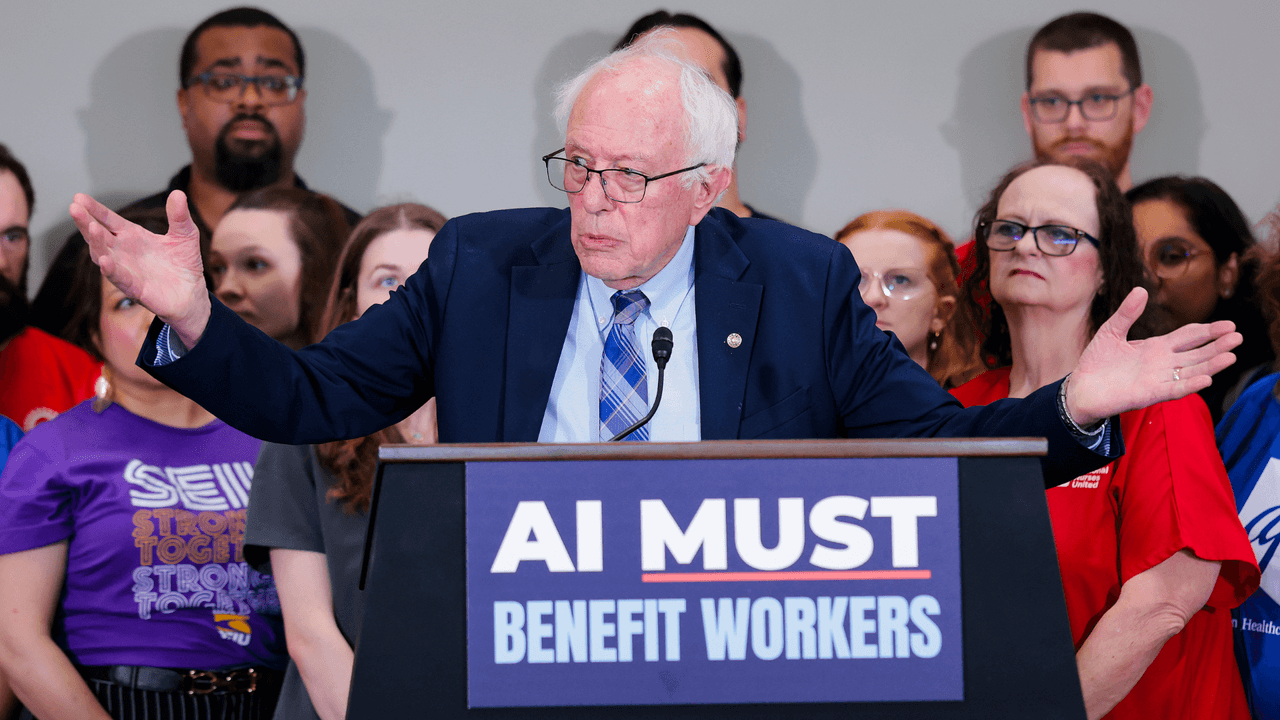
Senator Bernie Sanders has introduced a bold and polarizing piece of legislation that would require the United States government to hold a 50% public ownership stake in major American artificial intelligence companies. The bill also includes a provision to distribute $1,000 annual dividends to every American citizen, positioning AI wealth as a shared national resource rather than a prize reserved for Silicon Valley billionaires and institutional investors.
The proposal has immediately ignited a fierce political debate — not just between left and right, but also within the broader conversation about who benefits from the AI revolution unfolding at breakneck speed across the American economy.
What Does Sanders' AI Bill Actually Propose?
At its core, Sanders' legislation rests on a straightforward argument: artificial intelligence is being built on publicly funded research, trained on data generated by ordinary citizens, and deployed in ways that are rapidly reshaping the labor market. If AI is going to disrupt jobs and concentrate wealth at the top, the American people deserve a direct financial return on that transformation.
The key provisions of the bill include:
- 50% public ownership: The federal government would acquire a 50% equity stake in major US-based AI firms, effectively making American taxpayers co-owners of companies like OpenAI, Anthropic, and others operating at the frontier of the technology.
- $1,000 annual dividend: Profits generated from the government's ownership stake would be redistributed directly to American citizens in the form of a yearly $1,000 cash payment — a form of technology-funded universal basic income.
- Democratic oversight: Public board representation would come with the ownership stake, introducing a degree of accountability that private AI development currently lacks.
Sanders framed the proposal as a necessary counterweight to a future where AI productivity gains flow almost entirely to a small class of wealthy shareholders while working Americans face displacement and economic insecurity.
VP Vance Responds: Trump Supports Giving Americans a Stake in AI
Perhaps surprisingly, Vice President JD Vance signaled that the Trump administration is not entirely opposed to the core idea of giving ordinary Americans a share of AI's economic upside. Vance confirmed that President Trump supports giving the American people a stake in AI companies — but with a crucial philosophical difference in approach.
Rather than endorsing Sanders' model of direct cash dividends, Vance indicated the administration favors what he called "pre-distribution" over redistribution. In practical terms, this means ensuring that average Americans have the opportunity to build ownership in AI companies before the wealth is generated — through mechanisms like expanded stock ownership programs, lower barriers to early-stage investment, and policies that encourage broad participation in AI's financial upside from the ground up.
Vance's framing reflects a conservative preference for market-based solutions over government-directed wealth transfers. Rather than having the state collect and redistribute corporate profits, the pre-distribution model attempts to engineer a more equitable ownership landscape before the wealth concentrates in the first place.
Pre-Distribution vs. Redistribution: A Critical Difference
The ideological gap between Sanders' approach and the Trump-Vance vision reveals a deeper tension in American politics over how to handle transformative economic shifts. Redistribution, as Sanders envisions it, involves the government taking a direct financial stake and then sharing the resulting returns with citizens. Pre-distribution, by contrast, attempts to democratize ownership structures before profits are realized, avoiding the need for state intervention after the fact.
Critics of the pre-distribution model argue that without strong government intervention, market forces will continue to favor wealthy early investors and well-connected venture capitalists, making broad public ownership aspirational at best. Critics of Sanders' bill, meanwhile, raise concerns about government ownership stifling innovation, creating bureaucratic inefficiencies, and potentially politicizing decisions that should remain in the hands of engineers and entrepreneurs.
Why the AI Wealth Question Is Becoming Unavoidable
The political convergence — however partial — between Bernie Sanders and the Trump administration on the question of AI ownership reflects something important: the question of who benefits from artificial intelligence is moving from the fringes to the center of American economic policy.
Projections from economists and technologists suggest that AI could automate a significant share of existing jobs within the next decade, accelerating income inequality and putting pressure on both government budgets and social cohesion. Against that backdrop, proposals that would have seemed radical just a few years ago are gaining serious traction across the political spectrum.
Countries like Norway have long used sovereign wealth funds to ensure that natural resource revenues benefit all citizens rather than just private companies. Proponents of Sanders' bill argue that AI should be treated similarly — as a national resource built on public infrastructure, public research dollars, and the collective data footprint of the American people.
What Happens Next?
Sanders' bill faces a steep path to passage in the current political environment. However, its introduction marks a significant moment in the ongoing debate over AI governance, corporate power, and economic fairness. Whether through direct dividends, pre-distribution mechanisms, or some hybrid yet to be designed, the pressure for a more equitable distribution of AI's wealth is building — and both parties are being forced to respond.
As AI capabilities continue to advance at a remarkable pace, the decisions made in Washington over the coming months and years will shape whether the AI revolution becomes one of history's great equalizers or one of its most dramatic concentrations of wealth and power.