
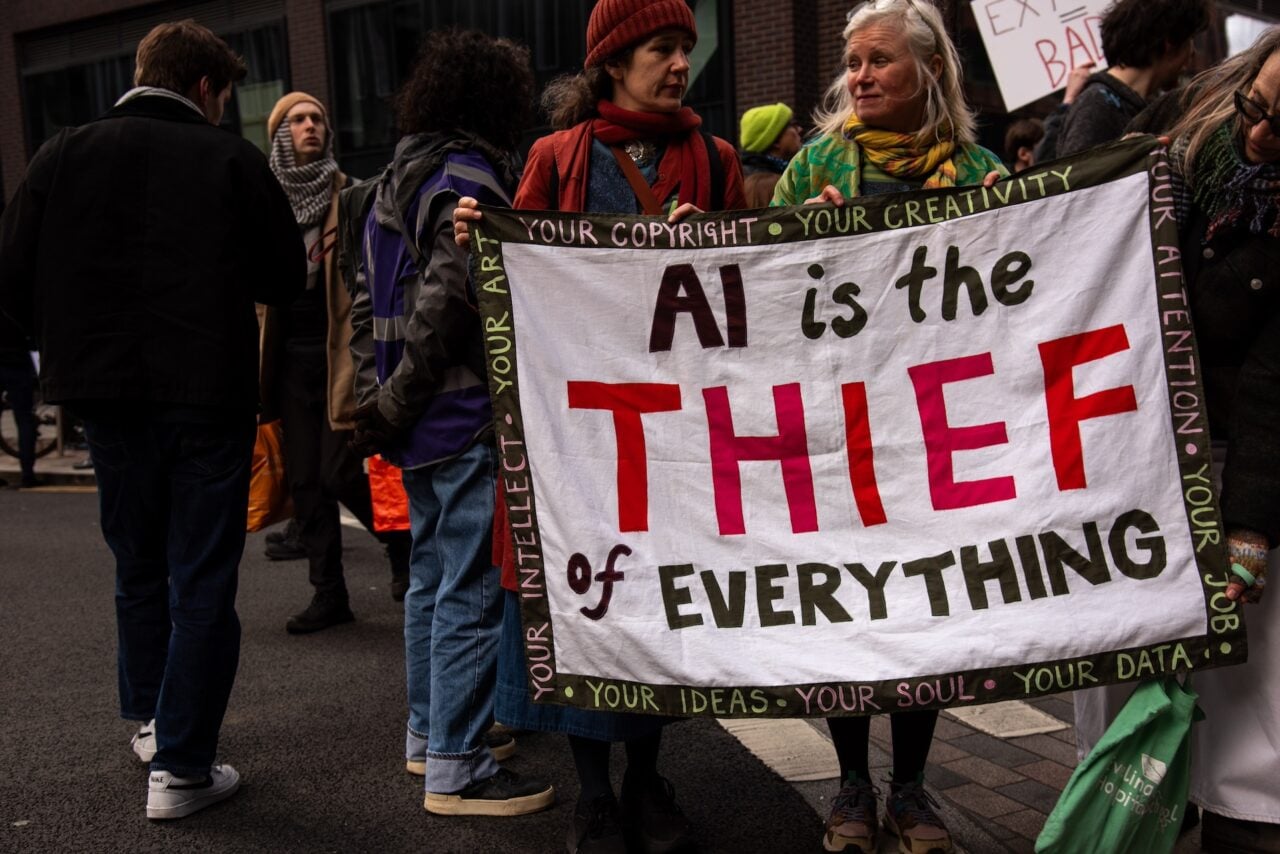
The AI Gold Rush Has a Serious Theft Problem
There's a quiet tension running underneath the explosive growth of artificial intelligence, and it has nothing to do with robots taking over the world. It's far more mundane — and arguably more urgent. Across industries, a growing chorus of voices is asking the same uncomfortable question: did AI companies build their billion-dollar products on work they never paid for?
Publishers and artists were among the first to sound the alarm. News organizations filed lawsuits. Illustrators organized protests. Visual artists discovered their distinctive styles had been scraped, digested, and reproduced by image-generation tools. But as the legal and ethical scrutiny around AI training data intensifies, it's becoming clear that the issue extends far beyond any single creative community. Nearly every sector that produces valuable information — from software developers to scientists, from musicians to database vendors — is now grappling with the same fundamental grievance.
What Is AI Training Data and Why Does It Matter?
To understand why this controversy is so wide-reaching, it helps to understand what AI models actually require to function. Large language models, image generators, and code-completion tools are all built on a process called training, in which the system ingests enormous quantities of existing human-created content. The model learns patterns, relationships, and structures from this data, and that learning is what makes it capable of generating coherent text, realistic images, or working code.
The scale of data required is staggering. Leading AI systems have been trained on hundreds of billions of words sourced from books, websites, academic papers, social media posts, forum discussions, and more. Image models have consumed millions of photographs and artworks. Code models have been fed repositories containing decades of software written by developers around the world.
The crucial detail is that, in most cases, the original creators of this content were never asked, never compensated, and never informed. AI companies have largely argued that this practice falls under fair use — a legal doctrine that permits the use of copyrighted material under certain conditions. Critics disagree, loudly and increasingly through the courts.
It's Not Just Artists Anymore
The early narrative around AI and intellectual property tended to center on the creative industries, partly because the harms were so visible. An AI image tool that could replicate the unmistakable style of a living artist made for compelling headlines. But the problem has since rippled outward in ways that are harder to dismiss as the complaints of a niche community.
Software developers have raised concerns about code-generation tools trained on open-source repositories. While much open-source software is freely available, it often comes with licenses that impose specific conditions on how it may be used and redistributed. Using that code to train a commercial AI product — and then selling access to that product — may violate those license terms, even if no single line of code is directly reproduced.
Academic publishers and researchers have flagged similar issues. Journals that charge for access to scientific literature have found that AI companies appear to have used their paywalled content for training purposes. The data providers behind many professional databases — legal research tools, financial information services, medical literature aggregators — are now scrutinizing whether their proprietary datasets ended up inside AI models without authorization.
Even other technology companies have entered the fray. As AI firms rush to build proprietary models, some have turned to the datasets, APIs, and scraped outputs of competitors. The result is a strange dynamic in which established tech giants simultaneously benefit from and complain about AI's voracious appetite for existing content.
The Legal Landscape Is Catching Up
Courts in multiple countries are now working through cases that will help define the boundaries of acceptable AI training practices. In the United States, several high-profile lawsuits are testing whether training a model on copyrighted material constitutes infringement, and whether the outputs of that model can themselves infringe on original works.
The outcomes of these cases will have profound implications. A ruling that broadly permits AI training on publicly available content would validate the approach most major AI labs have taken. A ruling that requires explicit licensing could reshape the entire industry, dramatically increasing costs and potentially concentrating power among companies large enough to negotiate data agreements at scale.
Some AI developers, sensing the direction of regulatory and legal winds, have proactively pursued licensing deals. Several major news organizations have signed agreements with AI companies, trading access to their archives for fees or other considerations. Stock photo agencies have established licensing frameworks for their image libraries. These deals remain controversial among creators who argue they were negotiated without meaningful consultation and often at rates far below the true value of the content involved.
What This Means for the Future of AI Development
The underlying tension here is unlikely to be resolved quickly or cleanly. AI development has been built on the assumption that publicly available data is fair game, and unwinding that assumption is enormously complicated. At the same time, the argument that an entire industry's commercial success rests on uncompensated labor is difficult to sustain indefinitely, both legally and ethically.
- Clearer regulatory frameworks around AI training data are likely to emerge in the coming years, particularly in the European Union and the United Kingdom.
- Licensing ecosystems for AI training data are already beginning to take shape, though standards remain inconsistent and contested.
- Synthetic data — AI-generated content used to train future AI systems — is being explored as a partial alternative, though it introduces its own questions about quality and bias.
- Watermarking and provenance tools may eventually make it possible to trace which materials were used in a given model's training, adding accountability to a process that has so far been largely opaque.
One thing is certain: the era of consequence-free data harvesting is ending. As regulators, courts, and affected industries push back, AI companies will need to develop clearer, fairer, and more transparent approaches to the content that powers their systems. The question of who owns the raw material of the AI revolution is no longer theoretical — and the answer will shape the technology's trajectory for decades to come.