
A US Military Space Exercise Happened in Near-Total Silence — Here's What We Know
In an age where rocket launches are livestreamed, celebrated, and dissected across social media in real time, one recent mission from Rocket Lab broke every convention. A satellite quietly slipped into orbit from a remote peninsula in New Zealand, with no fanfare, no countdown clock, and no official acknowledgment — at least not right away. What unfolded was a carefully orchestrated US Space Force military exercise designed to test something increasingly vital to national security: the ability to rapidly deploy assets into low-Earth orbit during a crisis, on short notice, and with minimal public exposure.
The Launch That Wasn't Announced
On a Friday that passed without ceremony, Rocket Lab executed a launch from its privately operated spaceport at Māhia Peninsula in New Zealand. Unlike most of the company's missions — which are typically accompanied by slick promotional content, countdown streams, and social media buzz — this one arrived in near-total silence. No livestream was made available. No press releases were distributed. The only public signal that anything was about to happen was a routine navigational warning issued to pilots and sailors, advising them to steer clear of the rocket's projected flight path.
For casual observers, there was nothing to notice. For those paying close attention, that navigational notice was the only breadcrumb. And even then, the full picture didn't come together until the weekend, when the US military's official catalog of space objects was quietly updated to reflect the mission.
Meet Victus Haze Puma: The Satellite Nobody Was Supposed to See
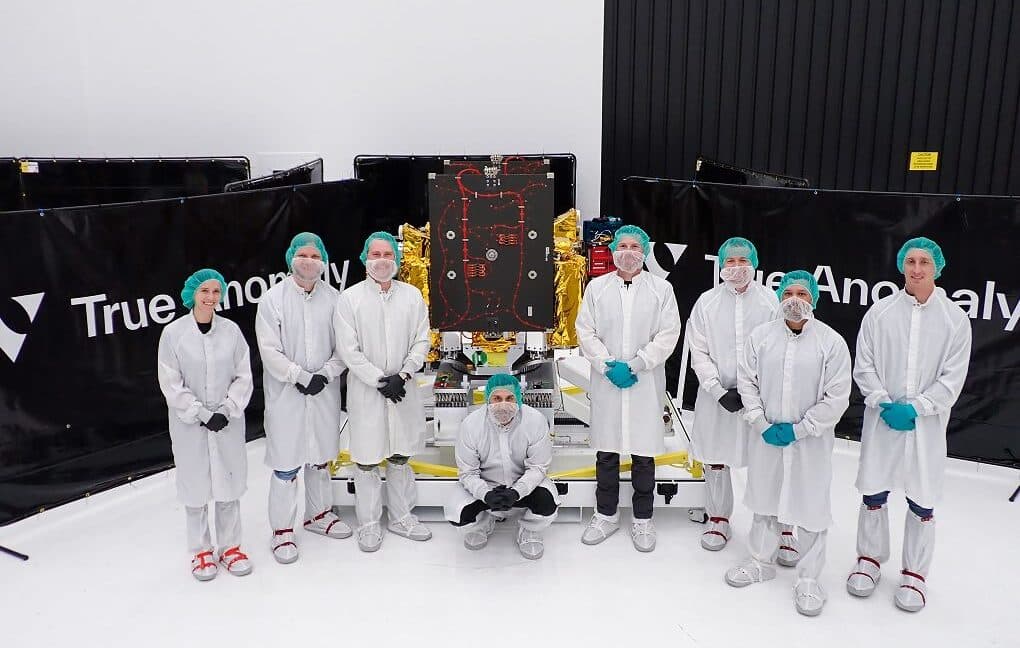
The newly launched spacecraft was designated Victus Haze Puma and appeared in the Space Force's catalog with a launch date matching that silent Friday. It was placed into a polar orbit, ranging between approximately 215 and 286 miles above the Earth — or 347 to 461 kilometers in altitude — with an orbital inclination of roughly 97.5 degrees relative to the equator. This type of sun-synchronous polar orbit is commonly used for reconnaissance and surveillance missions, providing consistent lighting conditions as the satellite passes over different parts of the globe.
As of the following Monday morning, neither Rocket Lab nor the Space Force had issued any official public statement acknowledging the launch. The satellite's existence was confirmed solely through the routine, bureaucratic process of cataloging space objects — a system that operates largely outside of public attention.
What Is the Victus Haze Exercise?
The Victus Haze mission is part of a broader US Space Force initiative designed to demonstrate and sharpen the military's ability to respond rapidly to threats or crises in orbit. The name "Victus" has appeared in prior Space Force exercises — most notably Victus Nox, a 2023 mission that similarly tested rapid-launch timelines using a commercial launch provider. The goal of these exercises is to compress the timeline between a decision to launch and an asset reaching orbit — something that could prove decisive in a conflict where adversaries might attempt to disable or destroy US space infrastructure.
In modern warfare, space is no longer a passive backdrop. Satellites provide the backbone for GPS navigation, communications, intelligence gathering, missile warning systems, and battlefield coordination. Losing key satellites — whether through directed energy weapons, anti-satellite missiles, or electronic jamming — could severely degrade a military's operational effectiveness. The ability to rapidly replace or reinforce orbital assets is therefore not just a technical ambition; it is a strategic necessity.
Why Rocket Lab? Why New Zealand?
Rocket Lab has positioned itself as a critical partner for the US government's small-satellite launch needs. Its Electron rocket is purpose-built for responsive, small-payload launches — the kind of nimble, cost-effective capability that suits military exercises like Victus Haze perfectly. The company's Māhia Peninsula launch site in New Zealand offers geographic advantages for reaching polar and sun-synchronous orbits, and its private ownership means it can operate with a degree of flexibility that government-run facilities might not always permit.
The use of a commercial, overseas launch facility also aligns with the Space Force's broader strategy of leveraging the commercial space industry to build resilience into national security space operations. Rather than depending solely on large, expensive government launches, the military is investing in its ability to use commercial providers quickly and discreetly when the situation demands it.
The Bigger Picture: Space as a Contested Domain
The Victus Haze Puma launch is a small but telling indicator of how seriously the United States is taking the militarization of space. Both China and Russia have developed and tested anti-satellite weapons in recent years, raising alarm among defense planners about the vulnerability of US space infrastructure. In response, the Space Force has been working to build what officials describe as a more "resilient" architecture — one that can absorb losses and reconstitute quickly.
- Rapid-launch exercises like Victus Haze demonstrate how quickly a satellite can move from decision to orbit using commercial providers.
- Small satellites in low-Earth orbit are cheaper and faster to replace than large, expensive geostationary platforms.
- The use of stealth procedures tests operational security protocols in addition to launch timelines.
- International partnerships and commercial spaceports expand the geographic diversity of US launch options.
Each of these elements feeds into a larger doctrine of deterrence and resilience — making it harder for adversaries to calculate that a single strike against US space assets would yield a lasting advantage.
What Comes Next
With almost no official commentary available, the specific objectives of the Victus Haze Puma satellite — whether it carries sensors, communications payloads, or some form of experimental technology — remain unknown to the public. What is clear is that the mission represents a continued evolution in how the United States thinks about, deploys, and protects its interests beyond the atmosphere.
The fact that a military space exercise of this nature could launch, reach orbit, and get cataloged before any official entity publicly acknowledged it says something profound about both the pace of modern space operations and the deliberate opacity that now surrounds them. In the new space race, sometimes the most significant moves are the ones you were never meant to see.