
The UK Is Betting on AI to Determine How Old Asylum Seekers Are — Here's Why That's a Problem
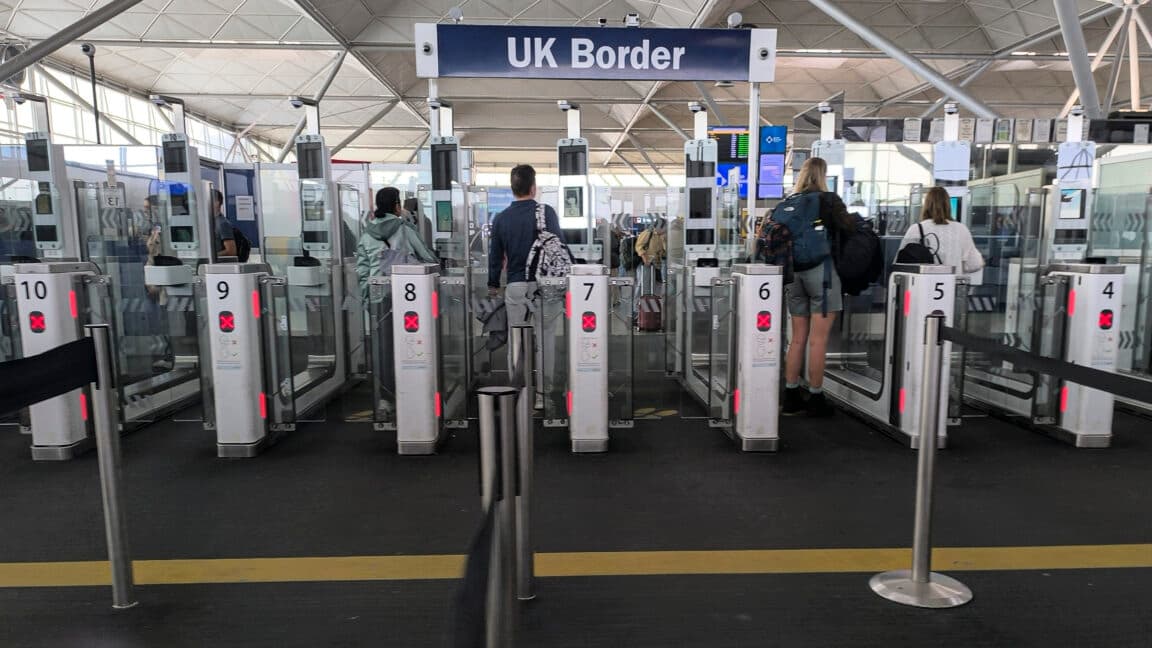
Artificial intelligence is quietly reshaping how governments make decisions about some of the world's most vulnerable people. The latest example comes from the United Kingdom, where the government is preparing to deploy facial age estimation (FAE) technology at its borders to help determine the ages of asylum seekers who arrive without identity documents. It sounds like a practical, modern solution to a genuine administrative challenge. But an explosive investigation by WIRED and Lighthouse Reports, in collaboration with The Independent, has revealed that the technology the UK plans to rely on is significantly flawed — and the stakes for getting it wrong could not be higher.
What Is Facial Age Estimation and Why Does It Matter?
Facial age estimation is a form of AI-powered biometric analysis that scans a person's face and generates an estimate of their age. Unlike facial recognition, which attempts to identify a specific individual, FAE simply tries to predict how old someone is based on visual features like skin texture, bone structure, and facial proportions.
The technology has already found commercial applications in age verification for online platforms — from social media sites restricting access to minors in countries like Australia, to pornography websites facing mandatory age checks across multiple US states. But the UK government's planned use of FAE marks what is believed to be the first time such a system will be applied in an immigration and border control context, where the consequences of an inaccurate prediction are profoundly serious.
Many asylum seekers arriving in the UK do not carry official documents proving their age. In such cases, the government must assess whether an individual is a child or an adult, because the legal protections afforded to minors are significantly greater. Children are entitled to specific safeguarding measures, specialist support, and appropriate accommodation. Adults, on the other hand, can be placed in adult-only immigration detention centers — facilities that are wholly unsuitable and potentially dangerous for a child.
What the Internal Government Report Actually Found
The investigation obtained an internal UK government report detailing its own testing of facial age estimation systems. The findings are deeply concerning. According to the report, the systems tested regularly misclassified children as adults. In a process where a single incorrect determination could result in a child being stripped of legal protections and placed among adult detainees, that margin of error is not an acceptable technical limitation — it is a human rights issue.
Perhaps even more troubling are the bias problems identified in the technology. The report reveals that the FAE systems appear to perform inconsistently across different demographic groups, directly affecting the largest group of migrants subject to age assessments in 2025, according to data from the UK Home Office. This means the technology is not just inaccurate in general — it may be disproportionately inaccurate for the very people it is most frequently being asked to assess.
Bias in AI systems used for high-stakes decision-making is a well-documented problem. Facial analysis technologies have repeatedly been shown to perform worse on people with darker skin tones, women, and other demographic groups that are underrepresented in training datasets. When such biases appear in tools used for employment screening or content moderation, the harm is serious. When they appear in tools used to determine whether a frightened child is sent to a detention facility, the harm can be devastating and irreversible.
Why Is the UK Proceeding Despite These Findings?
This is perhaps the most troubling question raised by the investigation. The UK government is reportedly aware of the technology's limitations — the internal report makes them clear — yet is proceeding with plans to introduce FAE as part of its asylum age assessment process starting next year. No official explanation has been offered for why a tool known to misidentify children as adults is being advanced toward deployment in this context.
Critics and child welfare advocates argue that this represents a dangerous prioritization of administrative efficiency over the safety and rights of vulnerable individuals. The pressure on UK immigration services to process asylum claims quickly is well documented, and there may be an institutional appeal to having a technology that can rapidly generate an age estimate. But speed without accuracy in this domain is not a feature — it is a liability.
The Broader Context: Age Verification Technology Is Expanding Fast
The UK's asylum case sits within a much larger global trend. Age verification requirements are proliferating at pace, driven by legislation targeting children's online safety. Governments and regulators are scrambling to find scalable technical solutions, and facial age estimation has emerged as a leading candidate because it requires no document submission and can be administered quickly.
However, experts in digital rights, AI ethics, and child protection have consistently warned that the technology is not yet mature enough for high-stakes deployments. Accuracy rates that might be commercially tolerable for age-gating a social media profile become morally unacceptable when the outcome determines whether a frightened young person sleeps in a children's facility or an adult detention center.
What Should Happen Instead?
Rights organizations and immigration legal experts have long argued that age assessment should rely on holistic, multi-disciplinary evaluations conducted by trained professionals — including social workers, pediatricians, and legal guardians — rather than on a single algorithmic output. The Merton Assessment, a framework currently used in the UK, is designed to take into account a range of physical, emotional, and behavioral indicators rather than a single metric.
Introducing FAE does not necessarily replace these processes, but there is a genuine risk that an AI-generated number becomes an anchor that skews the broader assessment, particularly for overworked case workers under pressure to reach quick decisions.
The Stakes Are Too High to Get This Wrong
The UK government's plan to deploy facial age estimation on asylum seekers illustrates a critical tension at the heart of AI governance: the desire to use powerful new tools to solve real problems versus the responsibility to ensure those tools are safe, fair, and fit for purpose before they are applied to human lives. When the internal evidence shows that a technology regularly mistakes children for adults and carries significant demographic bias, proceeding with deployment is not innovation — it is a policy choice with real human costs.
As age verification technology continues to expand from screens to borders, the lesson from the UK's asylum case is clear. Algorithmic tools must be held to higher standards of accuracy and fairness when their outputs carry life-altering consequences. The burden of proof should be on the technology to demonstrate it is ready — not on vulnerable children to prove the machine got it wrong.