
Tesla on Autopilot Crashes Into Katy, Texas Home, Fatally Killing One Woman
A devastating accident in Katy, Texas has once again cast a harsh spotlight on the safety of automated driving assistance systems. A Tesla vehicle with its driver-assistance technology engaged crashed directly into a residential home, resulting in the death of one woman. The incident has reignited fierce debate among safety regulators, automotive experts, and the general public about the real-world reliability of semi-autonomous vehicle technology on public roads.
What Happened in Katy, Texas?
According to initial reports, the Tesla was operating with what authorities described as "an automated driving assistance system" engaged at the time of the crash. The vehicle veered off course and struck a home in the Katy area, a suburban community located just west of Houston. One woman was killed as a direct result of the collision. The identities of those involved have not been fully disclosed as authorities continue their investigation.
Emergency responders arrived at the scene to find significant structural damage to the home. Investigators from local law enforcement, as well as federal agencies that routinely examine crashes involving automated driving technology, are expected to review data from the vehicle's onboard systems, including its event data recorder and any available Autopilot logs.
This is not an isolated case. The National Highway Traffic Safety Administration (NHTSA) has been tracking Tesla crashes involving Autopilot and Full Self-Driving (FSD) features for several years, and incidents like this one contribute to a growing body of data that regulators are using to evaluate whether current systems are safe enough for unsupervised use on public roads.
Understanding Tesla's Automated Driving Assistance System
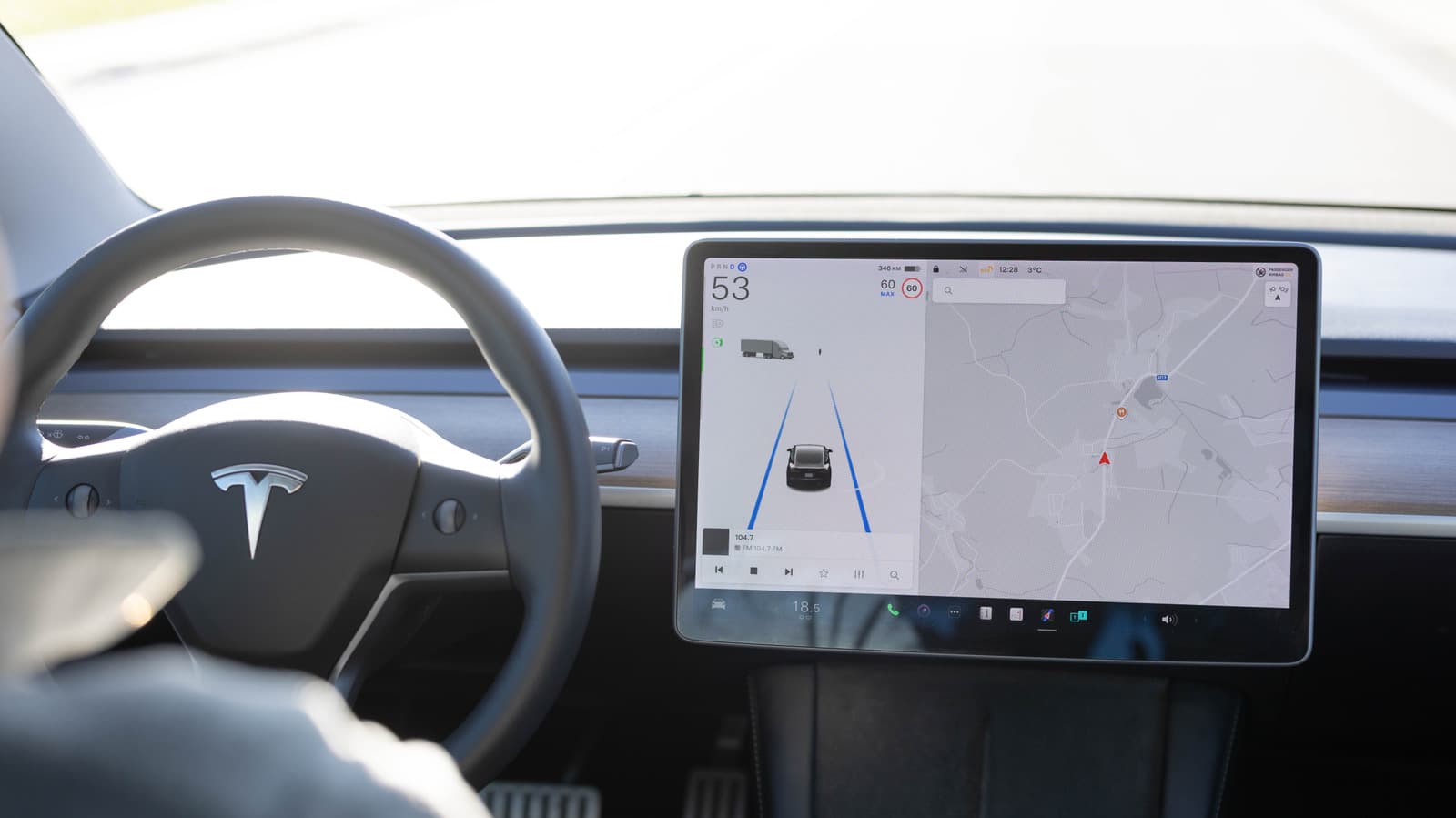
Tesla offers two primary levels of driver-assistance software: Autopilot and Full Self-Driving (FSD). Despite the ambitious name, neither system makes a Tesla fully autonomous. Both require the driver to remain attentive, keep their hands on or near the steering wheel, and be ready to take over control at any moment.
- Autopilot is Tesla's standard driver-assistance suite, capable of adaptive cruise control and lane-keeping on highways and well-marked roads.
- Full Self-Driving (FSD) is a more advanced — and significantly more expensive — software package that adds features like automatic lane changes, traffic light recognition, and city street navigation, though it still requires active driver supervision.
Critics have long argued that Tesla's branding of these features is dangerously misleading, suggesting a level of autonomy the technology cannot yet reliably deliver. When drivers place excessive trust in the system and disengage mentally from the act of driving, the consequences can be catastrophic.
A Pattern of Concern: Autopilot Crashes Are Not New
The Katy, Texas crash is part of a troubling pattern that federal regulators have been monitoring closely. The NHTSA has opened numerous investigations into Tesla crashes where Autopilot or FSD was reported to be active. These investigations have involved collisions with stationary objects, emergency vehicles parked on roadsides, and now, residential structures.
In 2023, Tesla recalled over two million vehicles in the United States to update its Autopilot system after the NHTSA concluded that the feature did not do enough to ensure drivers remained engaged. The software update was intended to increase alerts and restrictions when inattentive driving was detected. However, critics noted that a software patch does not address the fundamental behavioral problem: drivers who misunderstand or deliberately ignore the system's limitations.
Fatal crashes linked to Autopilot have occurred on highways, surface streets, and now in residential neighborhoods, suggesting that the risk is not confined to any one driving environment.
Regulatory and Legal Implications
Incidents like the one in Katy, Texas tend to generate immediate regulatory scrutiny. The NHTSA has the authority to open a Special Crash Investigation, a formal process used when a crash may involve an automated driving system. These investigations can ultimately lead to recalls, software mandates, or changes to how automakers are permitted to market and deploy semi-autonomous features.
From a legal standpoint, crashes involving automated systems raise complex questions about liability. Is the driver responsible for failing to maintain adequate supervision? Is the automaker liable for deploying a system that lulls drivers into a false sense of security? Courts and insurance companies across the country are still working through these questions, and cases like this one are likely to play a significant role in shaping future legal precedent.
Tesla has historically defended its systems by pointing to data suggesting that Autopilot improves overall safety compared to human-only driving. However, opponents argue that aggregate safety statistics do not absolve the company of responsibility in individual crashes where system behavior or misleading marketing may have been a contributing factor.
What This Means for EV and Autonomous Vehicle Safety Going Forward
The death of a woman in Katy, Texas is more than a statistic — it is a sobering reminder that the gap between marketed capability and real-world performance in autonomous driving technology can have lethal consequences. As automakers race to roll out increasingly sophisticated driver-assistance features, the urgency for clear regulatory standards, rigorous independent testing, and honest consumer communication has never been greater.
For drivers currently using Tesla's Autopilot or FSD features, safety experts consistently emphasize the same core message: these are assistance tools, not replacements for human judgment. Hands should remain ready on the wheel, eyes on the road, and attention fully engaged at all times.
As investigations into the Katy crash continue, the findings will likely influence not just Tesla's future software development, but the broader trajectory of how the entire automotive industry approaches the responsible deployment of automated driving technology on public roads.