
Rocket Report: Blue Origin Rebuilds Its Launch Pad While Relativity Space Sets Its Sights on Mars
The space industry never stands still, and this week's Rocket Report is packed with developments that underscore just how rapidly the commercial launch sector is evolving. From Blue Origin's ongoing infrastructure work at its launch pad to Relativity Space's ambitious plans to reach Mars, and from fresh delays plaguing Isar Aerospace's Spectrum rocket to eagerly anticipated updates on SpaceX's Starship program, there is plenty to unpack. Whether you're a seasoned space enthusiast or a casual observer, here's everything you need to know about the latest milestones and setbacks shaping the future of rocket launches.
Starship Flight 13: What We Know So Far
SpaceX's Starship program remains one of the most closely watched stories in all of aerospace, and for good reason. According to Gwynne Shotwell, SpaceX's president and chief operating officer, the next test flight of the company's massive rocket — designated Flight 13 — could take place as soon as next month. Shotwell shared this timeline in a recent interview with CNBC, though she was careful to temper expectations, noting that there is still a significant amount of work to complete before the vehicle is ready to fly again.
Based on Shotwell's comments, Flight 13 is expected to closely mirror the previous test flight, which took place last month. That means another suborbital flight path and a splashdown of the Starship upper stage in the Indian Ocean. Crucially, SpaceX is not yet ready to attempt an orbital flight. The company has pushed that milestone back to at least Flight 14, after the ship was unable to complete a critical engine restart during its time in space on the last mission. Solving that engine restart issue is considered a key technical hurdle before Starship can demonstrate the orbital capabilities it will eventually need for ambitious missions to the Moon and beyond.
While the prospect of a Flight 13 launch next month is exciting, industry watchers are urging patience. SpaceX has a history of ambitious timelines that occasionally slip, and the engineering work required to address the restart failure is not trivial. Still, the momentum is undeniable, and each successive test flight has brought meaningful data and incremental progress.
Blue Origin Begins Rebuild at Its Launch Pad
Blue Origin, the rocket company founded by Jeff Bezos, is quietly making significant progress on rebuilding infrastructure at one of its launch pads. While specific details about the scope and timeline of the reconstruction effort are still emerging, the rebuild signals Blue Origin's continued investment in expanding its launch capabilities. The company has been working to establish itself as a serious player in the commercial launch market, primarily through its New Glenn rocket, which completed its first successful orbital mission earlier this year.
Infrastructure upgrades and pad rebuilds are a normal part of the launch business, particularly as rocket programs mature and operational tempos increase. For Blue Origin, maintaining and improving its ground infrastructure is an essential step toward achieving the kind of rapid launch cadence that customers and the market increasingly demand. The rebuild at the launch pad is expected to support future New Glenn missions and potentially other vehicle programs the company has in development.
Relativity Space Takes Aim at Mars
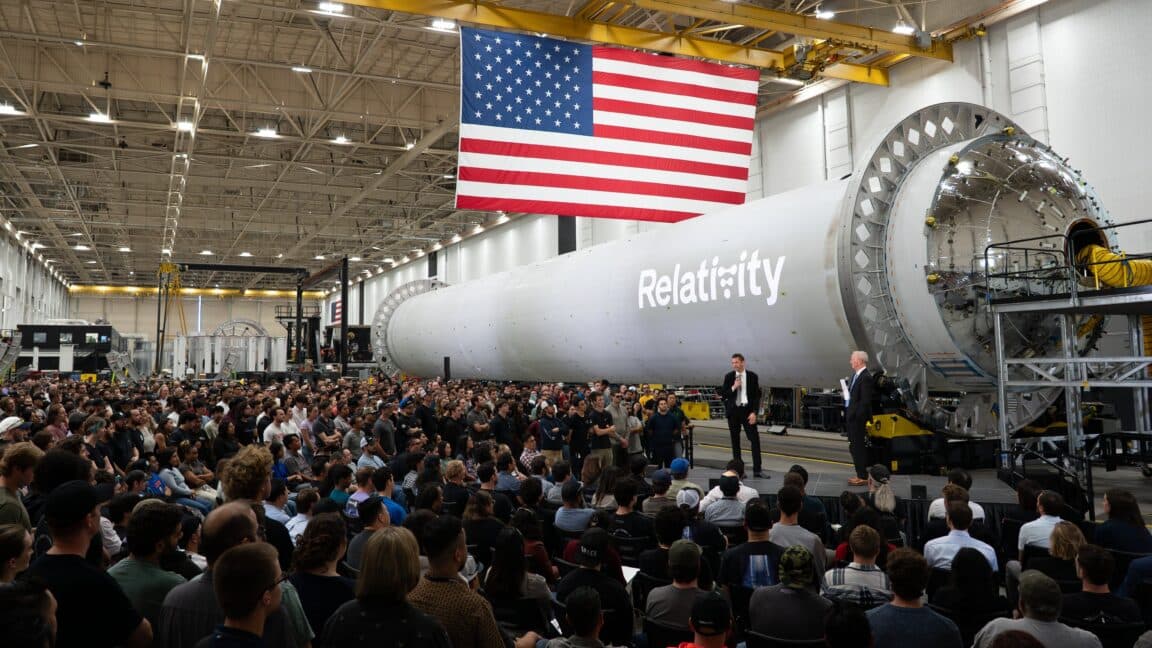
One of the more eye-catching storylines in this week's report comes from Relativity Space, the startup that made headlines for 3D-printing its Terran 1 rocket. After stepping back from the small launch vehicle market, Relativity has been developing a much larger rocket called Terran R, a fully reusable medium-to-heavy lift vehicle designed to compete in an increasingly crowded market. Now, the company is setting its ambitions even higher — literally — with a stated goal of eventually targeting Mars.
Relativity's Mars vision ties into a broader trend of commercial space companies thinking beyond Earth orbit. While the practical details of how Relativity plans to contribute to Mars exploration remain to be fully articulated, the directional ambition reflects growing confidence in the commercial sector's ability to tackle deep space challenges that were once the exclusive domain of government agencies like NASA. For now, successfully launching Terran R and building a sustainable launch business will be the necessary first steps on that longer journey.
Isar Aerospace Faces More Delays with Spectrum Rocket
Over in Europe, Isar Aerospace continues to hold its position as the leading contender among a new generation of European rocket startups, but the company's path to establishing a reliable launch record is proving to be a rocky one. The latest setback occurred on Monday, when Isar was forced to scrub yet another launch attempt of its Spectrum rocket after teams detected what the company described as "off nominal behavior in the vehicle's fluid systems." Engineers are now analyzing data to isolate the root cause of the anomaly before another attempt can be made.
Isar is certainly not short on resources, having raised nearly $1 billion to date — a remarkable sum for a European launch startup. However, what the company still lacks is something money cannot easily buy: flight experience. The Spectrum rocket has completed only one flight to date, and that maiden launch last year ended in failure less than 30 seconds after liftoff. Every scrub and anomaly, while frustrating, is also an opportunity to learn, and Isar's engineering teams will need to convert those lessons into a successful flight soon if the company is to maintain its competitive position.
The Bigger Picture: A Rapidly Evolving Launch Landscape
Taken together, this week's developments paint a vivid picture of an industry in flux. Established players like SpaceX and Blue Origin are pushing deeper into operational maturity, while newer entrants like Isar Aerospace and Relativity Space are working hard to carve out their own niches. The competition is fierce, the technical challenges are immense, and the stakes — both commercial and exploratory — have never been higher.
- Starship Flight 13 could launch as soon as next month, though an orbital attempt won't come until at least Flight 14 after an engine restart failure.
- Blue Origin is rebuilding infrastructure at one of its launch pads, supporting future New Glenn missions and long-term capacity growth.
- Relativity Space is targeting Mars as a long-term goal while continuing development of its fully reusable Terran R rocket.
- Isar Aerospace has scrubbed another Spectrum launch attempt due to fluid system anomalies, adding to the European startup's frustrating string of delays.
As the cadence of launches and announcements continues to accelerate across the industry, one thing is clear: the race to make space more accessible — and eventually to extend human presence to Mars and beyond — is very much alive. Stay tuned for next week's Rocket Report for the latest updates on these stories and more as they continue to develop.