
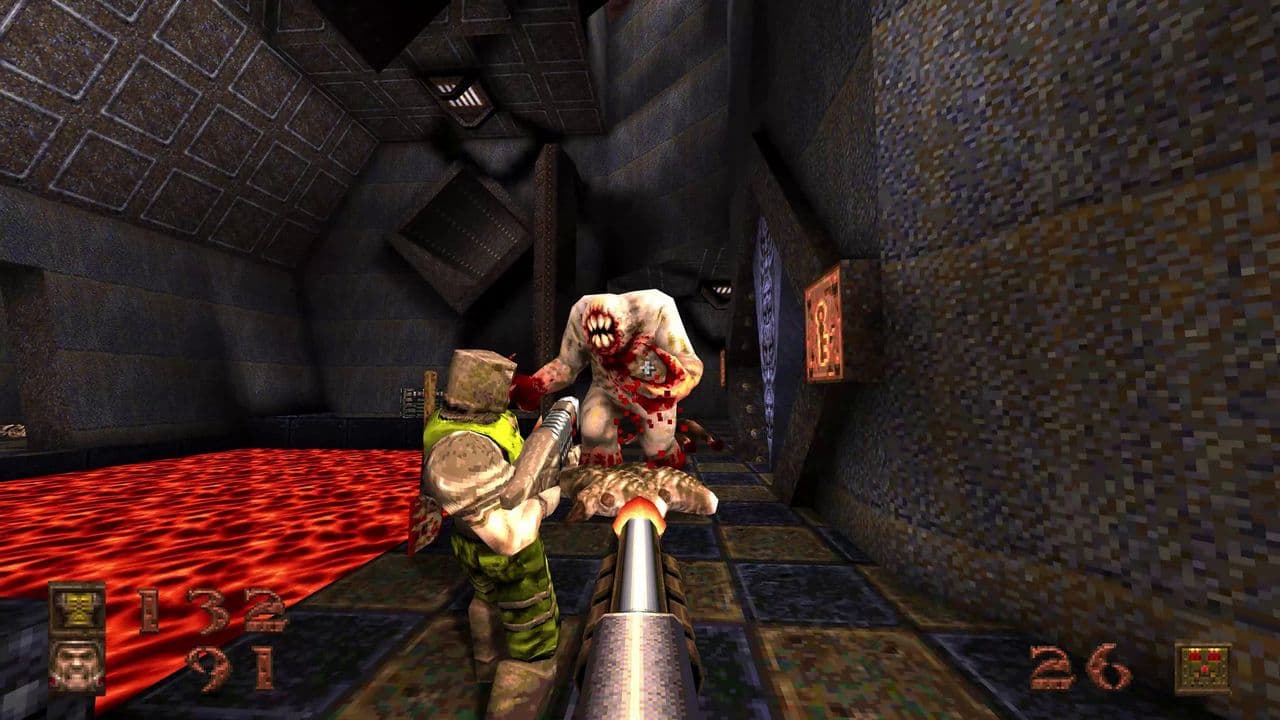
Quake at 30: How id Software's 1996 Masterpiece Changed PC Gaming Forever
On June 22, 1996, id Software released a game that would permanently alter the course of PC gaming. Quake arrived not with a quiet debut, but with the force of something the industry had genuinely never seen before — true 3D polygonal worlds, bone-crunching physics, and a multiplayer framework that would go on to define competitive online gaming culture for decades. Now, thirty years later, it is impossible to discuss the history of first-person shooters, 3D graphics hardware, or online competitive play without Quake occupying a central place in that conversation.
A Leap Beyond 2.5D: The True 3D Revolution
Before Quake, the genre was dominated by titles that relied on clever visual tricks rather than genuine three-dimensional geometry. Doom, Duke Nukem 3D, System Shock, and their contemporaries used what is often called 2.5D rendering — sophisticated illusions of depth that fooled the eye while keeping computational demands manageable. These games were groundbreaking for their time, but they were fundamentally limited by the architectural compromises baked into their engines.
id Software made a deliberate and consequential decision to abandon those shortcuts entirely. Quake's engine rendered fully polygonal 3D worlds and character models, meaning the geometry of the game world was real in a mathematical sense. Walls could be at any angle. Rooms could exist above and below one another. Players could look fully up and down, strafe, and navigate genuinely three-dimensional spaces in ways that earlier engines simply could not accommodate.
This shift unlocked capabilities that had a cascading effect on game design. For the first time in the FPS genre, developers could implement real 3D collision detection and physics. Projectiles traveled through three-dimensional space. Surfaces had genuine spatial relationships to one another. The creative possibilities that opened up as a result of this architectural change would ripple through the industry for years, influencing virtually every major studio working on action games in the late 1990s and early 2000s.
The Hardware Reckoning: Quake and the Birth of the GPU Market
Quake's technical ambition came at a significant cost. Even the best CPUs of the Pentium era struggled to render the game at acceptable frame rates, and the experience of playing Quake on underpowered hardware was notoriously punishing. This created an urgent and immediate market need that the hardware industry was positioned, if not quite ready, to fill.
3D accelerator cards — dedicated graphics processing hardware designed to offload the demanding polygon rendering tasks from the CPU — went from niche enthusiast curiosities to essential PC gaming components almost overnight. The releases of landmark products like the 3dfx Voodoo, the ATI Rage, and the Nvidia Riva cards were shaped directly by the appetite Quake created. QuakeGL, the OpenGL-compatible version of the game that took full advantage of hardware acceleration, became the definitive killer application of the era. If you wanted to run Quake smoothly and beautifully, you needed one of these cards.
This dynamic established a template for the PC gaming hardware market that persists to this day. The idea that a single landmark game title could drive mass consumer adoption of new graphics hardware has its clearest and most historically significant precedent in Quake's launch in 1996. The modern GPU market, dominated by companies like Nvidia and AMD, traces a direct lineage back to the commercial pressures that Quake created thirty years ago.
Online Multiplayer: Quake Builds the Culture
Quake's technological achievements were remarkable, but its cultural contribution to competitive online gaming may be its most enduring legacy. While earlier games had experimented with networked play, Quake arrived with a robust online multiplayer framework at a moment when home internet access was becoming genuinely viable for a growing segment of PC owners. The timing was not accidental, and the result was transformative.
The competitive community that formed around Quake deathmatch was unlike anything the gaming world had seen before. Players developed sophisticated movement techniques, studied maps obsessively, and competed with an intensity that mirrored traditional sports. The concept of the professional or semi-professional gamer — someone who invested enormous time and effort into mastering a competitive game and measured themselves against opponents across a network — took root in Quake's servers in a way that had no real precedent.
The vocabulary, the culture, the community structures, and many of the competitive formats that define esports in 2026 were either invented or decisively shaped by what happened in Quake's online arenas in the late 1990s. Tournament play, clans, dedicated servers, spectator modes — all of these elements of modern competitive gaming were incubated in the Quake community.
Controversy, Criticism, and id Software's Defiance
Quake's launch was not without turbulence. The game drew sharp criticism for its graphic violence and gore, echoing the controversy that had surrounded Doom a few years earlier. Media commentators, political figures, and ratings boards in multiple countries raised objections, and the game became a flashpoint in the broader cultural debate over video game content that was intensifying throughout the mid-1990s.
id Software's response was characteristically direct. The team maintained that they made games they genuinely enjoyed playing, and they declined to alter their creative vision in response to external pressure. This posture — creative independence in the face of controversy — became part of the studio's identity and influenced how many game developers thought about their relationship to public criticism in the decades that followed.
The End of an Era: Quake and the Classic id Lineup
There is a bittersweet dimension to Quake's legacy within id Software's own history. The game would prove to be the final major production from the studio's classic lineup — the group of designers, programmers, and artists who had built Wolfenstein 3D, Doom, and Doom II into landmark achievements. Burnout and personal conflicts fractured the team in the aftermath of Quake's release, and the studio that produced the game's sequels was a meaningfully different organization from the one that had created the original.
This makes Quake something of a monument as well as a milestone. It represents the culmination of a specific creative partnership at the height of its powers, and the totality of what that partnership produced — from technical innovation to cultural impact — remains staggering even viewed through the lens of thirty years of subsequent development.
Quake's Legacy in 2026: Still Essential, Still Influential
Three decades after its release, Quake endures not merely as a historical curiosity but as an active influence on game design, engine development, and competitive gaming culture. Modern FPS titles, contemporary GPU architectures, and the entire structure of esports competition all carry the fingerprints of what id Software built and released in the summer of 1996.
For a game that arrived during a period of intense industry experimentation, Quake's ability to not just participate in that moment but to define it — and to cast a shadow long enough to reach 2026 — speaks to the singular quality of what its creators achieved. Happy 30th birthday, Quake. The industry you helped build is still running on your engine.