
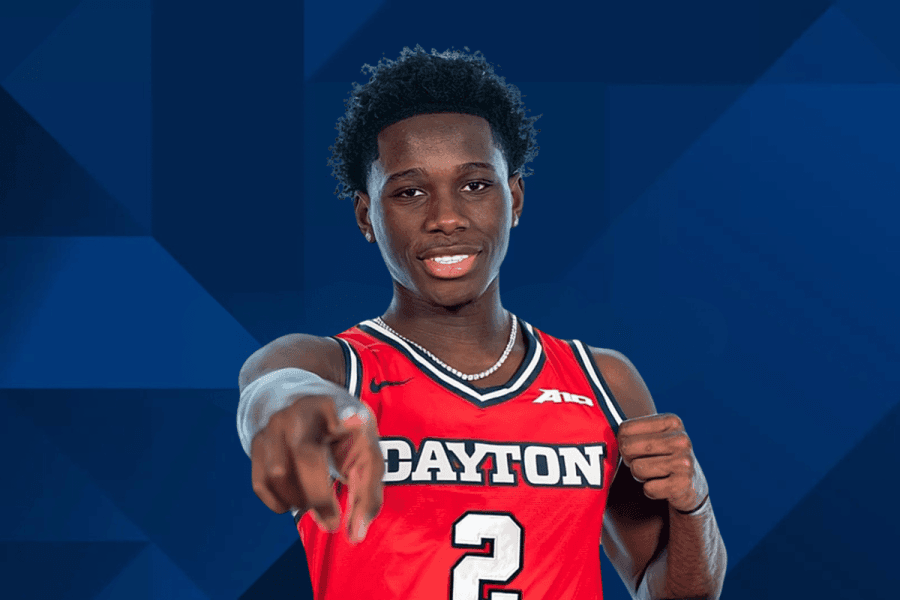
NCAA Permanently Bars Adam Njie Jr. Following Sports Betting Integrity Investigation
In one of the most consequential sports betting integrity rulings in recent college basketball history, the NCAA has permanently declared former Iona University basketball player Adam Njie Jr. ineligible for all NCAA competition. The decision follows a formal investigation that uncovered serious violations, including the sharing of insider information with bettors ahead of two games during the 2024-25 season and false claims of involvement in point-shaving schemes. The case has sent shockwaves through college athletics and reignited a national conversation about the growing threat that legalized sports betting poses to the integrity of collegiate sports.
What Did Adam Njie Jr. Do?
According to the NCAA's findings, Adam Njie Jr. shared sensitive, non-public information with individuals involved in sports betting prior to at least two games during the 2024-25 college basketball season while he was a member of the Iona University men's basketball program. This type of insider information sharing is a direct violation of NCAA bylaws, which strictly prohibit student-athletes from engaging in any activity that could compromise the integrity of athletic competition.
Beyond information sharing, Njie also falsely indicated to bettors that he would participate in point-shaving schemes — a form of sports corruption in which a player intentionally underperforms to manipulate the margin of victory for gambling purposes. While investigators did not conclusively confirm that actual point-shaving occurred during the affected games, the mere act of falsely claiming involvement in such a scheme is itself a severe violation of NCAA rules and federal law governing sports integrity.
The NCAA announced the violations publicly via its official news account on X (formerly Twitter) on June 18, 2026, confirming that the sports betting integrity violations occurred at Iona and that Njie would face permanent ineligibility as a result.
Understanding the NCAA's Permanent Ineligibility Ruling
A permanent bar from NCAA competition is among the harshest penalties the governing body can impose on a student-athlete. Unlike suspensions or conditional reinstatement pathways, a permanent ineligibility ruling means Njie cannot compete in any NCAA-sanctioned sport at any member institution for the remainder of his athletic career. This effectively ends any prospect of him returning to college athletics in any capacity.
The NCAA has made it clear in recent years that it will not tolerate gambling-related misconduct, particularly as the rapid expansion of legal sports betting across the United States has increased opportunities — and temptations — for athletes to engage in corrupt activity. The governing body has established dedicated sports wagering enforcement mechanisms, partnering with integrity monitoring services to flag suspicious betting patterns that may indicate insider activity.
The Broader Context: College Sports and the Sports Betting Explosion
The Adam Njie case does not exist in a vacuum. Since the U.S. Supreme Court's 2018 ruling in Murphy v. National Collegiate Athletic Association effectively opened the door for states to legalize sports betting, the landscape of American sports gambling has changed dramatically. Dozens of states now permit legal sports wagering, and mobile betting apps have made placing bets faster and more accessible than ever before.
For college athletes — many of whom are young, financially constrained, and deeply embedded in social networks where sports betting is normalized — this environment presents serious risks. The NCAA has responded with increased education initiatives, mandatory compliance training, and stricter enforcement protocols. Nevertheless, cases like Njie's demonstrate that violations continue to occur and that the temptation to exploit insider knowledge for financial gain remains a persistent threat.
College basketball, in particular, has a long and troubled history with gambling scandals, from the point-shaving cases of the 1950s to more recent incidents in the modern sports betting era. Each new case raises questions about what more can be done to protect the integrity of the game and shield student-athletes from exploitation by outside gambling interests.
Iona University's Role and Institutional Responsibility
While the NCAA's action targets Njie personally, the case also raises questions about institutional responsibility. Athletic programs have an obligation to educate their student-athletes about the strict prohibitions against gambling-related activity and to create an environment in which students feel empowered to report suspicious approaches from bettors or outside actors.
Iona University has not been publicly cited for institutional failures in connection with this case, but the incident underscores how important it is for athletic departments to maintain robust compliance programs, conduct regular educational sessions on sports wagering rules, and establish clear reporting channels for athletes who may be approached by individuals with corrupt intentions.
What This Means for Student-Athletes Nationwide
The permanent ban handed down to Adam Njie Jr. serves as an unambiguous warning to every student-athlete competing under NCAA jurisdiction. The rules are clear:
- Student-athletes are prohibited from placing bets on any NCAA sport, including their own sport and games in which they do not participate.
- Sharing non-public, insider information with bettors — even without placing a bet personally — is a serious violation that can result in permanent ineligibility.
- Any involvement in, or false claim of involvement in, point-shaving or match-fixing schemes will be treated as a major integrity violation with severe consequences.
- The NCAA actively monitors unusual betting patterns in collaboration with integrity monitoring partners and will investigate when red flags emerge.
Student-athletes are encouraged to immediately report any contact from individuals attempting to solicit insider information or recruit them into gambling schemes. Prompt reporting can protect athletes from becoming entangled in situations that could permanently derail their academic and athletic careers.
Final Thoughts: Protecting the Integrity of College Sports
The NCAA's decision to permanently bar Adam Njie Jr. from competition reflects the governing body's commitment to defending the integrity of college athletics in an era when the sports betting industry has never been larger or more accessible. While the ruling marks a definitive end to Njie's NCAA career, it also represents a broader message to the college sports community: the consequences of gambling-related violations are severe, swift, and irreversible. As legal sports betting continues to expand across the United States, both athletes and institutions must remain vigilant, educated, and committed to upholding the standards that make college competition meaningful.