
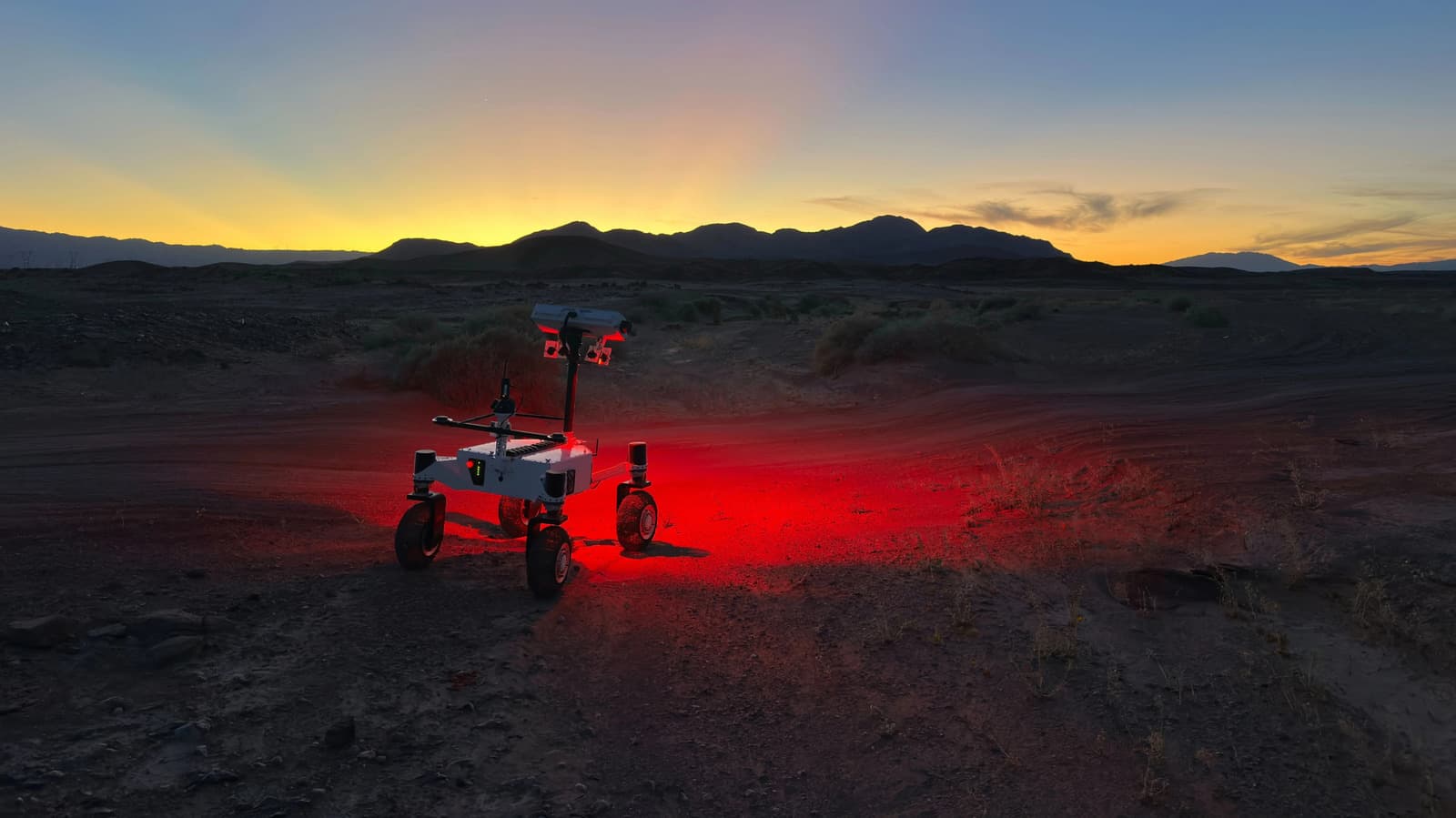
NASA's Ernest Rover Is Redefining How We Explore Other Worlds
Space exploration has always pushed the boundaries of engineering, and NASA's latest prototype rover is no exception. The agency has been quietly testing a next-generation rover called Ernest, and the results are turning heads across the aerospace community. Capable of driving at faster speeds than its predecessors and equipped with the remarkable ability to physically lift its wheels to climb over obstacles, Ernest may represent one of the most significant leaps forward in rover design in decades.
NASA recently shared footage of the prototype undergoing rigorous testing, giving the public its first real look at what the future of planetary surface exploration could look like. What many saw was not just an incremental improvement over existing rover technology — it was a fundamentally different approach to mobility on alien terrain.
What Makes the Ernest Rover Different?
To appreciate what NASA has built with Ernest, it helps to understand the limitations of current rovers. Vehicles like Curiosity and Perseverance, while extraordinary achievements in their own right, are cautious machines by design. They navigate Mars at speeds that can feel glacially slow, carefully picking their way around rocks and rough terrain to avoid getting stuck. The infamous incident in 2005, when Opportunity became embedded in a sand dune and required weeks of careful maneuvering to escape, is a reminder of how unforgiving planetary surfaces can be.
Ernest is engineered to change that dynamic in two key ways. First, it is built to travel at significantly faster speeds than current operational rovers. Greater speed means more ground covered per mission day, which translates directly into more science, more data, and greater flexibility in mission planning. Second — and perhaps more dramatically — Ernest can actually lift its individual wheels to step over or climb obstacles that would stop a conventional rover in its tracks.
The Wheel-Lifting Mechanism Explained
The wheel-lifting capability is the feature that has generated the most excitement among engineers and space enthusiasts alike. Traditional rovers rely on passive suspension systems and slow, careful driving to navigate rocky terrain. If a boulder is too large or a ledge too steep, mission controllers must plot an entirely different route, sometimes losing hours or days of valuable mission time.
Ernest takes a more active approach. Each wheel is mounted on an articulated leg-like appendage that can be raised and repositioned, almost like a limping or stepping motion. This means the rover can literally pick up a wheel and place it on the other side of an obstacle, mimicking in some ways the adaptive locomotion of legged animals. The result is a rover that can tackle terrain that would be impassable for its predecessors, opening up entirely new areas of scientific interest that were previously considered unreachable.
Why Speed Matters in Planetary Exploration
One of the least glamorous but most critical constraints in planetary rover missions is time. Mars rovers operate under strict communication windows with Earth, and every Martian sol — a day on Mars lasting about 24 hours and 37 minutes — is precious. When a rover can only travel a handful of meters per hour, mission scientists must make difficult choices about which targets to prioritize and which to pass by.
By building Ernest to move faster across open terrain, NASA engineers are effectively multiplying the scientific return of any future mission that uses this technology. A rover that can cover twice the ground in the same time period is, in practical terms, like having two rovers for the cost of one. This has enormous implications not just for Mars, but for potential future missions to the Moon, Europa, Titan, or wherever humanity's robotic scouts venture next.
Testing Here on Earth to Prepare for Other Worlds
The footage NASA released shows Ernest being put through its paces in controlled testing environments designed to simulate the kinds of surfaces it might encounter on another planet. Engineers observe how the rover's systems respond to different obstacle heights, surface textures, and incline angles, gathering data that will be used to refine the design before it could ever be considered for an actual mission.
This kind of iterative, prototype-driven development is standard practice at NASA's Jet Propulsion Laboratory and other research centers, but the capabilities on display with Ernest suggest the team is operating at a new level of ambition. The combination of speed and active wheel articulation in a single platform is not something that has been demonstrated at this scale before.
Potential Applications and Future Missions
While Ernest is still a prototype and no specific mission assignment has been announced, the technology it demonstrates has clear applications across several areas of NASA's long-term exploration roadmap. Consider the following possibilities:
- Mars Sample Return Support: A faster, more agile rover could help collect and transport samples across larger areas of the Martian surface, supporting ongoing and future sample return efforts.
- Lunar Exploration: As NASA's Artemis program expands human and robotic presence on the Moon, rovers capable of navigating the cratered, boulder-strewn lunar south pole would be invaluable.
- Ocean World Missions: Future missions to moons like Europa or Enceladus may require rovers that can handle unpredictable, icy terrain where obstacle avoidance is critical to survival.
- Crewed Mission Support: A rover that can travel farther and faster could serve as an advance scout for human explorers, surveying terrain and identifying hazards before astronauts arrive on the scene.
A Glimpse Into the Future of Rover Design
The Ernest prototype is a reminder that the science of building robots for other worlds is still very much evolving. Each generation of rover has taught engineers something new about what works, what fails, and what possibilities remain unexplored. The lessons embedded in Ernest's design — faster locomotion, active wheel articulation, improved obstacle negotiation — will almost certainly influence rover development for years to come, whether or not Ernest itself ever leaves Earth.
NASA's willingness to share test footage publicly also reflects a broader commitment to transparency and public engagement. Watching a prototype rover nimbly step over an obstacle that would have stopped its predecessors cold is the kind of moment that reminds people why space exploration captures the imagination. It is not just about the destinations; it is about the ingenuity required to get there.
Conclusion: Ernest Could Change Everything About How We Rove
NASA's Ernest rover prototype is more than a technical curiosity — it is a serious engineering statement about the future of planetary surface exploration. With its combination of enhanced speed and the groundbreaking ability to lift its wheels and climb obstacles, Ernest addresses two of the most persistent limitations that have constrained rover missions since the first wheels rolled across the Martian surface. As testing continues and the technology matures, the day when a descendant of Ernest is exploring distant worlds may be closer than we think. For anyone who has ever watched a rover photograph a Martian sunset and felt the quiet wonder of human curiosity reaching across the solar system, that is very good news indeed.