
NASA Halts Work on the Lunar HALO Module: What It Means for the Future of Moon Exploration
In a significant turn for America's lunar ambitions, NASA has formally asked Northrop Grumman to stop work on the Habitation and Logistics Outpost — better known as the HALO module. This directive marks one of the most consequential decisions in NASA's evolving Moon strategy, effectively pulling the plug on a key component of the Lunar Gateway program that had been years in the making and had already absorbed over a billion dollars in federal investment.
What Is the HALO Module?
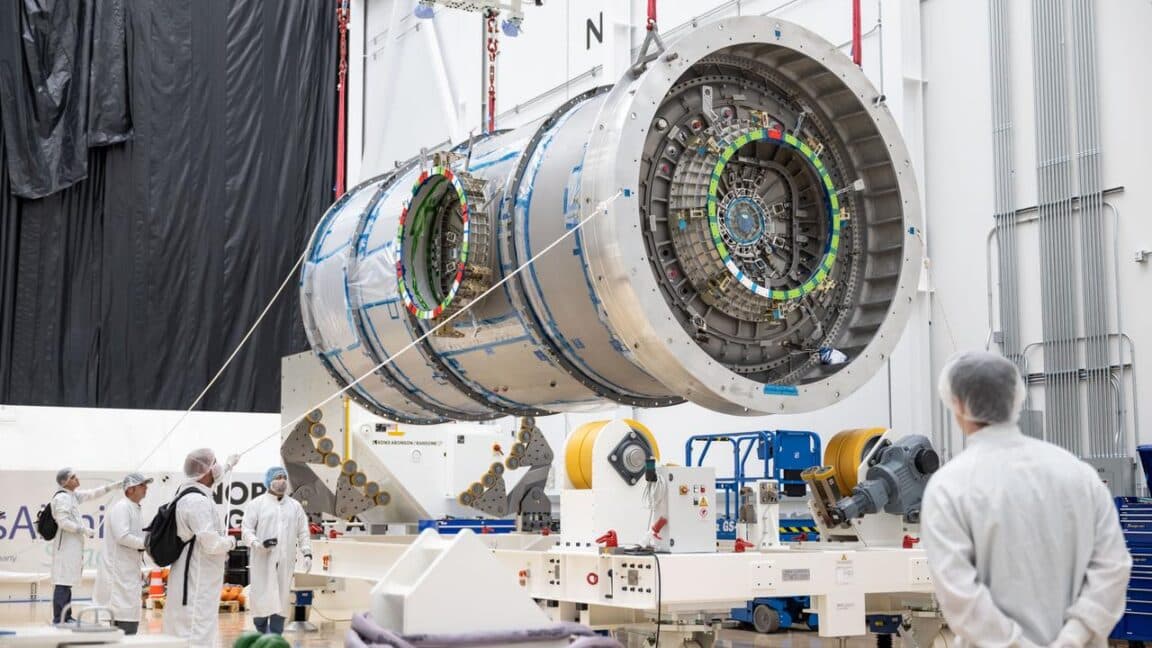
The Habitation and Logistics Outpost, or HALO, was designed to be the beating heart of the Lunar Gateway — a planned space station intended to orbit the Moon and serve as a staging point for future crewed lunar surface missions. Measuring 6.1 meters in length, the HALO module is a large pressurized living and working space where visiting astronauts would spend the majority of their time during Gateway missions.
NASA awarded contracts worth approximately $1.1 billion to Northrop Grumman to design, build, and integrate the HALO module with its companion piece, the Power and Propulsion Element (PPE). Together, these two components represented the most mature hardware in the entire Lunar Gateway program. The HALO was not just another line item on a budget sheet — it was tangible, partially constructed hardware heading toward a launch readiness milestone.
NASA's Strategic Pivot: From Orbital Station to Moon Surface Base
To understand why NASA has halted HALO development, it is essential to look at the broader shift in the agency's lunar strategy. Just three months before the halt directive, NASA held a high-profile event at its Washington, DC, headquarters where officials announced a fundamental change in direction. Rather than prioritizing a lunar orbital station, NASA declared it would redirect resources toward establishing a permanent base on the surface of the Moon.
This strategic pivot represents a profound philosophical shift. For years, the Lunar Gateway had been positioned as the cornerstone of NASA's Artemis program — a hub from which astronauts would descend to the lunar surface before returning. Now, the agency appears to view a permanent surface presence as a more compelling and cost-effective goal, particularly as competition with other space powers accelerates and budget pressures from Congress intensify.
What Happens to the Power and Propulsion Element?
While the HALO module's future has been left largely unaddressed until now, NASA had already revealed the fate of its companion hardware. The Power and Propulsion Element — the other major component of the Lunar Gateway that was furthest along in development — will not be discarded. Instead, NASA plans to repurpose it as a core module for a nuclear-electric propulsion demonstration mission in deep space.
This decision reflects NASA's broader interest in advanced propulsion technologies that could dramatically reduce transit times for future crewed missions to Mars and beyond. By converting the PPE into a testbed for nuclear-electric propulsion, the agency is attempting to salvage significant engineering investment while simultaneously advancing a technology it considers critical to long-duration spaceflight.
The Financial and Contractual Stakes
The decision to halt HALO development is not without serious financial and contractual consequences. Northrop Grumman has received over $1.1 billion under existing contracts to develop and integrate the module. Stopping work at this stage means the government must navigate contract termination procedures, assess costs already incurred, and determine what — if anything — can be salvaged or repurposed from the hardware investment made to date.
For Northrop Grumman, one of the largest aerospace and defense contractors in the United States, the halt represents a significant programmatic loss. The company had been positioning its capabilities around long-duration human habitation systems, and the HALO contract was a flagship demonstration of that expertise. While the company is unlikely to face existential consequences from this single contract loss, the decision raises questions about future NASA business and the long-term commercial viability of orbital habitation modules.
Broader Implications for the Artemis Program
The halt of the HALO module is the latest in a series of turbulent developments for NASA's Artemis program, which aims to return humans to the Moon for the first time since Apollo 17 in 1972. Artemis has already faced significant delays, cost overruns, and technical challenges across multiple mission elements, including the Space Launch System rocket and the Orion spacecraft.
Removing the Lunar Gateway from the critical path could actually streamline some near-term mission planning. Several spaceflight analysts have argued for years that the Gateway added complexity and cost to an already challenging program. Missions that had been designed to require a Gateway stop could potentially be reconfigured for direct-to-surface approaches, reducing mission duration and operational risk.
Looking Ahead: What Comes Next for NASA's Moon Plans?
NASA's pivot toward a lunar surface base raises as many questions as it answers. Key among them: where exactly on the Moon will this base be located, how will it be powered, what habitation systems will replace the HALO concept, and what is the realistic timeline for establishing a permanent crewed presence on the lunar surface?
The agency has pointed to the lunar south pole as a prime location due to the presence of water ice in permanently shadowed craters — a resource critical for sustaining long-term human habitation and potentially producing rocket propellant. However, the specific architecture for a surface base remains under development, and major hardware contracts have yet to be awarded for that effort.
Conclusion
NASA's decision to ask Northrop Grumman to stop work on the HALO module is a watershed moment in American space exploration policy. It signals a clear departure from the orbital-gateway model in favor of a more direct, surface-centric approach to lunar exploration. While the financial and programmatic costs of this pivot are real and significant, the agency appears committed to redirecting its resources toward what it views as a more sustainable and strategically valuable long-term presence on the Moon. As the details of the new lunar surface architecture come into focus, the space industry — and the world — will be watching closely.