
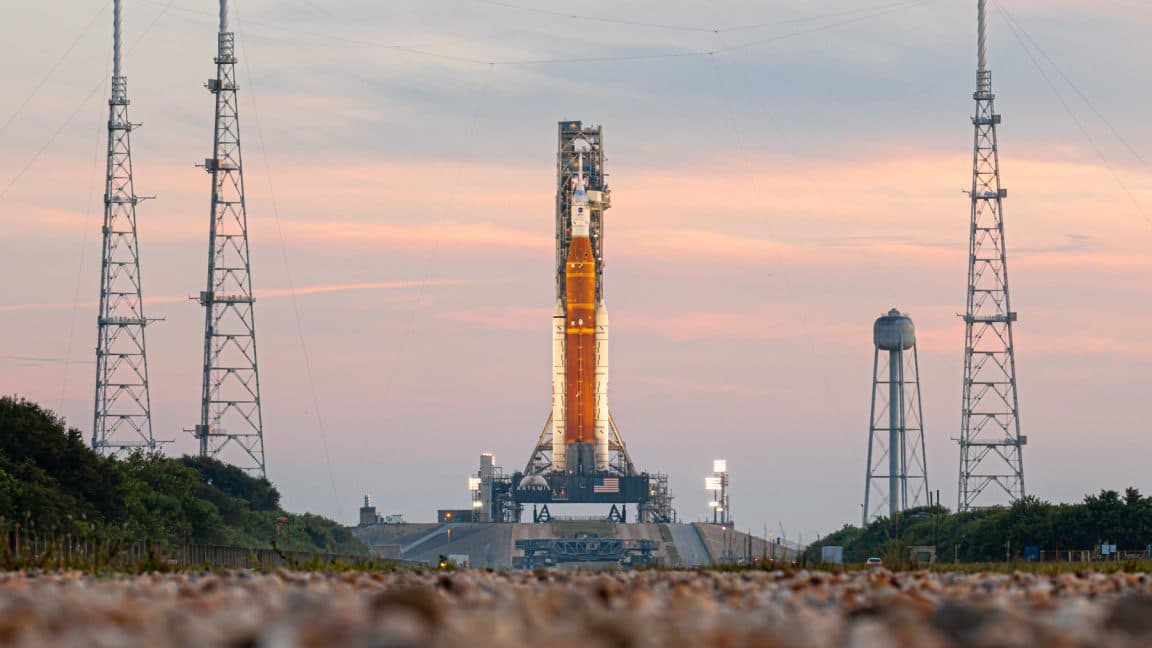
Kennedy Space Center's Aging Infrastructure Is Falling Behind the Commercial Space Race
For decades, Kennedy Space Center in Florida has stood as the crown jewel of American spaceports — the historic launchpad from which humanity first reached the Moon and from which countless missions have pushed the boundaries of science and exploration. But according to a new report from NASA's Office of Inspector General, this iconic facility is quietly struggling to keep pace with a rapidly evolving era of space travel, one defined by super heavy-lift launch vehicles and an explosion of commercial demand.
The findings paint a sobering picture: NASA's launch infrastructure is dated, increasingly strained, and may not be capable of meeting the growing needs of both government and commercial space partners in the years ahead. As SpaceX's Starship and Blue Origin's New Glenn prepare to reshape what's possible in low Earth orbit and beyond, the facilities meant to support them are showing their age.
What the NASA Inspector General Report Actually Found
The report, published by the NASA Office of Inspector General, examines NASA's launch facilities at two key sites: Kennedy Space Center in Florida and Wallops Flight Facility in Virginia. While both facilities face challenges, the report reserves its most critical observations for Kennedy Space Center, where the pressure from next-generation commercial rockets is expected to be most acute.
"NASA's launch infrastructure is vital to providing the agency, other government agencies, and commercial partners access to space for their most complex and expensive missions," the report states. "Nevertheless, NASA's launch infrastructure is dated and often does not provide the capacity to meet the growing demands of the agency and its partners."
This isn't a minor administrative concern. Kennedy Space Center underpins some of the most consequential and expensive missions ever attempted. When the infrastructure supporting those missions is described as inadequate, the implications ripple outward across every agency and company that depends on it.
SpaceX Starship and Blue Origin New Glenn Are Changing Everything
The timing of this report is no coincidence. The commercial space industry has entered a new phase, one dominated by super heavy-lift launch systems that dwarf the rockets of previous generations in both size and ambition. SpaceX's Starship — the most powerful rocket ever built — and Blue Origin's New Glenn are not simply larger vehicles. They represent a fundamentally different class of demand placed on ground support systems, launch pads, processing facilities, and surrounding infrastructure.
Both vehicles require enormous resources on the ground. From the sheer physical scale of their processing and assembly needs to the intensity of their launches — which generate unprecedented levels of acoustic energy, exhaust, and thermal stress — these rockets push existing infrastructure to its limits and often beyond them. Kennedy Space Center, built and refined largely during the Space Shuttle era, was not designed with these vehicles in mind.
The increased launch cadence that commercial operators like SpaceX now demand compounds the problem further. Where NASA once planned launches over months or even years, commercial schedules can call for launches within days or weeks of one another. Aging infrastructure that might survive a slow-paced government mission schedule can buckle under the relentless rhythm of commercial operations.
A Facility Built for Another Era
Kennedy Space Center's legacy is extraordinary. It supported the Apollo program, hosted the Space Shuttle for three decades, and has served as the primary gateway to orbit for the United States for more than half a century. But that legacy comes with a caveat: much of the underlying infrastructure reflects the engineering priorities and budget realities of the 1960s through the 1990s.
Electrical systems, processing hangars, roadways, water deluge systems, and even ground support equipment across parts of the facility reflect decades of incremental updates rather than the kind of comprehensive modernization that a new era of rocketry demands. Deferred maintenance, budget constraints, and the complexity of operating a live spaceport have all contributed to a gap between what the facility currently offers and what commercial and government partners increasingly need.
Wallops Flight Facility in Virginia, while smaller in scope and focused primarily on suborbital and smaller orbital missions, faces its own version of these challenges. The Inspector General's report flags capacity and infrastructure concerns there as well, though the scale of the issues is less acute than those at Kennedy.
Why This Matters for the Future of American Space Leadership
The United States is engaged in a new space race, not only with international competitors like China, but in a broader contest to establish the infrastructure and capabilities that will define space access for the next generation. In that context, the condition of Kennedy Space Center is not merely a facilities management question — it is a strategic one.
If NASA and its partners cannot reliably process, prepare, and launch the most advanced rockets in history from American soil, mission timelines slip, costs rise, and the competitive advantage that the United States has historically enjoyed begins to erode. Commercial companies like SpaceX have already demonstrated a willingness to build their own launch sites — SpaceX's Starbase facility in South Texas is a direct example — but the specialized capabilities and location advantages of Kennedy Space Center remain significant and worth preserving.
Investing in infrastructure modernization is, in this sense, an investment in national competitiveness.
What Needs to Happen Next
The Inspector General's report stops short of prescribing a detailed remediation plan, but its diagnosis is clear enough to point toward necessary action. Modernizing Kennedy Space Center for the super heavy rocket era will require sustained funding commitments, long-term planning, and close coordination between NASA, commercial launch providers, and Congress.
Key priorities are likely to include upgrading processing and assembly facilities capable of handling the physical scale of vehicles like Starship and New Glenn, improving launch pad infrastructure to withstand the acoustic and thermal loads these rockets produce, expanding ground support systems to accommodate higher launch cadences, and addressing deferred maintenance that has accumulated over years of constrained budgets.
None of this will be cheap, and none of it will happen overnight. But the alternative — allowing the nation's premier spaceport to fall further behind the demands being placed upon it — carries costs of its own, measured in delayed missions, lost opportunities, and diminished American leadership in a domain that is only growing more strategically important.
The Bottom Line
Kennedy Space Center remains one of the most storied and consequential places in the history of human exploration. But history alone cannot sustain a facility facing the demands of 21st-century spaceflight. The NASA Inspector General's report is a clear signal that the time for meaningful investment in launch infrastructure is now — before the gap between what exists and what is needed becomes impossible to close. As SpaceX Starship and Blue Origin New Glenn prepare to define the next chapter of space access, Kennedy Space Center must be ready to support it.