
Faraday Future's Unlikely New Chapter: From EVs to Robots
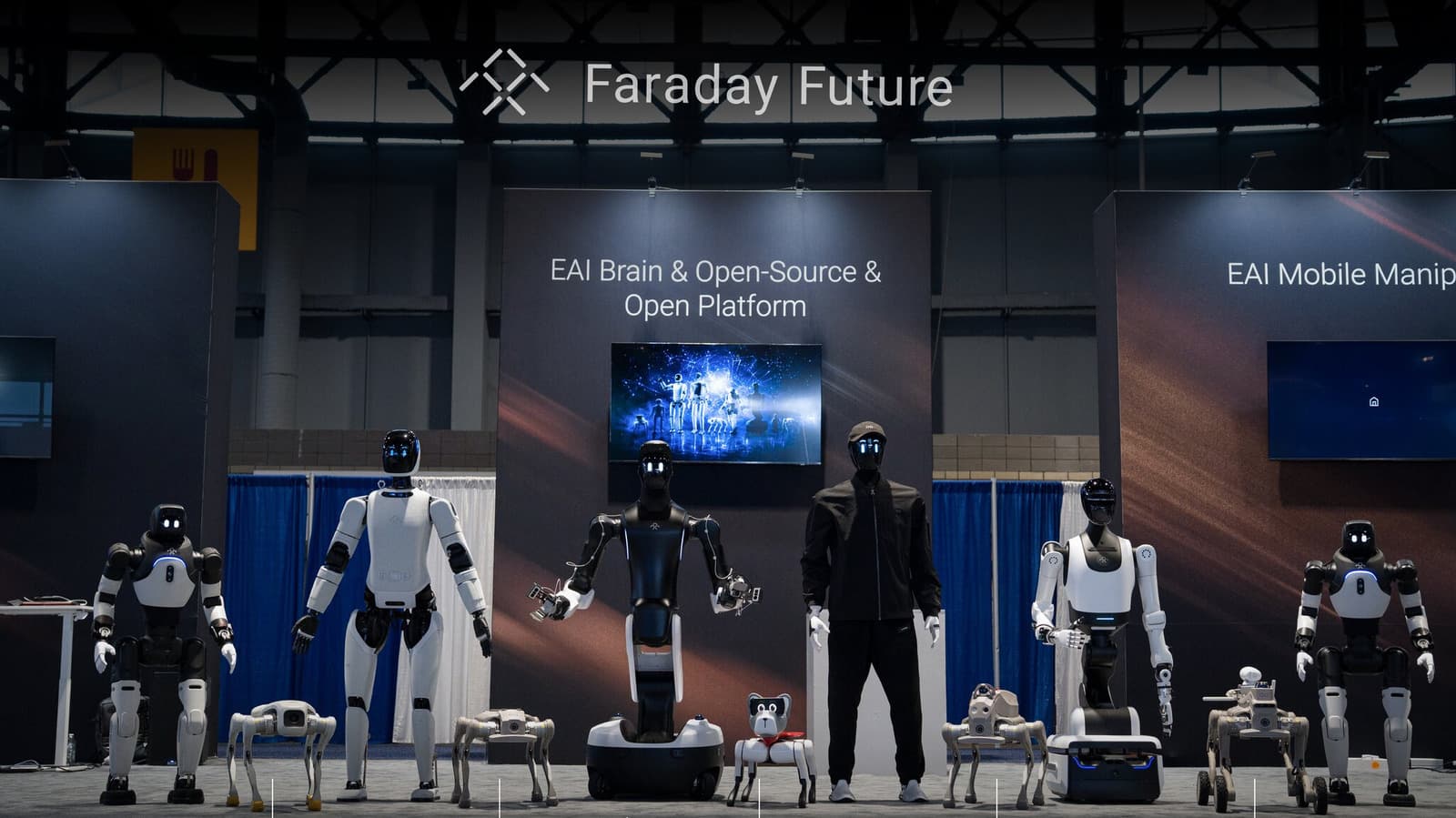
It's not every day that a company known for selling fewer than 20 cars announces it wants to become a robotics powerhouse. But that is exactly where Faraday Future finds itself in 2025. After years of financial turbulence, leadership upheaval, and a production record that barely registers as a rounding error in the broader EV industry, the California-based automaker is now pitching a lineup of robots — including humanoids and a quadruped that comes with an optional canine head. Yes, you read that correctly.
Faraday Future's story has always been one of grand ambitions colliding with harsh realities. Now, as the company attempts yet another reinvention, the question everyone is asking is simple: can they actually pull this off, or is this just the latest chapter in one of Silicon Valley's most dramatic cautionary tales?
A Brief History of Faraday Future's Struggles
To understand where Faraday Future is going, it helps to understand where it has been. Founded in 2014, the company burst onto the scene with jaw-dropping concept vehicles, bold promises about challenging Tesla, and a willingness to spend lavishly on splashy CES announcements. It once unveiled plans for a $1 billion manufacturing facility in Nevada, only to abandon the project when cash ran dry.
After years of near-bankruptcy filings, executive departures, and investor lawsuits, Faraday Future finally began delivering its flagship FF 91 luxury EV in 2023. The celebrations were short-lived. By most accounts, the company has managed to sell just over 15 vehicles — a number that even the most generous observer would describe as disappointing for an automaker that spent the better part of a decade promising to reshape the industry.
The EV market itself has grown increasingly competitive, with Tesla, Rivian, Lucid, and a wave of Chinese manufacturers all competing fiercely for buyers. For a company with Faraday Future's limited capital and production capacity, carving out a sustainable niche was always going to be an uphill battle. It appears that battle has now prompted a significant strategic pivot.
Enter the Robots: What Faraday Future Is Now Offering
Faraday Future hasn't abandoned EVs entirely — at least not officially. But the company is now actively promoting a new robotics product line that encompasses some genuinely interesting, if unproven, territory.
Humanoid Robots
Humanoid robots are arguably the hottest product category in technology right now. Companies like Tesla with its Optimus robot, Boston Dynamics, Figure AI, and a growing roster of Chinese manufacturers are all racing to bring bipedal machines to market. Faraday Future is now positioning itself as a contender in this space, though specific technical details about its humanoid offering remain limited at this stage. The company is entering a segment that has attracted billions in investment, which at the very least signals that it has identified a market with genuine momentum.
Quadruped Robots With Optional Canine Heads
Perhaps the most eye-catching element of Faraday Future's robotics lineup is its quadruped — a four-legged robot that can be optionally configured with a canine-style head. Four-legged robots have seen growing commercial traction, largely thanks to Boston Dynamics' Spot, which has found real-world applications in industrial inspection, security, and research environments. The appeal of a dog-like aesthetic is not merely novelty; it can make robots more approachable in consumer and enterprise settings alike. Whether Faraday Future's version offers comparable performance and reliability to established competitors remains to be seen.
Why This Pivot Makes a Certain Kind of Sense
On the surface, jumping from luxury electric vehicles to humanoid robots might look like a desperate move from a company running out of road. But there is a strategic logic worth examining.
First, the robotics market is still relatively open. Unlike EVs, where consumer expectations, charging infrastructure, and brand loyalty are well established, the personal and enterprise robotics space is still being defined. A company with engineering talent, even if its manufacturing track record is poor, could potentially find a foothold faster in robotics than in automotive.
Second, the valuations being assigned to robotics companies right now are extraordinary. Investors are eager to fund the next breakthrough in embodied AI and physical automation. For Faraday Future, which desperately needs capital, a credible robotics pitch could unlock funding that its EV business no longer can.
Third, there is genuine overlap in the underlying technology. Electric drivetrains, battery management systems, and software-defined hardware architectures are relevant to both vehicles and robots. Faraday Future can, at least in theory, leverage some of its existing intellectual property as it enters this new arena.
The Skeptic's View: Can Faraday Future Be Trusted to Deliver?
It would be naive to discuss Faraday Future's robotics ambitions without acknowledging the company's track record. Promises have been the one thing it has never struggled to produce. Execution is a different matter entirely. Investors, consumers, and industry observers who have followed the company's journey have seen bold announcements fail to materialize before.
The robotics industry also demands rigorous engineering, consistent software iteration, and robust supply chains — all areas where Faraday Future has historically faced serious challenges. Competing against well-funded, technically sophisticated rivals like Tesla Robotics or Figure AI will require not just vision but flawless follow-through.
What Comes Next for Faraday Future
The company has not announced firm release dates or pricing for its robotics lineup, and concrete technical specifications are still scarce. Whether this latest pivot represents a genuine transformation or simply another round of aspirational marketing will depend entirely on what Faraday Future is able to put in front of customers in the months ahead.
For now, the world's most unlikely robotics company has announced itself. The technology industry will be watching — some with hope, many with skepticism, and more than a few with a wry sense of familiarity.