
Dataland: The Dawn of a New Era in Art and Artificial Intelligence
The intersection of technology and creativity has produced countless innovations over the decades, but nothing quite as groundbreaking as what Refik Anadol Studio has unveiled in recent months. Dataland, widely recognized as the world's first museum dedicated entirely to AI arts, has officially opened its doors, marking a pivotal moment in the history of both art and artificial intelligence. Powered by Google Cloud and supported by Google Arts & Culture, this extraordinary institution is redefining what it means to experience art in the twenty-first century.
For years, artists and technologists have debated whether artificial intelligence could be a legitimate creative medium or merely a tool. Dataland answers that question boldly and visually, offering immersive, data-driven artworks that challenge perceptions, provoke emotion, and invite visitors into entirely new sensory dimensions. This is not art about technology — it is art made possible by technology, and the distinction matters enormously.
Who Is Behind Dataland?
Refik Anadol, the Turkish-American media artist and director known for his large-scale immersive installations, is the visionary force driving Dataland. His studio has spent years pioneering a practice he calls "data aesthetics," transforming massive datasets — from climate records and ocean data to cultural archives and human memories — into breathtaking visual experiences. Works like Unsupervised at the Museum of Modern Art in New York brought mainstream attention to his approach, but Dataland represents something far more ambitious: a permanent, purpose-built home for AI arts as a recognized discipline.
Anadol's philosophy centers on the idea that data is not cold or lifeless. In his hands, and through the computational power of modern AI systems, raw information becomes a living, breathing artistic material. Dataland is the fullest expression of that philosophy to date.
How Google Cloud Powers the Museum Experience
Behind every shimmering visual and flowing data sculpture at Dataland lies an extraordinary infrastructure challenge. Creating real-time, large-scale AI-generated art requires processing enormous volumes of data at remarkable speed, rendering complex visuals seamlessly, and maintaining performance across a dynamic, public-facing environment. This is precisely where Google Cloud becomes indispensable.
Google Cloud provides the computational backbone that makes Dataland's installations possible. Its infrastructure supports the machine learning models, storage systems, and real-time rendering pipelines that bring each artwork to life. Without cloud computing at this scale and reliability, many of the museum's most ambitious pieces would simply not be technically feasible. Google Cloud's involvement is not merely a sponsorship arrangement — it is a foundational partnership that shapes what the museum can create and display.
- High-performance computing resources enable real-time AI rendering across large-format displays throughout the museum.
- Scalable storage solutions allow the studio to work with datasets of extraordinary size and complexity.
- Machine learning APIs and tools support the training and deployment of the custom models underlying each artwork.
- Reliable global infrastructure ensures consistent visitor experiences regardless of demand or operational load.
The Role of Google Arts & Culture
Google Arts & Culture has long been a champion of making art accessible to wider audiences, offering virtual tours, high-resolution artwork archives, and collaborative projects with museums around the world. Its support for Dataland extends that mission into genuinely new territory. By partnering with Refik Anadol Studio on this initiative, Google Arts & Culture is signaling a commitment to recognizing AI-generated art as a legitimate and culturally significant form of human expression.
This partnership also carries implications for accessibility. Through Google Arts & Culture's platforms, elements of the Dataland experience may reach audiences far beyond those who can physically visit the museum, democratizing access to a form of art that might otherwise remain confined to a single location. In this way, the collaboration echoes the broader mission that has always defined Google Arts & Culture's work: bringing art to everyone, everywhere.
What Visitors Can Expect Inside Dataland
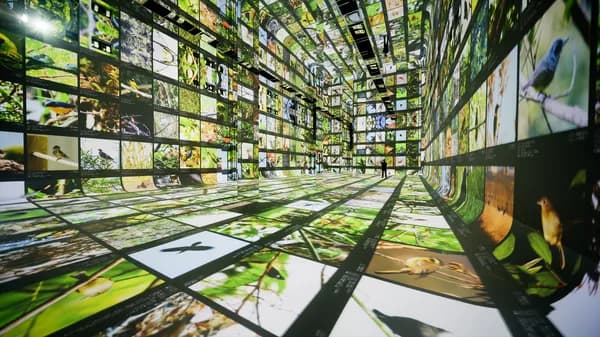
Stepping into Dataland is not like entering a traditional museum. There are no static canvases on white walls, no velvet ropes separating viewers from objects behind glass. Instead, the space itself becomes the artwork. Visitors move through immersive environments where AI-generated visuals respond to data in real time, creating an ever-changing experience that is never exactly the same twice.
One of the standout spaces is the Data Pavilion, a sweeping installation that transforms complex datasets into flowing, organic visual forms that fill entire walls and ceilings. The effect is simultaneously intimate and cosmic — a reminder that beneath the noise of modern life, there are patterns of extraordinary beauty waiting to be discovered and revealed.
Why Dataland Matters for the Future of Art
The opening of Dataland is more than a cultural event. It is an argument — made in light, color, and data — about where art is heading. As artificial intelligence becomes increasingly embedded in creative workflows across industries, the question of how we evaluate, curate, and preserve AI-generated work becomes urgent. Dataland begins to answer that question by giving AI arts a permanent institutional home and treating them with the same seriousness that any other artistic discipline deserves.
It also raises productive questions about authorship, creativity, and the relationship between human intention and machine output. These are not simple questions, but they are important ones, and Dataland provides a space where they can be explored through direct experience rather than abstract debate.
A New Chapter for Museums, Technology, and Human Creativity
The collaboration between Refik Anadol Studio, Google Cloud, and Google Arts & Culture represents a new model for what cultural institutions can look like. Dataland proves that technology companies and artists can work together not to commercialize creativity, but to expand its possibilities in ways that serve the public and push the boundaries of human expression.
As AI continues to evolve at a rapid pace, the art it enables will evolve with it. Dataland is not the final word on AI arts — it is an opening statement, and a remarkably confident one. For anyone curious about where art, technology, and human imagination intersect, it is a destination unlike any other in the world.