
ASML Fires Back at US Government Over EUV Shipment Claims
Dutch semiconductor equipment giant ASML has issued a firm denial in response to a report from the US government alleging that one of its cutting-edge Extreme Ultraviolet (EUV) lithography machines had been shipped to China. The company called the claims "inaccurate and damaging to our reputation," pushing back strongly against what it characterized as harmful rumors circulating at the highest levels of geopolitical discourse. The episode has reignited global attention on semiconductor export controls, the intensifying US-China tech war, and the central role ASML plays in the worldwide chip supply chain.
What Is an EUV Lithography Machine and Why Does It Matter?
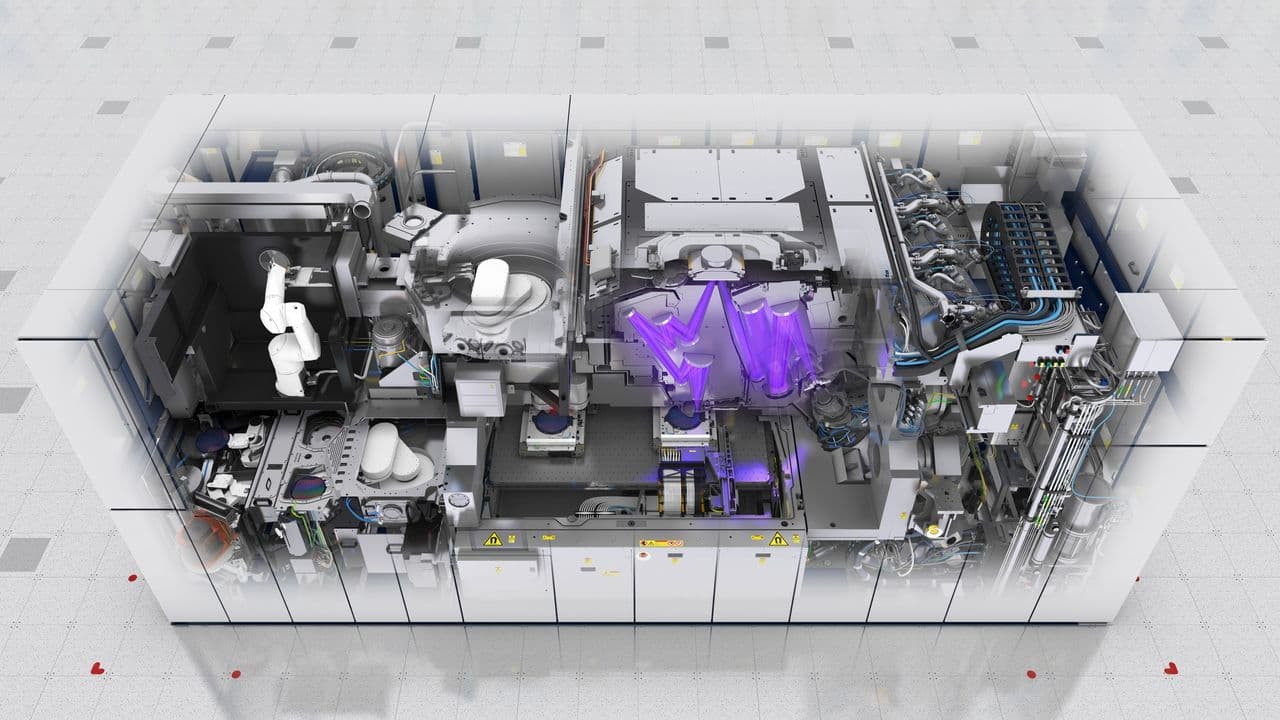
To understand why this story has sparked such widespread concern, it helps to know what EUV technology actually is and why it is considered so strategically important. EUV, or Extreme Ultraviolet lithography, is the most advanced chip-printing technology in existence. ASML is the only company in the world capable of manufacturing these machines, making it a singular chokepoint in the global semiconductor industry.
These tools use extremely short wavelengths of light to etch incredibly fine circuit patterns onto silicon wafers, enabling the production of the most advanced chips powering smartphones, AI systems, data centers, and defense technologies. A single EUV system costs upward of $150 million and contains over 100,000 components sourced from suppliers across dozens of countries. Because of their unmatched capability, EUV machines are widely considered among the most strategically sensitive pieces of technology in the world.
Access to EUV lithography is considered essential for manufacturing chips at the 7-nanometer process node and below — the territory where the most powerful modern processors are produced. Denying a country access to EUV machines is, in effect, a powerful lever for limiting that country's ability to develop cutting-edge semiconductors independently.
The US Government Report and Its Claims
The controversy began when a US government report surfaced suggesting that an ASML EUV system had made its way to China, potentially in violation of existing export restrictions. The United States has, in coordination with the Netherlands and Japan, maintained strict controls on the export of advanced chipmaking equipment to China. These restrictions have been a cornerstone of Washington's strategy to limit China's ability to manufacture the most advanced semiconductors domestically, which in turn constrains its capacity to develop sophisticated AI hardware and military technology.
If true, the alleged shipment would represent a significant breach of those controls and could have far-reaching consequences — not just for ASML, but for the entire framework of allied technology export policy that the US has painstakingly constructed over recent years. The report generated significant media coverage and prompted concern among policymakers and industry observers alike.
ASML's Denial: "Inaccurate and Damaging"
ASML did not mince words in its response. The company stated unequivocally that the reports were inaccurate, and it went further by characterizing them as damaging to the company's hard-earned reputation for compliance. ASML has long positioned itself as a responsible actor in the semiconductor space, one that takes its obligations under international export control frameworks seriously.
The company has been subject to Dutch and, by extension, European export regulations that prohibit the sale of EUV machines to Chinese customers — restrictions that were formally codified in the Netherlands' export licensing regime. ASML has publicly and repeatedly stated that it has not shipped any EUV systems to China and that it complies fully with all applicable export laws and government directives.
By labeling the claims "rumors," ASML sought to undercut the credibility of the report and reassure investors, customers, and government partners that its compliance record remains intact. For a company whose market capitalization and global standing depend heavily on trust and geopolitical goodwill, even unverified allegations of this nature carry significant risk.
The Broader Context: Semiconductor Export Controls and the US-China Tech War
This incident does not exist in a vacuum. It is the latest chapter in an ongoing and escalating battle over semiconductor technology between the United States and China. Since at least 2019, the US government has pursued a series of increasingly aggressive export control measures targeting China's access to advanced chips and the tools used to make them.
Key milestones in this effort include:
- The addition of Huawei to the US Entity List in 2019, cutting off its access to American chip technology.
- The sweeping October 2022 export controls that restricted China's ability to purchase advanced AI chips and semiconductor manufacturing equipment from American companies.
- Coordinated restrictions with allied nations, particularly the Netherlands and Japan, to prevent their companies — including ASML and Tokyo Electron — from supplying China with the most advanced chipmaking tools.
- Continued tightening of rules in 2023 and beyond, targeting even less advanced equipment that China might use to build a domestic chip industry.
Within this context, any suggestion that advanced equipment has slipped through the export control net carries enormous diplomatic and strategic weight. It would signal a failure of the multilateral enforcement architecture that Washington has worked to build and could embolden China's chip ambitions significantly.
What This Means for Investors and the Semiconductor Industry
For investors tracking ASML stock and the broader semiconductor sector, episodes like this serve as a reminder of the unique geopolitical risk that sits at the heart of the chip equipment industry. ASML generates a significant portion of its revenue from customers in Asia, and any disruption to its ability to operate freely in global markets — whether through sanctions, reputational damage, or export restriction changes — can have a material impact on its financial performance.
More broadly, the semiconductor supply chain is uniquely vulnerable to geopolitical shocks. The concentration of EUV manufacturing in a single company, in a single country, means that policy decisions and regulatory disputes involving ASML reverberate across the entire global technology ecosystem — from consumer electronics to cloud computing to national defense.
ASML's Compliance Record and Reputation at Stake
One of the most significant aspects of ASML's response is its emphasis on reputational damage. For a company operating at the intersection of advanced technology and global geopolitics, reputation is not merely a soft asset — it is a business-critical resource. ASML's ability to maintain export licenses, secure government contracts, and preserve relationships with chip manufacturers in the US, South Korea, Taiwan, and Europe all depend on being viewed as a trustworthy, law-abiding entity.
A credible allegation that it had shipped a restricted machine to China — even if ultimately proven false — could trigger regulatory scrutiny, investor unease, and diplomatic complications that take years to fully resolve. By responding quickly and forcefully, ASML made clear it intends to protect that standing aggressively.
Conclusion: A High-Stakes Dispute With Long-Term Implications
The clash between ASML and the US government report over the alleged EUV shipment to China reflects just how high the stakes have become in the global semiconductor race. Whether or not the underlying claims have any merit, the episode underscores the fragility of export control regimes, the enormous strategic value of advanced chipmaking technology, and the reputational pressures facing companies caught at the center of geopolitical competition. As governments and corporations navigate this complex terrain, the world will be watching ASML closely — not just as a technology company, but as a bellwether for how the rules of the global technology order are written, enforced, and contested.