
The Long Shadow of a Half-Blood Hunter
There are films that entertain, films that impress, and then there are films that permanently rewire the way an entire medium understands itself. Vampire Hunter D, the 1985 OVA directed by Toyoo Ashida, belongs firmly in that final, rarefied category. Based on Hideyuki Kikuchi's sprawling novel series, it introduced audiences to a brooding, half-human, half-vampire dhampir wandering a post-apocalyptic gothic frontier, and in doing so, it planted a dark, thorny seed that anime is still growing from today. Its 2000 sequel, Vampire Hunter D: Bloodlust, directed by Yoshiaki Kawajiri, watered that seed with some of the most breathtakingly fluid animation ever committed to film. Together, these two works define a creative north star that the medium's coolest, most atmospheric instincts continue to orbit.
What Made the Original Vampire Hunter D So Revolutionary
To understand the original film's impact, you have to place it in context. In 1985, anime was still largely dominated by super robot shows, shonen adventure series, and science fiction spectacles. Dark, moody, horror-inflected storytelling existed at the margins. Vampire Hunter D walked into that landscape dressed in a wide-brimmed hat, carrying a longsword, and refused to apologize for any of it.
The film borrowed liberally from Western gothic literature — Dracula, Anne Rice, the entire tradition of aristocratic vampire mythology — and fused it with samurai aesthetics, spaghetti western pacing, and science fiction world-building. The result was a genre cocktail that felt genuinely unlike anything else. D himself, silent and almost supernaturally beautiful, became an archetype: the cool, tragic antihero of ambiguous origin who operates outside the moral frameworks of the world around him. That archetype has echoed through anime for four decades.
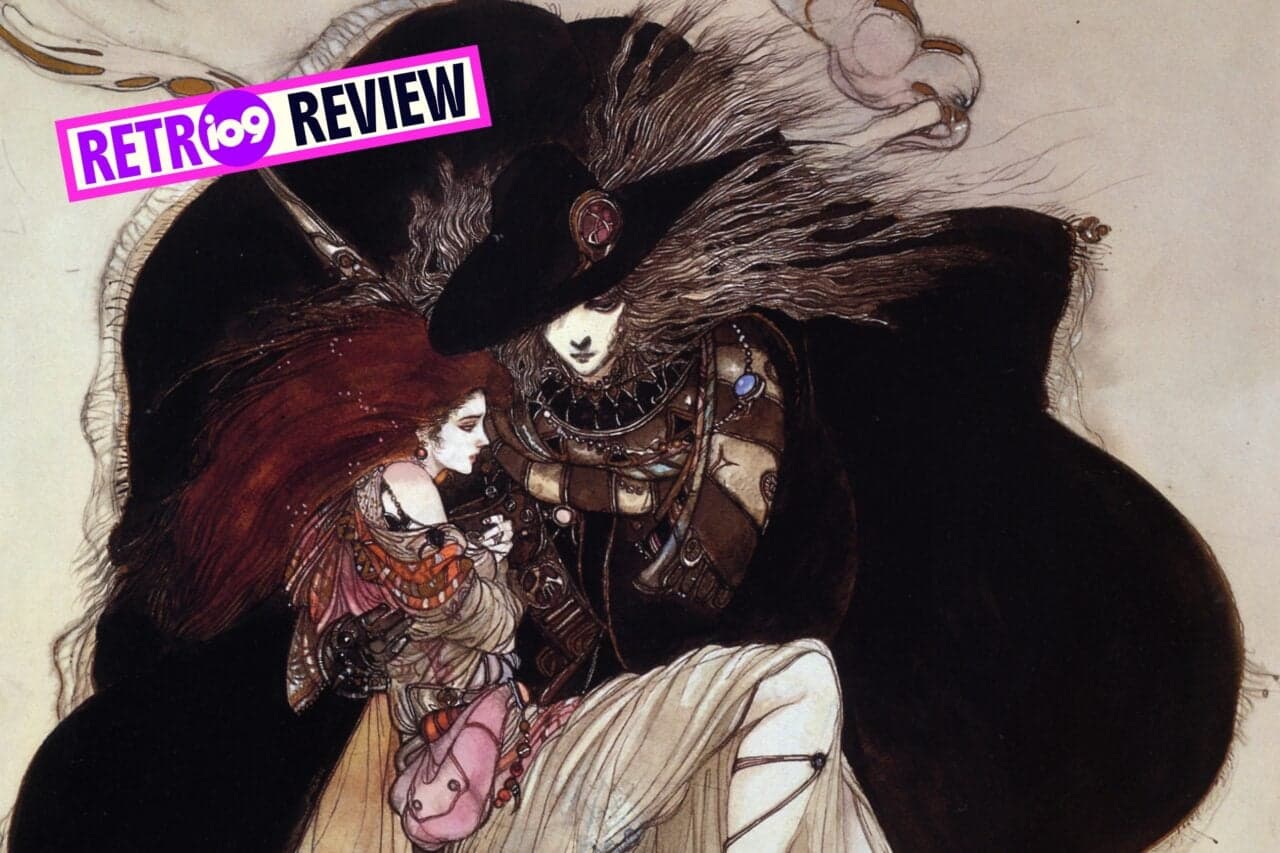
The film's visual design, led by Yoshitaka Amano's character concepts, established an aesthetic language of bone-pale beauty, flowing cloaks, and elaborate gothic architecture that would become foundational for dark fantasy anime going forward. Every anime that has ever lingered on moonlit ruins or dressed its brooding protagonist in impractical but magnificent clothing owes something to the visual grammar Amano and the production team established here.
Bloodlust Raised the Bar to an Almost Unreachable Height
If the original Vampire Hunter D planted the seed, then Bloodlust demonstrated exactly how tall the tree could grow. Fifteen years after the original, Yoshiaki Kawajiri — the visionary behind Wicked City and Ninja Scroll — brought his own ferocious kinetic energy to the franchise, and the results were staggering. Produced with a primarily American cast and an international animation crew, Bloodlust achieved a level of fluidity and detail that still makes modern viewers stop and rewind scenes just to watch them again.
The film understood something crucial that sequels often forget: escalation is not just about bigger stakes, it is about deeper beauty. The action sequences in Bloodlust are not merely fast — they are choreographed with the precision of a ballet and rendered with a painterly attention to light and shadow. The Markus Brothers, a rival team of vampire hunters D encounters throughout the film, each move with their own distinct, expressive physicality. Every fight is a miniature film unto itself.
Beyond its technical achievements, Bloodlust deepened the emotional and thematic richness of the franchise. It asked genuine questions about love across forbidden boundaries, about whether monsters are defined by their nature or their choices, and about the particular loneliness of those who exist between worlds. These are questions that resonate far beyond the gothic horror genre, and they give the film a weight that elevates it from spectacular entertainment to genuine art.
The Aesthetic DNA Running Through Modern Anime
Trace the lineage of any modern dark fantasy anime and you will find Vampire Hunter D somewhere in the roots. The influence shows up in obvious places and subtle ones alike.
- Castlevania, the Netflix animated series that revitalized Western interest in dark fantasy animation, is practically a direct descendant — gothic architecture, brooding dhampir protagonist, moral complexity layered over operatic violence. Its creator Adi Shankar has openly cited Kawajiri as a formative influence.
- Demon Slayer and its extraordinary visual ambition — the way it treats action sequences as opportunities for genuine visual poetry — carries forward the Bloodlust commitment to making combat beautiful rather than merely exciting.
- Berserk, which shares the gothic frontier aesthetic and the tormented antihero archetype, drinks from the same well of dark fantasy world-building that Kikuchi's original novels established.
- Studio MAPPA's work on series like Vinland Saga and Jujutsu Kaisen reflects an understanding that atmosphere is as important as plot — a lesson Vampire Hunter D taught in vivid, shadow-drenched detail.
Why These Films Still Matter Right Now
In an era when anime is more globally popular than it has ever been, the temptation to chase broad accessibility can sometimes sand down the medium's sharpest edges. Vampire Hunter D and Bloodlust stand as a permanent argument against that compromise. Both films are unambiguously, unapologetically cool in the way that only deeply committed artistic vision can produce. They did not ask for permission to be strange, melancholy, violent, and gorgeous all at once.
For animators, writers, and directors working today, these films remain a reminder that ambition and atmosphere are not obstacles to audience connection — they are the very things that make connection possible. Viewers respond to work that believes in itself, to aesthetics pursued with total conviction, to worlds that feel genuinely inhabited by their own internal logic and beauty.
The Standard That Keeps the Medium Reaching
Every generation of anime finds its own way to process the gothic grandeur that Vampire Hunter D unleashed. The specific visual styles evolve, the storytelling conventions shift, and the technical tools grow more powerful with each passing year. But the fundamental aspiration — to create something hauntingly beautiful, emotionally resonant, and stylistically uncompromising — remains constant. D may be a lone wanderer by nature, but his shadow stretches across the entire medium he helped to shape. As long as anime continues reaching for its coolest, darkest, most ambitious instincts, that shadow will keep falling exactly where it belongs.