
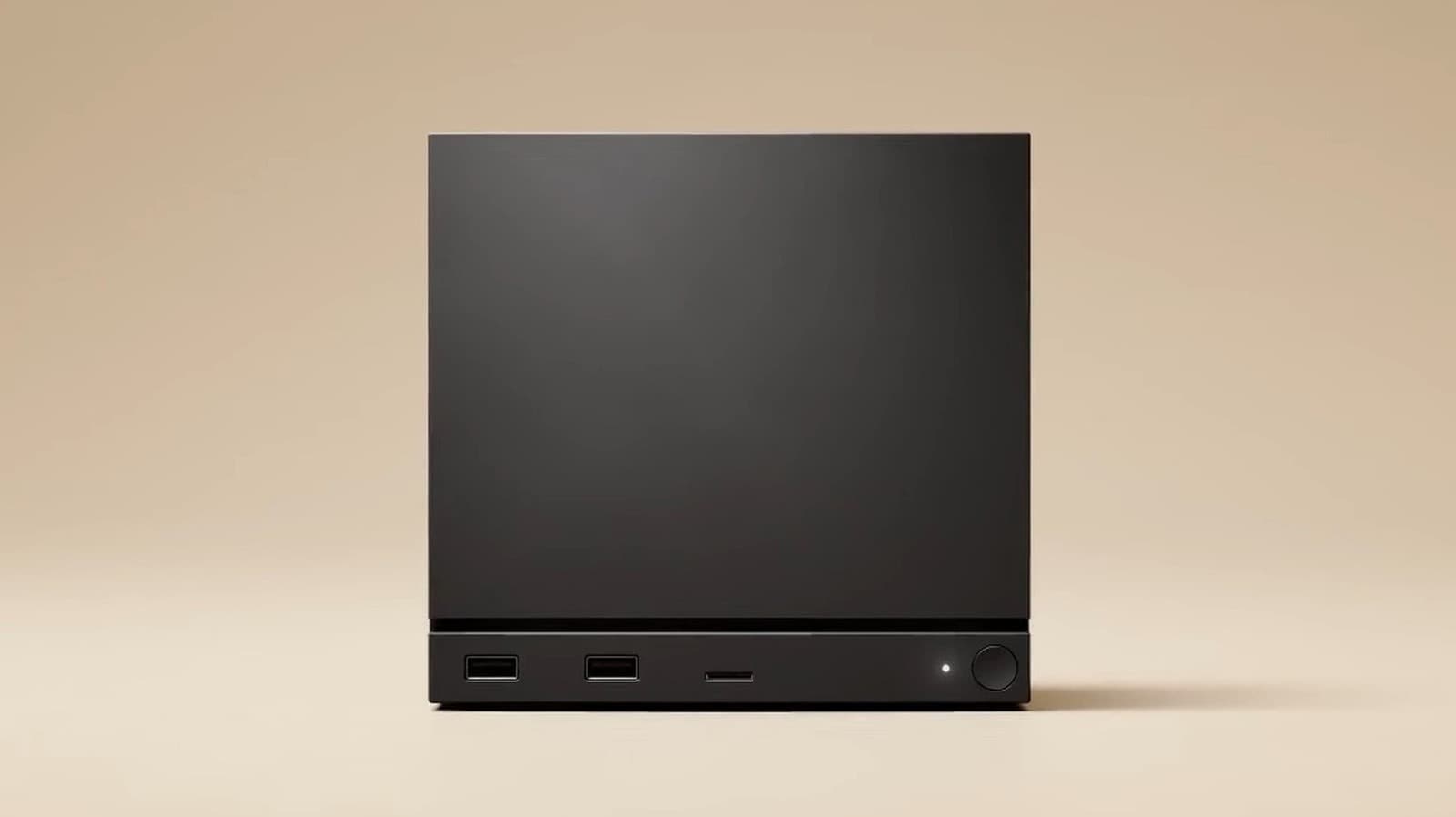
Valve's Steam Machine Is Here — But the Price Tag Will Make You Think Twice
After years of anticipation, leaks, and speculation, Valve has officially revealed pricing for its long-awaited Steam Machine — and it's not cheap. The device starts at $1,049 for a model with 512GB of storage, and that price point doesn't even come bundled with a controller. For gaming enthusiasts who have been eagerly waiting for Valve to make a serious play in the living room console space, this announcement is equal parts exciting and sobering.
So what exactly are you getting for over a thousand dollars? And is Valve's Steam Machine worth the investment compared to other gaming hardware on the market? Let's break it all down.
What Is the Valve Steam Machine?
The Steam Machine is Valve's attempt to bridge the gap between the power and versatility of PC gaming and the convenience of a living room console experience. Running on SteamOS — Valve's Linux-based operating system — the Steam Machine is designed to let players access their full Steam library from the comfort of their couch, without needing a traditional desktop setup.
Unlike the Steam Deck, which is a handheld gaming device, the Steam Machine is built for the big screen. Think of it as a compact gaming PC optimized for the living room, offering access to thousands of Steam titles with console-like simplicity. The idea has been floating around since Valve first announced Steam Machines back in 2013, and after the massive success of the Steam Deck, it seems Valve is finally ready to take another serious shot at the living room gaming market.
Steam Machine Pricing: What $1,049 Gets You
The base configuration of the Steam Machine starts at $1,049 and includes 512GB of storage. For a device in this category, 512GB is a reasonable starting point, though avid gamers who want to store multiple AAA titles locally will likely find themselves wanting more space fairly quickly. Modern games routinely exceed 50GB to 100GB in size, meaning 512GB could fill up faster than expected.
What makes the pricing sting a little more is the fact that a controller is not included in the box. For a device positioned as a living room gaming solution, that omission feels notable. Buyers will need to factor in the additional cost of a Steam Controller, a standard Xbox controller compatible with SteamOS, or any other compatible input device — adding anywhere from $30 to $70 or more on top of the base price.
How Does It Compare to the Competition?
Context matters a great deal when evaluating the Steam Machine's price. Here's how it stacks up against some of the key alternatives in the gaming hardware market:
- PlayStation 5: Sony's flagship console retails for around $499 to $549 depending on configuration. It includes a DualSense controller in the box and offers a curated, optimized library of console exclusives. At roughly half the price of the base Steam Machine, the PS5 is a much easier sell for casual gamers.
- Xbox Series X: Microsoft's top-tier console also comes in under $600, includes a controller, and gives players access to Xbox Game Pass — one of the best value propositions in gaming. Again, far less expensive than Valve's offering.
- Gaming PCs: A mid-range custom-built PC can be assembled in the $800 to $1,200 range, offering more flexibility, upgradeability, and raw performance. For tech-savvy buyers, a DIY PC might offer more long-term value.
- Steam Deck OLED: At around $549, the Steam Deck OLED gives players the full Steam library in handheld form. For those who don't strictly need the living room big-screen experience, the Steam Deck remains an extraordinary value.
Against these alternatives, the Steam Machine's $1,049 starting price is a tough sell — at least on paper. However, the target audience is likely someone who wants a premium, plug-and-play PC gaming experience in the living room without the complexity of building or configuring a traditional gaming rig.
Who Is the Steam Machine Actually For?
Despite the high price, there is a clear audience for the Steam Machine. PC gamers who have invested heavily in the Steam ecosystem — with libraries potentially worth thousands of dollars — will find real value in a polished, purpose-built device designed to run those games on a TV. The seamless integration with Steam, Big Picture Mode, and SteamOS offers a cohesion that a standard gaming PC connected to a television often lacks.
The Steam Machine also makes sense for players who want the breadth of PC gaming without diving into driver updates, component compatibility headaches, or Windows maintenance. SteamOS is designed to stay out of the way and let you play, which is a genuine quality-of-life advantage.
Storage, Expandability, and What We Still Don't Know
With 512GB as the base option, questions naturally arise about whether higher storage configurations will be available — and at what price. Valve has historically offered tiered configurations for its hardware, so it's likely that 1TB or even 2TB models could be offered at higher price points. Expandability via external drives or SD cards could also play a role in making the base model more practical for heavy users.
Details around exact hardware specifications, CPU and GPU configurations, RAM, connectivity options, and performance benchmarks are still emerging. How the Steam Machine performs across demanding modern titles and whether SteamOS compatibility covers the vast majority of Steam's library will be crucial factors in determining its real-world value.
Final Thoughts: A Bold Bet at a Premium Price
Valve's Steam Machine at $1,049 — without a controller — is a bold statement from a company that rarely makes hardware moves without careful deliberation. The price is undeniably high, especially when stacked against mainstream consoles. But for the right buyer — a dedicated PC gamer who wants a living room-ready, Steam-native experience with no compromises — it could be exactly the device they've been waiting for.
Whether the broader market agrees remains to be seen. As more specifications, configurations, and hands-on reviews emerge, the picture will become clearer. For now, Valve has signaled that it is serious about the living room gaming space — and it isn't trying to win on price alone.