
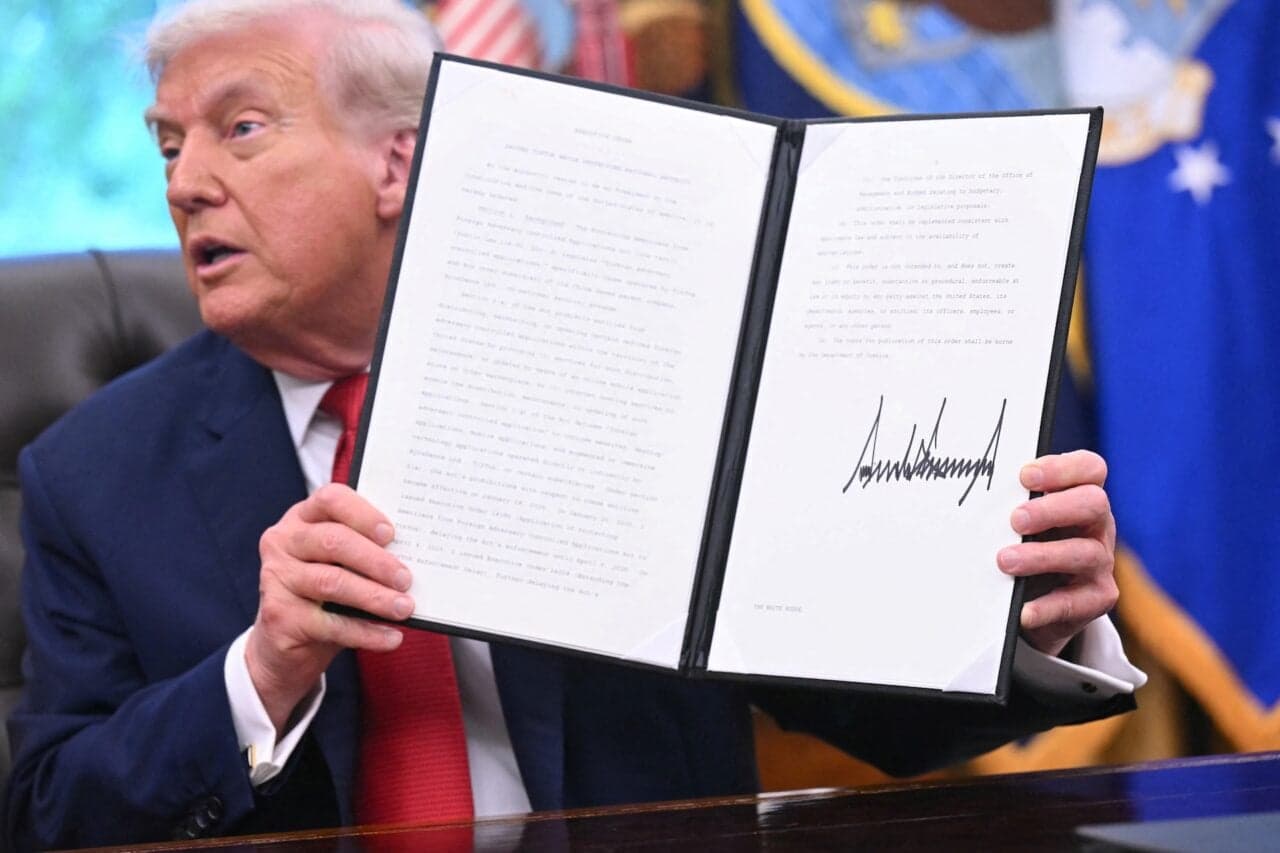
Trump Signs Two Executive Orders to Accelerate the Quantum Computing Era
In a move that signals growing urgency around next-generation technology leadership, President Donald Trump has signed two executive orders specifically aimed at hastening the arrival of the quantum computing era in the United States. While many of the actions referenced in the orders had already been set in motion, the signing represents the establishment of a formal policy framework — one that formalizes the federal government's commitment to maintaining and expanding American dominance in one of the most transformative technology races of the 21st century.
Quantum computing has long been viewed as the next great technological frontier. Unlike classical computers that process information in binary bits — either a 0 or a 1 — quantum computers use quantum bits, or qubits, which can exist in multiple states simultaneously. This property allows quantum machines to perform certain types of calculations at speeds that are simply impossible for today's most powerful supercomputers. The implications for fields like cryptography, drug discovery, logistics, artificial intelligence, and national security are staggering.
What Do the Executive Orders Actually Say?
The two executive orders signed by President Trump are primarily focused on creating a structured, government-wide policy framework for quantum computing development. Rather than introducing sweeping new initiatives from scratch, the orders codify and give formal direction to efforts that federal agencies had already begun pursuing. In other words, they put the weight of presidential authority behind a strategy that was already emerging organically across departments like the Department of Energy, the Department of Defense, and the National Institute of Standards and Technology (NIST).
The orders are designed to coordinate federal investment and research efforts, reduce bureaucratic friction in quantum-related programs, and ensure that the United States has a coherent national strategy for competing with rival nations — most notably China — in the quantum space. By signing these orders, the Trump administration is effectively declaring that quantum computing is not just a research curiosity but a matter of national priority and strategic importance.
Why Quantum Computing Is a Matter of National Security
One of the most pressing reasons governments around the world are paying close attention to quantum computing is its potential to break current encryption standards. Most of the encryption protecting sensitive government communications, financial systems, and critical infrastructure today relies on mathematical problems that classical computers would take thousands of years to solve. A sufficiently powerful quantum computer could theoretically crack these systems in a fraction of that time.
This is not a distant hypothetical. NIST has already been working for years on developing post-quantum cryptographic standards — encryption algorithms designed to withstand attacks from quantum computers. The executive orders are expected to reinforce and accelerate that work, ensuring that federal systems are transitioned to quantum-resistant encryption before adversaries can exploit vulnerabilities.
Beyond encryption, quantum computing offers enormous advantages in areas like:
- Military simulations and logistics: Quantum algorithms can optimize complex supply chains and battlefield simulations far beyond current capabilities.
- Intelligence analysis: Processing and pattern-matching across massive datasets could be dramatically accelerated.
- Weapons development: Quantum modeling could accelerate the design of advanced materials and systems.
- Cybersecurity offense and defense: Whoever achieves quantum supremacy first gains a significant advantage in cyberwarfare capabilities.
The United States vs. China: A Quantum Arms Race
The backdrop to these executive orders is a fierce and accelerating global competition for quantum supremacy, with China widely regarded as the United States' most formidable rival. Beijing has poured billions of dollars into quantum research, and Chinese institutions have published landmark research in quantum communication and quantum key distribution. China has also claimed several milestones in quantum satellite communication, creating networks that are theoretically unhackable.
The Trump administration's executive orders can be read, in part, as a direct response to this competitive pressure. By formalizing a national quantum policy, the White House is sending a signal both domestically and internationally that the U.S. does not intend to cede ground in this race. American technology companies — including Google, IBM, Microsoft, and a growing ecosystem of quantum startups — have already made significant strides, but sustained federal backing is seen as critical to maintaining that edge.
The Role of Private Industry and Research Institutions
Federal policy alone cannot win a technology race of this magnitude. The executive orders are also expected to strengthen collaboration between government agencies and private sector players. Companies like IBM and Google have achieved significant quantum milestones in recent years, including demonstrations of quantum processors with growing qubit counts and improving error-correction capabilities. Startups such as IonQ, Rigetti, and PsiQuantum are developing alternative quantum architectures that could prove transformative.
Universities and national laboratories — including Argonne, Oak Ridge, and Lawrence Berkeley — have been central to basic quantum research for decades. The new policy framework is designed to create clearer pathways for translating that foundational research into real-world applications and commercial products, with an emphasis on keeping key intellectual property and talent within the United States.
Looking Ahead: What This Means for the Quantum Future
The signing of these executive orders is unlikely to produce overnight breakthroughs. Quantum computing still faces enormous engineering challenges, particularly around qubit stability, error rates, and scalability. Achieving the kind of fault-tolerant, large-scale quantum computers needed to deliver on the technology's most ambitious promises remains years — possibly more than a decade — away.
However, the establishment of a clear federal policy framework matters enormously for long-term planning. Researchers need sustained funding commitments. Companies need regulatory clarity to invest confidently. Allies need to see a coherent American strategy if they are to coordinate their own quantum efforts with Washington.
By formalizing the United States' commitment to quantum computing through executive action, the Trump administration is acknowledging what scientists, technologists, and national security experts have been arguing for years: the quantum era is not a question of if, but when — and the nations that lay the groundwork today will be the ones setting the rules of the world tomorrow.