
Tesla's Cybercab Could Redefine EV Efficiency — Here's What We Know
Tesla has never been shy about pushing the boundaries of what electric vehicles can do, and its latest entry into the EV landscape may be its most impressive technical achievement yet — at least on paper. New regulatory filings suggest that the Tesla Cybercab, the company's highly anticipated autonomous robotaxi, could rank among the most energy-efficient electric vehicles ever produced. That's a remarkable claim in a field that already includes some of the most aerodynamically refined machines on the road. Yet despite this engineering milestone, the actual rollout of Tesla's robotaxi service has been anything but fast. So what does the Cybercab's efficiency story tell us, and why is the service taking so long to arrive at scale?
What the Filings Say About Cybercab Efficiency
Regulatory filings submitted in connection with the Cybercab's development have revealed energy consumption figures that are turning heads in the EV community. The numbers suggest the Cybercab uses significantly less energy per mile than virtually any other electric vehicle currently on the market, including Tesla's own Model 3 — long considered one of the most efficient mass-market EVs available.
Efficiency in electric vehicles is typically measured in watt-hours per mile (Wh/mi) or its inverse, miles per kilowatt-hour (mi/kWh). A lower Wh/mi figure means the vehicle uses less energy to travel the same distance, which translates directly into lower operating costs, longer range from a given battery size, and a reduced environmental footprint per mile traveled. The figures associated with the Cybercab, if confirmed in real-world testing, would place it at or near the top of any efficiency ranking for EVs in commercial or consumer use.
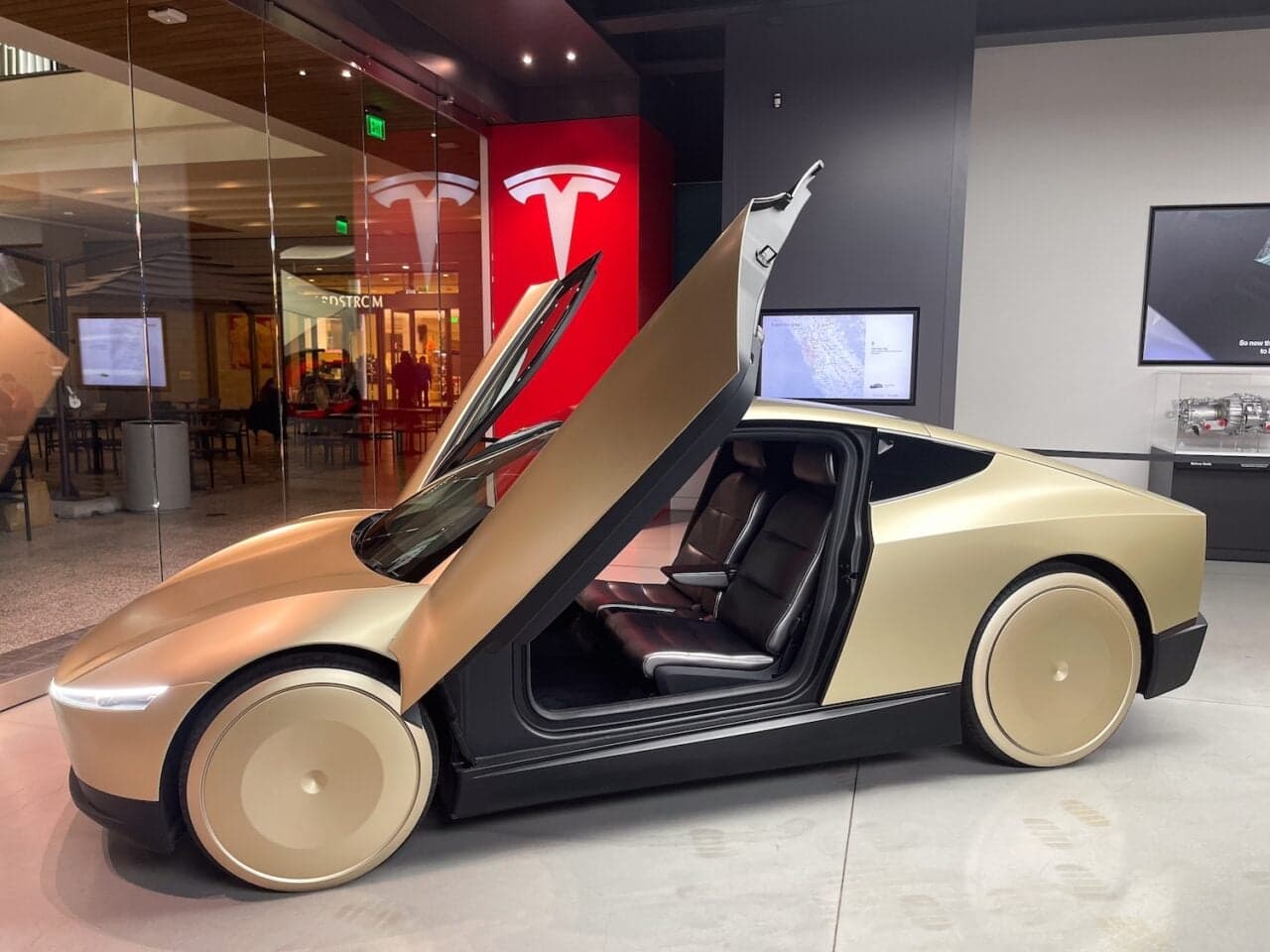
Several design decisions appear to contribute to this impressive figure. The Cybercab is a purpose-built vehicle, meaning it was designed from the ground up as an autonomous taxi rather than adapted from an existing platform. This allows Tesla's engineers to optimize every aspect of the vehicle — aerodynamics, weight distribution, powertrain configuration, and thermal management — without the compromises that come with adapting a passenger car for autonomous use.
Design Choices That Drive Efficiency
The Cybercab's two-passenger layout is a key factor. By eliminating the rear seating row and the structural elements needed to support it, Tesla can reduce the vehicle's overall weight considerably. In EVs, mass is the enemy of efficiency; every extra kilogram requires more energy to accelerate and decelerate, so a lighter vehicle will almost always use less energy per mile under comparable conditions.
The vehicle's aerodynamic profile is also purpose-optimized. Unlike traditional cars that must accommodate human ingress and egress with conventional door openings and rooflines shaped around human headroom across multiple rows, the Cybercab's compact, streamlined body can be shaped primarily around airflow efficiency. A lower drag coefficient means less energy wasted pushing air out of the way at highway speeds, which matters enormously over the hundreds of thousands of miles a commercial robotaxi might accumulate in its operational lifetime.
Additionally, the Cybercab is expected to use Tesla's latest-generation drive unit and battery technology, which themselves deliver incremental but meaningful efficiency improvements over previous generations. Combined with a vehicle that was built to take full advantage of those improvements, the result is a compounding effect that pushes total efficiency well beyond what any retrofitted or compromise-laden design could achieve.
The Robotaxi Rollout: Why Is It Taking So Long?
Despite the Cybercab's promising efficiency credentials, the broader rollout of Tesla's autonomous ride-hailing service has proceeded far more slowly than the company's earlier projections suggested. Tesla has been operating a limited robotaxi service using modified Model Y vehicles in certain markets, but expanding that service — and transitioning it to purpose-built Cybercab hardware — involves regulatory, technical, and operational challenges that don't resolve on an engineer's timeline.
Regulatory approval is perhaps the most significant bottleneck. Autonomous vehicle services must navigate a complex patchwork of state and local regulations, each with its own requirements for safety validation, data reporting, incident response, and insurance. Obtaining and maintaining those approvals across multiple markets simultaneously requires enormous legal and compliance resources, and regulators move at their own pace regardless of what a company's internal roadmap says.
Safety validation is equally demanding. Tesla's Full Self-Driving system, which underpins the Cybercab's autonomous capabilities, has made substantial progress, but operating without any human supervision — the true driverless scenario the Cybercab is designed for — requires a level of demonstrated reliability that takes time to accumulate across diverse real-world conditions. Edge cases, unusual road configurations, unpredictable pedestrian behavior, and adverse weather all need to be addressed comprehensively before regulators will authorize unsupervised commercial operation at scale.
Why Efficiency Matters More for a Robotaxi Than a Consumer EV
For a privately owned vehicle that travels perhaps 15,000 miles per year, the difference between a highly efficient EV and a merely good one might amount to a modest reduction in electricity costs. But a commercial robotaxi operates in a completely different economic environment. A Cybercab running continuous revenue-generating trips could easily accumulate 50,000 to 100,000 miles annually. At that utilization rate, efficiency becomes a major profit lever.
- Lower energy costs per mile directly improve unit economics for each ride.
- Higher efficiency can enable longer operating windows between charges, increasing the proportion of time the vehicle spends earning revenue rather than sitting at a charger.
- Reduced energy consumption lowers the vehicle's lifetime carbon footprint, an increasingly important factor for corporate and municipal fleet operators.
- Superior efficiency may allow Tesla to use a smaller, lighter, and less expensive battery pack while still delivering competitive range, further improving the vehicle's cost structure.
The Bigger Picture for Tesla's EV Strategy
The Cybercab represents more than just another entry in Tesla's vehicle lineup. It is the physical embodiment of the company's long-stated vision: a future where Tesla operates a massive fleet of autonomous vehicles generating recurring revenue around the clock. For that vision to be economically viable at scale, efficiency isn't a nice-to-have — it is foundational.
If the efficiency figures suggested by regulatory filings hold up in real-world operation, the Cybercab will give Tesla a meaningful structural cost advantage over any competitor deploying less efficient hardware. That advantage compounds over millions of miles across thousands of vehicles, potentially making the economics of Tesla's robotaxi network dramatically more attractive than those of rival services.
The slow pace of the rollout is frustrating for investors and enthusiasts alike, but the underlying technology story is genuinely compelling. A purpose-built autonomous vehicle that may be the most efficient EV ever produced is a strong foundation for a service that, once it does reach scale, could fundamentally change urban transportation. The Cybercab isn't just efficient in terms of energy — if Tesla executes well, it could prove to be one of the most efficient business vehicles ever deployed.