
The Future Is Cool — And Green: How Solid-State Air Conditioning Could Transform Our World
Summers are getting hotter. Records are being broken year after year, and the one technology most of us depend on to survive the heat — air conditioning — is quietly making the problem worse. As climate scientists warn of increasingly extreme temperatures, a new generation of engineers and startups are betting on a radical reinvention of cooling itself. Meanwhile, in a completely different field, a chemist is turning to the natural world to reimagine how we design life-saving drugs. These two stories represent something bigger than innovation — they represent a fundamental shift in how humanity might solve the problems it has created for itself.
The Hidden Climate Cost of Keeping Cool
Air conditioning is one of the modern world's most essential technologies — and one of its most environmentally costly. Today, AC systems account for roughly 7% of global electricity consumption and approximately 3% of total greenhouse-gas emissions worldwide. With heatwaves intensifying and urban populations growing, those numbers are only expected to climb. The International Energy Agency has projected that the number of air conditioners in use globally could triple by 2050, transforming cooling into one of the single largest drivers of future energy demand.
The irony is painfully clear: the hotter the planet gets, the more we run our air conditioners, and the more we run our air conditioners, the hotter the planet gets. Breaking this cycle is one of the defining engineering challenges of our era. That's why scientists and technology startups are increasingly turning their attention to a fundamentally different approach to cooling — one that could sidestep many of the problems associated with traditional refrigerant-based systems.
What Is Solid-State Cooling and Why Does It Matter?
Traditional air conditioners work by compressing and expanding refrigerant gases, a process that is effective but energy-intensive and reliant on chemical compounds that can be potent greenhouse gases if they leak. Solid-state cooling takes an entirely different approach. Rather than cycling gases, these systems move heat through solid conductive materials — with no compressors, no refrigerants, and no moving parts in the traditional sense.
The underlying physics draws on several phenomena, including the elastocaloric effect, where certain materials absorb or release heat when mechanically stressed, and the electrocaloric effect, where electric fields drive temperature changes in specific materials. The result is a cooling system that is potentially quieter, more compact, and far cleaner in its environmental footprint.
The appeal is obvious. Solid-state coolers promise to slash the emissions associated with air conditioning while delivering reliable performance in a wide range of applications — from cooling buildings and data centers to chilling medical supplies and electronics. Several well-funded startups have entered the space, backed by excitement from both the clean-tech investment community and government energy agencies eager to find alternatives to the status quo.
The Big Question: Can It Actually Compete?
Despite the enthusiasm, scientists urge caution. The central challenge facing solid-state cooling is efficiency. Conventional vapor-compression AC systems have been refined over more than a century and operate at impressive levels of thermodynamic efficiency. Matching — let alone beating — that performance with a completely new technology platform is a formidable task.
Researchers point out that while solid-state cooling works well in laboratory demonstrations and small-scale prototypes, scaling the technology up to cool entire rooms or buildings introduces significant engineering hurdles. Heat transfer rates, material fatigue over repeated stress cycles, and the sheer cost of manufacturing at scale are all open questions that the field has yet to fully answer.
- Elastocaloric materials can degrade over time with repeated mechanical cycling, raising durability concerns.
- Current solid-state systems tend to have lower coefficient of performance (COP) than mature vapor-compression systems at equivalent scales.
- Manufacturing costs for high-performance shape-memory alloys and electrocaloric polymers remain high.
- Thermal management at the system level — moving heat efficiently in and out of solid materials — requires innovative engineering solutions that are still being developed.
None of these challenges are insurmountable, and progress has been steady. But the gap between a promising laboratory result and a commercially viable product that can compete with a $300 window AC unit is wide. The next decade will be critical in determining whether solid-state cooling becomes a mainstream technology or remains a niche alternative.
Nature's Drug Designer: Lessons From Two Decades in Big Pharma
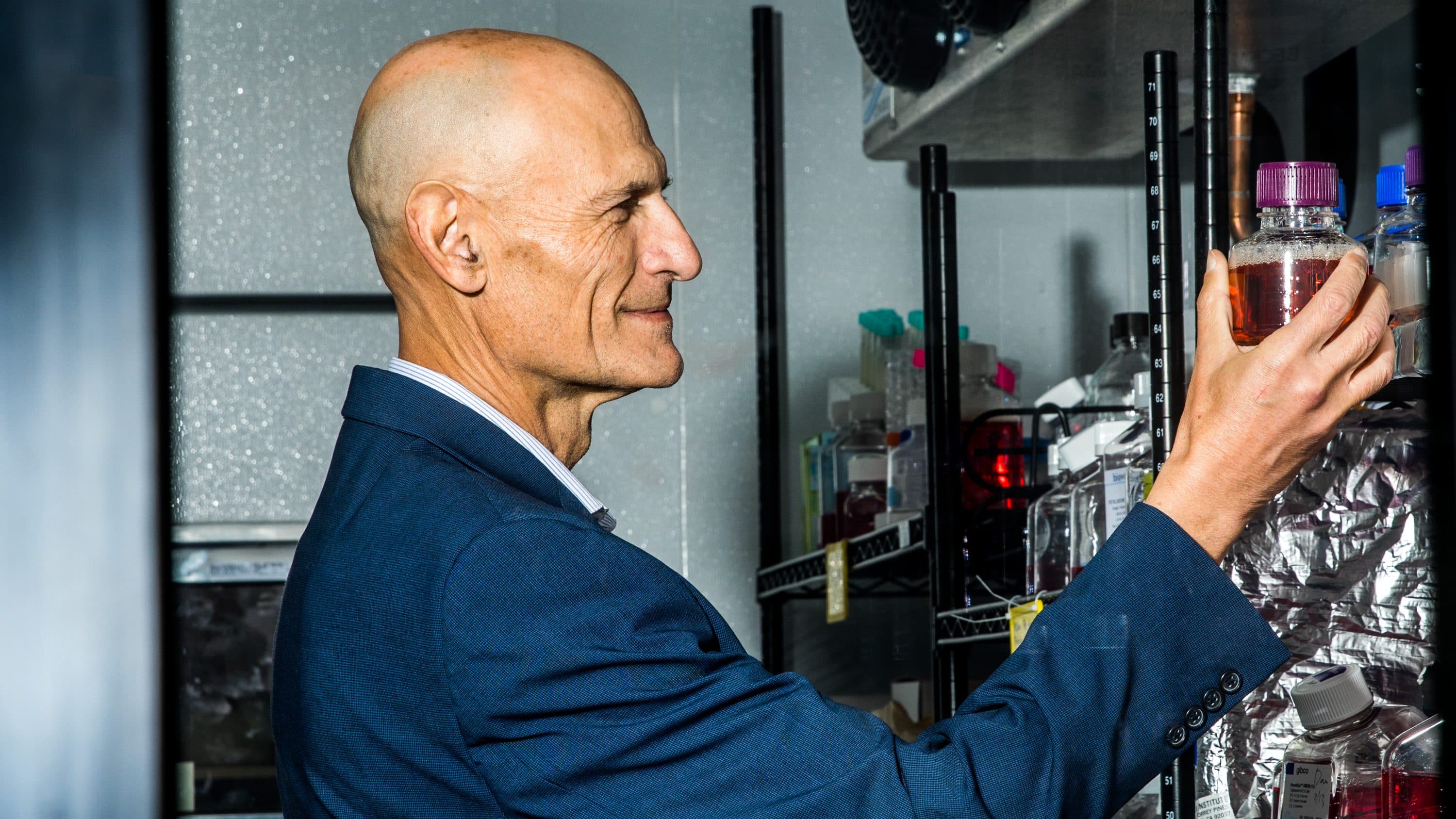
On a completely different frontier of innovation, a chemist named Tim Cernak was reaching a turning point. After nearly two decades working in the pharmaceutical industry, Cernak had seen firsthand how drug discovery — for all its scientific sophistication — often struggled with creativity and efficiency. The traditional approach to designing new molecules tends to be painstaking, incremental, and expensive. Cernak began asking a bold question: what if nature itself could be our guide?
The concept of nature-inspired or biomimetic drug design is rooted in a simple observation: living organisms have had billions of years to evolve extraordinarily complex and effective molecules. Natural products — compounds derived from plants, fungi, bacteria, and marine organisms — have been the source of many of our most powerful medicines, from penicillin to paclitaxel. What Cernak and a new generation of chemists are pursuing goes beyond simply extracting natural compounds. They are studying the logic of how nature builds molecules and applying those principles computationally and synthetically to engineer entirely new drugs.
A New Job Title for a New Era
The emergence of roles like "nature's drug designer" reflects a broader trend in which the boundaries between biology, chemistry, computation, and engineering are dissolving. Modern drug designers are part botanist, part data scientist, part synthetic chemist — drawing on machine learning tools to map the vast chemical space of natural products and identify molecular scaffolds with therapeutic potential that traditional medicinal chemistry might never have explored.
This approach has particular promise in the fight against antibiotic resistance, cancer, and neurological disease — areas where conventional drug development pipelines have struggled. By borrowing evolution's playbook, researchers hope to accelerate the discovery of novel compounds that are not only effective but also easier and cheaper to synthesize at scale.
Two Breakthroughs, One Bigger Story
At first glance, solid-state air conditioning and nature-inspired drug design seem to have little in common. But they share a unifying theme: the limits of the old way of doing things are becoming increasingly clear, and the most promising paths forward involve going back to first principles — asking not just "how do we improve what we have?" but "what would we build if we were starting from scratch?"
For cooling technology, that means moving beyond refrigerant gases to the physics of solid materials. For drug discovery, it means moving beyond the narrow chemical libraries of the past to the boundless molecular creativity of the natural world. Both fields are in the early stages of what could be genuinely transformative shifts, and both carry enormous stakes — for the climate, for human health, and for the future of innovation itself.
As engineers race to prove that solid-state AC can match the efficiency of conventional systems, and as chemists like Cernak work to unlock the medicinal secrets encoded in nature's chemistry, one thing is clear: the solutions to tomorrow's biggest problems may already exist — we just need the ingenuity to find them.