
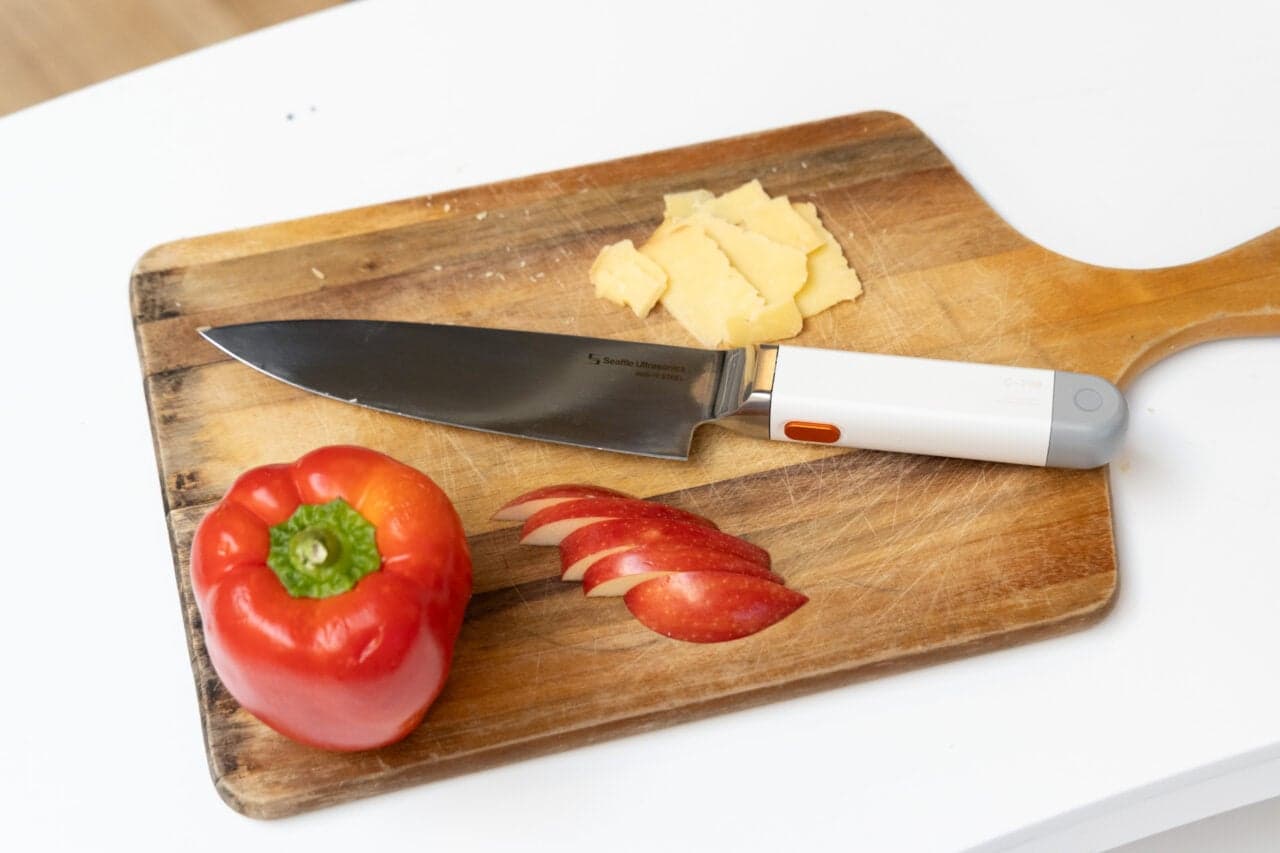
The Seattle Ultrasonics C-200: A Kitchen Knife That Vibrates at 40,000 Times Per Second
There is a certain kind of kitchen gadget that lives its entire life as a gimmick — a unitasker gathering dust in a drawer after the novelty wears off. Then there is the rare piece of gear that genuinely does something different, something that a standard tool simply cannot replicate. The Seattle Ultrasonics C-200 ultrasonic knife sits somewhere in the fascinating, complicated middle ground between those two categories, and figuring out exactly where it lands depends almost entirely on what you plan to cut.
Ultrasonic knives are not a brand-new concept. The technology has been used in food manufacturing, surgical settings, and industrial processing for decades. What Seattle Ultrasonics has done with the C-200 is bring that industrial-grade vibrating blade technology into a form factor that is actually usable in a home or professional kitchen environment. The blade oscillates at ultrasonic frequency — roughly 40,000 vibrations per second — which is far beyond what the human ear can detect and, more importantly, far beyond what most food can structurally resist.
What Is an Ultrasonic Knife and How Does the C-200 Work?
Before diving into performance, it helps to understand the mechanics. A conventional kitchen knife cuts by applying downward pressure and drag. The sharper the blade, the less force you need, but the fundamental action is still a wedge being forced through a material. An ultrasonic knife works differently. The rapid micro-vibrations of the blade essentially break the molecular bonds at the cut surface before the blade even fully passes through, reducing friction dramatically and allowing the knife to glide through materials with almost no resistance.
The C-200 pairs this vibrating blade with a handheld design powered by a dedicated transducer unit. When you switch it on, the blade hums almost imperceptibly and gets to work. The system is designed to be used as you would a standard kitchen knife, with the added benefit of that constant ultrasonic action doing the heavy lifting at the cutting edge.
Where the C-200 Genuinely Excels
Let's be direct: if you are looking for one specific use case where the C-200 earns every penny of its price tag, it is tomatoes. This might sound reductive, but anyone who has ever tried to cleanly slice a ripe heirloom tomato with a slightly dull knife understands the frustration. The tomato compresses, the skin resists, and you end up with a mangled, juice-soaked mess instead of clean, even slices. With the C-200, that problem disappears entirely. The ultrasonic vibration cuts through the delicate skin and soft interior without compression, producing slices that look like they were made by a machine in a professional kitchen.
Beyond tomatoes, the C-200 demonstrates its worth on a range of similarly challenging foods:
- Soft cheeses: Brie, fresh mozzarella, and burrata that would normally drag and tear under a conventional blade slide apart cleanly under the C-200, with no sticking and no distortion of the cut surface.
- Layered pastries and cakes: Multi-layer cakes and delicate pastries like mille-feuille, which typically crack and crumble when sliced, hold their structure beautifully when the ultrasonic blade moves through them.
- Bread with hard crusts: The vibrating action makes short work of thick, crusty sourdough without the sawing motion that standard bread knives require, reducing crumb scatter significantly.
- Sushi and rice-based dishes: Sushi rolls that tend to compress or lose their shape when cut conventionally come out with clean, professional cross-sections when the C-200 is used.
Where the Technology Shows Its Limits
Honesty requires acknowledging that the C-200 is not a universal upgrade over every knife in your block. For dense proteins — think raw chicken thighs, thick cuts of beef, or pork shoulder — the ultrasonic action offers relatively little advantage over a well-sharpened chef's knife. The vibration helps, but the limiting factor in cutting dense meat is less about surface friction and more about the structural resistance of fibrous tissue, which a sharp conventional blade handles efficiently on its own.
Similarly, hard vegetables like butternut squash or large root vegetables do not see as dramatic a benefit. The C-200 still cuts them, but if you were hoping the ultrasonic action would effortlessly glide through a dense winter squash, you may come away slightly underwhelmed. The knife is also heavier than most conventional kitchen knives due to the transducer hardware, which can cause fatigue during extended prep sessions.
Build Quality, Design, and Usability
Seattle Ultrasonics has clearly put serious engineering effort into the C-200. The construction feels durable and well-balanced for a device that houses precision electronic components alongside a cutting blade. The controls are minimal and intuitive — there is no steep learning curve here. The blade itself is stainless steel and can be cleaned normally, though care must be taken around the transducer connection point.
Setup is straightforward, and the device reaches full operating frequency almost immediately after being switched on. There is very little noise, and the vibration is not perceptible through the handle during normal use, which speaks well to the engineering quality of the dampening system.
Who Should Actually Buy the Seattle Ultrasonics C-200?
The C-200 is not a replacement for a full knife set. It is a specialist tool — and the best specialist tools are worth every cent to the people who actually need them. If you work in a professional kitchen where presentation matters and you are slicing soft, delicate, or layered foods at volume, the C-200 will meaningfully improve your output and reduce waste. If you are a home cook who takes food presentation seriously or regularly works with ingredients that defeat conventional blades, it offers genuine, demonstrable value.
If, however, you are looking for an all-in-one cutting solution or you primarily work with robust proteins and hard vegetables, your money may be better spent on a high-quality conventional knife and a good sharpening system.
Final Verdict: More Than a Gimmick — For the Right Hands
The Seattle Ultrasonics C-200 ultrasonic knife earns its place in the kitchen when deployed thoughtfully and for the tasks it was genuinely built to excel at. It is not a gimmick — the technology is real, the performance improvements in the right contexts are meaningful, and the build quality justifies serious consideration. But it is also not magic. The C-200 is a precision instrument for specific cutting challenges, and approaching it with that mindset is the key to getting real, lasting value out of one of the more genuinely interesting kitchen tools to come along in recent years.