
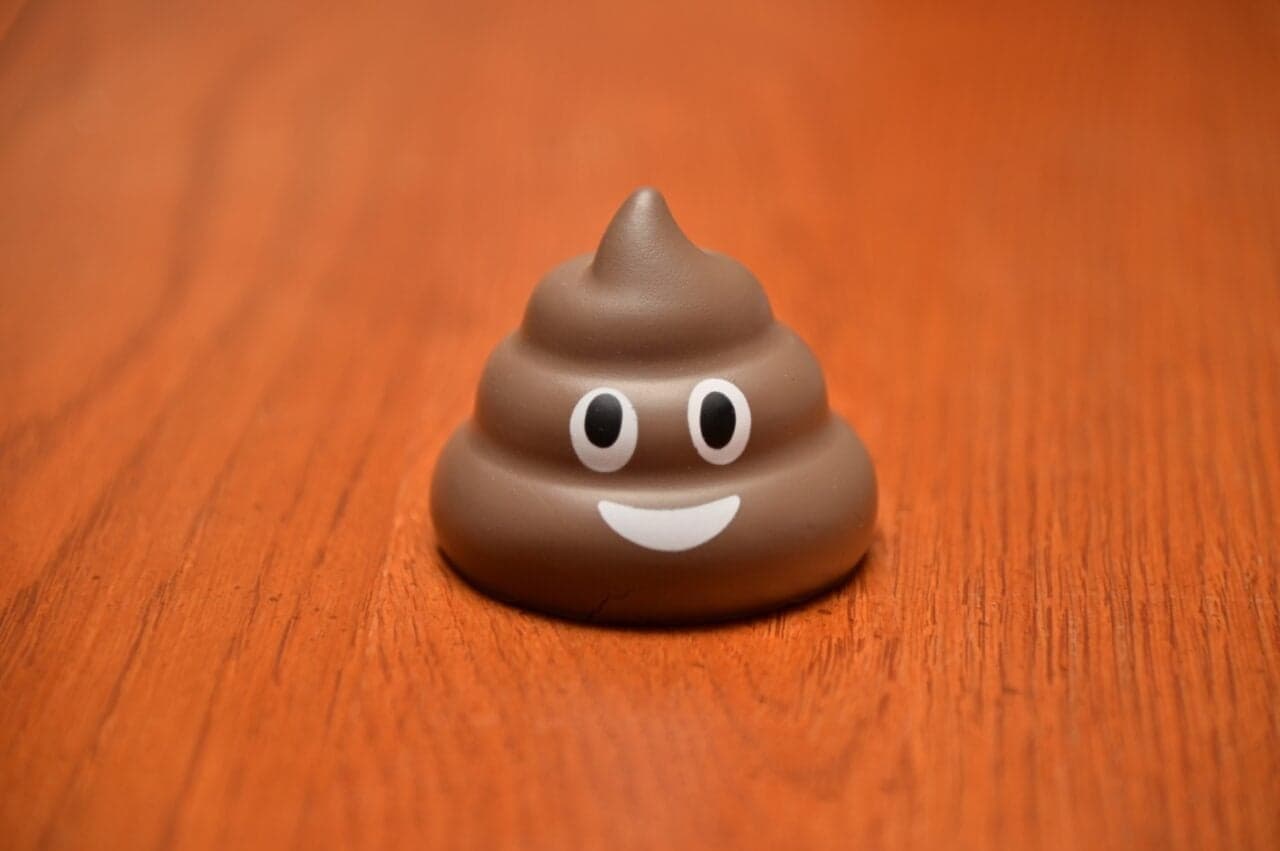
The Poop Emoji Got Gravity Right, Physicists Find
It is arguably the most universally recognized symbol on any smartphone keyboard. The swirling brown pile with wide eyes and a cheerful grin has become a cultural icon, a comedic shorthand, and — as it turns out — a surprisingly accurate piece of scientific illustration. Physicists studying the defecation habits of the humble lugworm have discovered that poop, at least in some corners of the animal kingdom, genuinely does defy gravity and stack itself into a neat, towering swirl. The universe, it seems, has a sense of humor.
The Unlikely Star of the Study: The Lugworm
The lugworm (Arenicola marina) is not what most people would consider glamorous. A segmented marine worm that burrows into the sandy mudflats of beaches and estuaries across the Northern Hemisphere, it spends its life ingesting sediment, extracting nutrients, and depositing the processed remains on the surface in coiled, ribbon-like castings. Beachgoers who have noticed those small, squiggly heaps of sand at low tide have witnessed the lugworm's handiwork — though few have ever stopped to consider the physics at play.
Researchers took a much closer look and discovered something remarkable. The lugworm's castings do not slump and spread the way you would expect a soft, moist material to behave under the influence of gravity. Instead, they stack upward, layer upon layer, forming a coiled column that defies the pull of Earth. This is not a trivial observation. It is a genuine puzzle in fluid mechanics and material science, and it points toward a broader principle governing the shape of excretions across the animal world.
Why Does Poop Defy Gravity?
To understand why the lugworm's castings behave this way, it helps to think about the material properties of what is being deposited. Poop is not a simple liquid or a simple solid — it is a complex material that can behave like both depending on the stresses applied to it. Scientists describe such materials as viscoelastic. They flow under sustained pressure but behave more like a rubber-like solid when released quickly.
When a lugworm expels its castings, the material exits in a continuous ribbon. As each new section piles on top of the last, the material below it bears a load. Rather than collapsing outward and flattening into a puddle, the casting holds its shape long enough for the next coil to settle on top. The result is a spiraling tower that can stand several times taller than you might expect given how soft and wet the material looks.
Physicists found that this behavior is not unique to the lugworm. It represents a broader pattern in the shape and structure of animal droppings across species. The combination of viscosity, elasticity, and the rate of deposition seems to govern how poop behaves in a surprisingly universal way — which brings us back to that emoji.
The Poop Emoji as Accidental Science
The classic poop emoji, introduced in Japanese mobile culture in the late 1990s and adopted globally by Unicode in 2010, depicts a swirled, upright column of brown matter. When designers created it, they were almost certainly going for visual recognition and comedic effect rather than biological accuracy. Yet the swirling, stacked shape they chose turns out to reflect real physics.
The emoji's characteristic coil implies that the material has enough structural integrity to maintain height and shape after deposition — which is precisely what researchers observed in the lugworm and in broader studies of how soft biological materials behave when extruded and stacked. Whether it was artistic intuition or sheer coincidence, the designers landed on a form that physicists now find scientifically defensible.
What This Research Actually Tells Us
Beyond the obvious delight of validating an emoji with peer-reviewed research, this line of inquiry has genuine scientific value. Understanding the material properties of biological waste has applications across several fields.
Environmental science: Lugworms play a significant role in aerating and recycling sediment in coastal ecosystems. Understanding how their castings behave helps researchers model nutrient cycling and sediment dynamics in intertidal zones.
Soft matter physics: The viscoelastic behavior observed in biological excretions contributes to a broader understanding of how complex fluids behave. This has applications in food science, materials engineering, and the design of soft robotics.
Medical research: Stool consistency and shape are established diagnostic indicators in human medicine. The Bristol Stool Scale, used by clinicians worldwide, already categorizes stool form as a proxy for gut health. A deeper physical understanding of why stool takes the shapes it does could eventually inform diagnostic tools.
Biomechanics: Studying how different animals produce and deposit waste under varying gravitational conditions offers insight into the mechanics of the digestive tract and the evolutionary pressures that shaped it.
A Reminder That Science Lives Everywhere
One of the most enduring lessons of scientific history is that curiosity about seemingly trivial phenomena often yields surprisingly profound insights. The lugworm does not appear in anyone's list of charismatic megafauna. Its daily activity — eating sand, processing it, and depositing the remains — is not the stuff of wildlife documentaries. Yet in that unglamorous routine, physicists found a window into the universal behavior of soft biological matter and stumbled upon a validation of one of the internet's most beloved symbols.
It is a reminder that the natural world is packed with physics waiting to be noticed, and that even the most unassuming creatures can upend assumptions about how matter behaves. The next time you see a lugworm casting on a beach at low tide, you are looking at a small, gravity-defying marvel — one that an emoji designer, somewhere, got surprisingly right.
The Bottom Line
Science has a long tradition of finding wonder in unexpected places, and the physics of poop is no exception. The lugworm's gravity-defying droppings have given physicists a fresh lens through which to study viscoelastic materials, coastal ecology, and the surprisingly consistent rules that govern soft matter across the animal kingdom. And in the process, researchers confirmed what millions of smartphone users have always intuitively known: the poop emoji is, in its own small way, a triumph of accidental accuracy.