
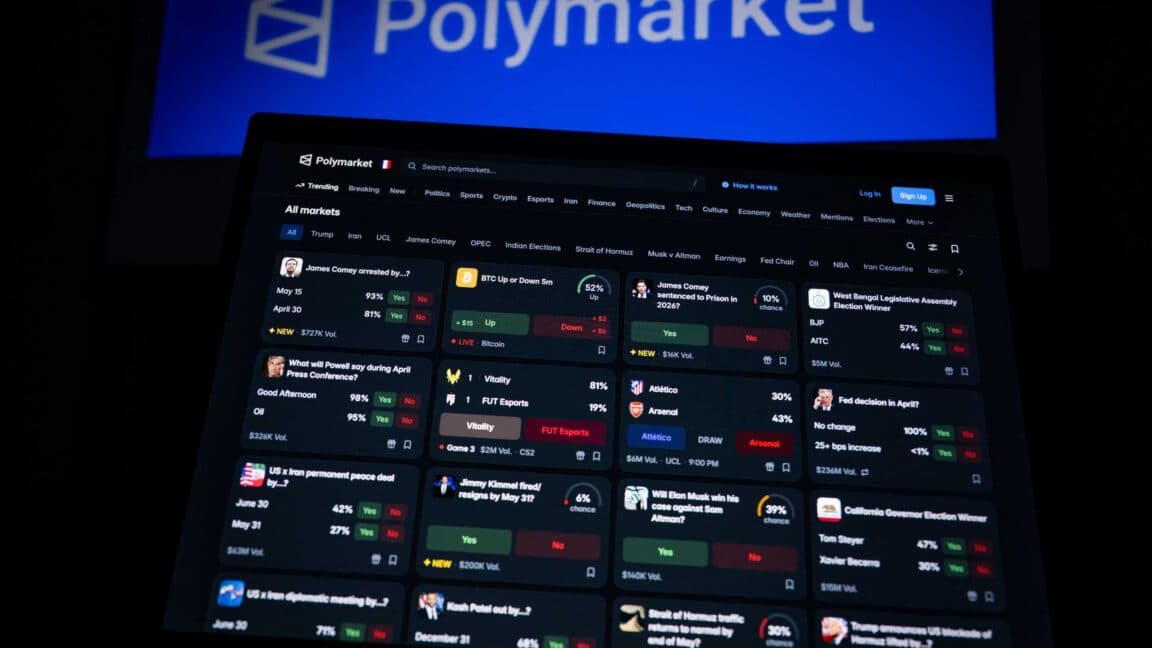
Polymarket's Viral Winning Videos Were Built on Fake Bets, Investigation Finds
If you have spent any time on social media over the past year, you may have come across a video of someone celebrating a massive win on Polymarket, the popular prediction market platform. A college student pumping his fist after turning a hunch about Donald Trump into $100,000. An ordinary person apparently beating the odds on a major political event. These videos felt electric, spontaneous, and real. According to a damning investigation published by the Wall Street Journal, they were none of those things.
The WSJ investigation, published on Saturday, revealed that Polymarket paid dozens of social media creators to film themselves making bets that never actually happened. The platform built near-perfect replica websites — dummy versions of its own product — instructed the creators to simulate trades on those fake sites, and then had them post the resulting footage without disclosing that they were paid to do so. The goal was straightforward: make prediction market gambling look like a reliable path to quick, life-changing money.
What the Wall Street Journal Investigation Actually Found
The investigation centers on how Polymarket executed what appears to be a coordinated, deceptive marketing campaign. Rather than running transparent advertisements, the company reportedly recruited content creators and supplied them with cloned versions of the Polymarket interface. These dummy sites looked identical to the real platform but did not involve actual money or real trades. Creators were then filmed "winning" large sums of money that never changed hands.
One of the most striking cases detailed in the report involves George Makihara, a college student who posted a video in January showing himself winning $100,000 on a bet that President Trump would publicly say the word "McDonald's" during that month. The clip circulated widely and appeared entirely credible. However, when the WSJ cross-referenced the video with actual trade data from the Polymarket platform, no such winning bet existed. Nobody won that wager in January — because Makihara never placed it in the first place.
According to the investigation, Makihara appeared to make 145 separate bets on Polymarket between January and May. Every single one of them was staged.
Why This Strategy Worked So Well — and Why It Matters
The effectiveness of this campaign comes down to one of the most powerful forces in modern marketing: social proof. When people see someone who looks like them — a regular college student, not a Wall Street trader — winning enormous amounts of money on what appears to be a simple prediction, the psychological pull is enormous. It lowers the perceived barrier to entry and makes the platform feel accessible, lucrative, and fun.
This is precisely what makes the deception so significant. Polymarket was not just running misleading ads that people might scroll past with skepticism. It was manufacturing the appearance of organic, peer-generated success stories. The videos were designed to look like genuine user content — the kind that tends to earn far more trust than polished brand advertising. In that sense, the campaign exploited the very credibility that makes creator content so valuable.
The fact that creators were instructed to hide their paid relationship with Polymarket adds another layer of concern. In the United States, the Federal Trade Commission requires influencers and paid promoters to clearly disclose sponsorships. Staging fake outcomes and concealing the brand relationship compounds what was already a transparency problem into something potentially far more serious from a regulatory standpoint.
Polymarket's Platform Context Makes This More Complicated
Polymarket operates as an unregulated prediction market, which is itself a point of contention in financial and legal circles. Users bet real money on the outcomes of real-world events, from elections and economic indicators to pop culture moments. The platform gained enormous mainstream attention during the 2024 U.S. presidential election cycle, drawing in casual bettors alongside seasoned traders.
Because the platform exists in a regulatory gray area in the United States, it already faces scrutiny over whether its products constitute illegal gambling or unregistered financial instruments. The revelation that it was also running a covert fake-video campaign is likely to intensify that scrutiny and draw attention from regulators who may have previously been willing to wait and watch.
What Users and Aspiring Bettors Should Take Away From This
For anyone who has seen these videos and felt tempted to sign up for Polymarket or any similar platform, this investigation is a useful reality check. A few key points are worth keeping in mind:
- Viral "winning" videos on social media platforms are not proof of a product's legitimacy or profitability. They can be — and in this case, were — entirely manufactured.
- Prediction markets carry real financial risk. Unlike the staged videos suggested, most participants do not walk away with five-figure windfalls from a single bet.
- When a platform operates outside standard regulatory frameworks, there are fewer consumer protections in place if something goes wrong with your funds or your experience.
- Undisclosed paid promotions are not just an ethical issue — they may violate FTC guidelines, which is worth knowing as a consumer evaluating the content you see.
The Broader Problem With Deceptive Marketing in Fintech and Gambling
Polymarket's alleged tactics did not emerge in a vacuum. Across the fintech and online gambling industries, aggressive user-acquisition strategies have repeatedly pushed against — and sometimes well past — ethical and legal boundaries. From misleading sign-up bonuses to cherry-picked testimonials, the pressure to grow user bases quickly can incentivize platforms to sacrifice transparency for reach.
What distinguishes the Polymarket case, if the WSJ's reporting holds up, is the sheer infrastructure involved. Building replica websites, scripting fake trades, coordinating dozens of creators, and then systematically hiding the sponsorship relationship represents a significant organizational effort. This was not a rogue influencer embellishing a result. It was, according to the investigation, a deliberate company strategy.
Final Thoughts
The Polymarket story is a reminder that the most convincing content is often the most carefully constructed. As prediction markets grow in popularity and social media continues to blur the line between authentic experience and sponsored performance, skepticism remains one of the most valuable tools a consumer can have. Before any viral video convinces you that a platform is your ticket to financial freedom, it is worth asking a simple question: did any of this actually happen?
In Polymarket's case, the answer — at least for a significant number of those viral moments — appears to be no.