
NHTSA Investigating Fatal Tesla Autopilot Crash That Killed Elderly Texas Woman Inside Her Home
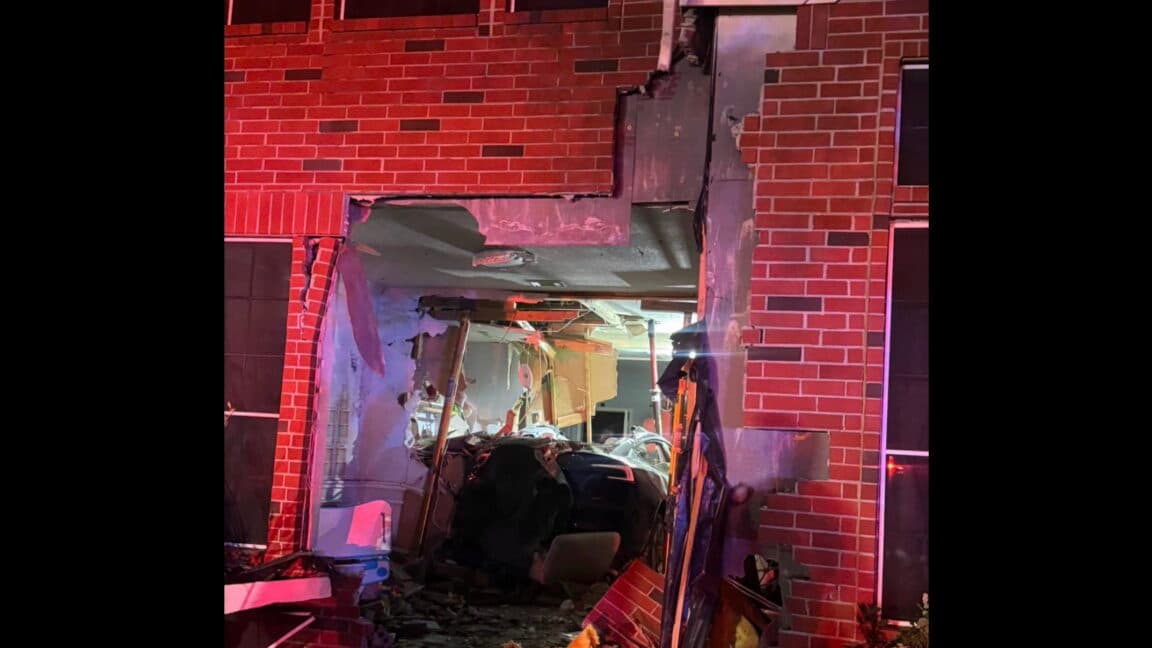
A devastating crash in Harris County, Texas, has reignited serious questions about the safety of Tesla's Autopilot driver-assistance system. An elderly woman was killed Friday after a Tesla Model 3 driver, who told police he was relying on the vehicle's automated driving-assistance mode, lost control of the car and crashed it into her family's home at a high rate of speed. The National Highway Traffic Safety Administration (NHTSA) has since launched an investigation into the incident, adding yet another case to the growing list of scrutinized Autopilot-related accidents across the United States.
What Happened: The Harris County Crash
According to a statement from the Harris County Sheriff's Office, the driver — identified as Michael Butler — told investigators that he had his Tesla Model 3's automated driver-assistance system engaged at the time of the crash. Authorities confirmed that Butler was not under the influence of alcohol or drugs and is fully cooperating with the investigation. In a particularly notable detail, Butler has been actively helping law enforcement understand how Tesla's Autopilot feature functions, suggesting the crash may hinge on a misunderstanding — or a failure — of the technology itself.
The sheriff's office stated that Butler "failed to drive in a single lane, left the roadway, and struck the residence" at a high rate of speed. The collision was fatal for an elderly woman inside the home, who had no connection to the crash or the vehicle. Her death underscores one of the most alarming potential consequences of autonomous and semi-autonomous vehicle failures: innocent bystanders bearing the ultimate cost.
NHTSA Steps In: A Pattern of Scrutiny
The NHTSA's decision to investigate this crash is consistent with its broader and intensifying oversight of Tesla's driver-assistance technologies. Over the past several years, the federal agency has opened dozens of investigations into crashes involving Tesla vehicles where Autopilot or Full Self-Driving (FSD) features were reported to be active or recently disengaged. The Harris County incident fits a troubling pattern that regulators, safety advocates, and consumers have been tracking closely.
Tesla's Autopilot is marketed as an advanced driver-assistance system capable of steering, accelerating, and braking automatically within its lane. However, Tesla consistently emphasizes that Autopilot requires active driver supervision at all times and is not a fully autonomous driving system. Critics argue that the system's name — "Autopilot" — and some of Tesla's marketing language may encourage over-reliance by drivers who mistakenly believe the car can operate without their full attention.
The Broader Debate: Are Autopilot Features Safe Enough?
The death of the Texas woman has once again thrust the debate over automated driving technology into the spotlight. Proponents of self-driving and driver-assistance technology argue that, statistically, automated systems have the potential to reduce human error, which accounts for the vast majority of traffic fatalities each year. Tesla has long maintained that vehicles with Autopilot engaged are involved in fewer accidents per mile driven than those without it.
However, critics and safety researchers counter that these statistics can be misleading. The conditions under which Autopilot is typically engaged — highways, clear weather, straightforward driving environments — are inherently safer than the full range of driving scenarios humans navigate every day. When Autopilot fails in edge cases, the results can be catastrophic, as this latest crash tragically demonstrates.
Among the key concerns raised by safety experts are:
- Driver complacency: Automated systems can lull drivers into a false sense of security, reducing their alertness and reaction times when manual intervention becomes necessary.
- System limitations: Current driver-assistance technologies, including Tesla's Autopilot, can struggle with unusual road conditions, unexpected obstacles, and complex intersections.
- Insufficient safeguards: Critics argue that Tesla and other automakers have not done enough to ensure drivers remain fully engaged when automated systems are active.
- Misleading naming conventions: Terms like "Autopilot" and "Full Self-Driving" may create unrealistic expectations among consumers about the level of automation actually present in their vehicles.
Tesla's History With NHTSA Investigations
This is far from the first time Tesla has found itself under the federal microscope. The NHTSA has previously ordered Tesla to conduct recalls related to its Autopilot and FSD software, citing concerns over inadequate controls to prevent misuse. In late 2023, Tesla issued a significant over-the-air software recall affecting millions of vehicles after NHTSA determined that the FSD Beta system allowed unsafe driving behaviors, including rolling through stop signs and disobeying traffic signals.
Each new incident involving Tesla's automated systems adds pressure on both the automaker and federal regulators to establish clearer standards for how driver-assistance technologies should operate, what limitations must be communicated to consumers, and what safeguards must be in place before these systems are deployed on public roads.
What This Means for Tesla Drivers and the Public
For the millions of Tesla owners currently using Autopilot or FSD features, this crash serves as a sobering reminder that these systems are tools to assist — not replace — human drivers. Regardless of what the NHTSA investigation ultimately concludes about the role of Autopilot in this specific crash, the fundamental message from safety authorities remains consistent: drivers must keep their hands on the wheel, eyes on the road, and minds engaged at all times, even when automation is active.
The elderly Texas woman who died inside her own home never had a chance to make any decision about autonomous vehicle technology. Her death is a reminder that the consequences of getting this technology wrong extend far beyond the drivers who choose to use it. As NHTSA's investigation moves forward, the outcome could have significant implications for how Tesla's Autopilot system is regulated, restricted, or redesigned in the months and years ahead.
Conclusion: A Turning Point for Automated Driving Safety?
The fatal crash in Harris County may prove to be another critical inflection point in the ongoing story of autonomous and semi-autonomous driving in America. With the NHTSA investigation underway, all eyes will be on the findings — and on what actions, if any, follow. For now, the tragedy stands as a powerful and painful illustration of the stakes involved as society navigates the complicated transition toward automated transportation. The road ahead demands not just smarter technology, but smarter, more responsible deployment of that technology — with human lives hanging in the balance.