
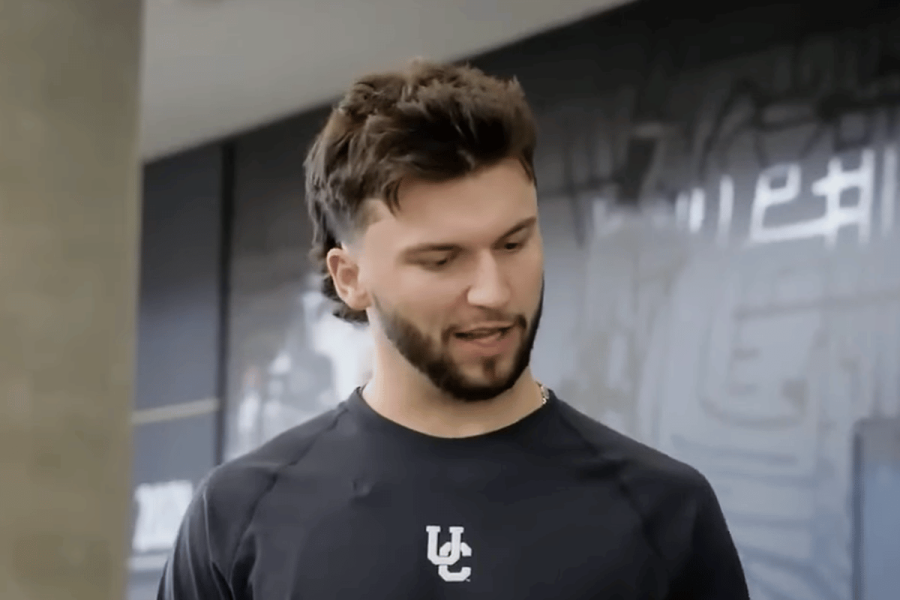
NFL Rejects Brendan Sorsby's Supplemental Draft Petition
In a significant decision that has sent ripples through college football and NFL prospect circles, the National Football League officially denied quarterback Brendan Sorsby's request for special eligibility to enter the league through a Supplemental Draft. The league's rejection, communicated in a formal letter dated June 23, 2026, effectively closes what many hoped would be an alternative pathway to professional football for the former college signal-caller. The decision hinges on two distinct factors: the specific circumstances surrounding Sorsby's NCAA ineligibility and the league's determination not to conduct a Supplemental Draft at all in 2026.
What Is the NFL Supplemental Draft?
To fully understand the weight of this decision, it helps to know what the NFL Supplemental Draft actually is and why it matters. Unlike the standard annual NFL Draft held each spring, the Supplemental Draft is a secondary process reserved for players who become ineligible for the regular draft cycle due to extraordinary circumstances. These circumstances typically include situations where a player loses their college eligibility after the standard draft deadline has already passed — through academic issues, violations of NCAA rules, or other unforeseen events.
Teams that select players in the Supplemental Draft must forfeit their corresponding pick in the following year's regular draft, making it a high-stakes decision. Historically, it has been used sparingly and reserved for genuinely exceptional cases. The NFL is not obligated to hold one every year, and in 2026, the league has elected not to do so — a decision that compounded Sorsby's situation significantly.
Who Is Brendan Sorsby?
Brendan Sorsby emerged as a notable college quarterback whose arm talent and playmaking ability drew attention from NFL scouts. His trajectory, however, took a complicated turn amid questions surrounding gambling — a topic that has increasingly become a flashpoint across both college and professional football in recent years. Sorsby previously attracted headlines for his involvement in a legal dispute connected to Texas Tech and the Big 12 Conference, with reports indicating his path to the NFL had already become contentious well before the Supplemental Draft petition was filed.
His petition for Special Eligibility, dated June 16, 2026, represented an attempt to find a formal route into the NFL despite losing his NCAA eligibility. That petition was reviewed and ultimately denied by NFL Management Council General Counsel Lawrence P. Ferazani Jr., whose June 23 letter made the league's position unambiguously clear.
The Gambling Questions That Won't Go Away
One of the most consequential elements of Sorsby's case is the persistent gambling-related scrutiny that has surrounded it. While the full details of the NFL's internal review have not been made entirely public, the league's decision to deny eligibility is widely understood to reflect concerns about the circumstances under which Sorsby lost his NCAA standing. Gambling integrity has become one of the most sensitive issues in professional sports, particularly after a wave of high-profile cases involving NFL players and college athletes in recent seasons.
The NFL has strict policies regarding gambling, and the league takes a firm stance on anyone connected to activities that could compromise the integrity of the game. Whether or not Sorsby himself is accused of direct wrongdoing, the cloud of gambling-related questions appears to have played a meaningful role in the league's reluctance to fast-track his entry. For a league already navigating a complex landscape around sports betting — which has simultaneously become a major revenue source and a significant compliance risk — the optics of admitting a player with unresolved gambling questions through a special eligibility process would be difficult to justify.
The League's Dual Rationale for Denial
The NFL's rejection rests on two stated pillars. First, the specific nature of Sorsby's NCAA ineligibility does not appear to meet the threshold the league requires for special eligibility consideration. The Supplemental Draft was never intended as a blanket remedy for all cases of lost eligibility — it is meant for truly exceptional circumstances that fall outside a player's reasonable control. Second, and perhaps most practically, the NFL has simply chosen not to hold a Supplemental Draft in 2026, making the point somewhat moot regardless of eligibility status. Even if Sorsby had met the criteria, there would be no mechanism through which teams could select him this year.
What Happens Next for Sorsby?
With the NFL's door firmly closed for the 2026 season, Sorsby's options are limited but not entirely exhausted. He could potentially explore opportunities in other professional leagues, such as the Canadian Football League or the United States Football League, as a means of maintaining competitive football while waiting for the 2027 NFL Draft cycle. Alternatively, legal challenges related to his NCAA ineligibility could theoretically open new avenues, though those processes tend to be lengthy and uncertain.
- Competing in an alternative professional league such as the CFL or USFL to stay active and build a professional résumé.
- Waiting for the 2027 NFL Draft, assuming eligibility concerns are resolved or no longer disqualifying under standard draft rules.
- Pursuing further legal action related to the circumstances of his NCAA ineligibility, potentially through the court system or arbitration.
- Engaging in private workouts and staying visible to NFL scouts in anticipation of a future opportunity.
Broader Implications for College Athletes and NFL Eligibility
The Sorsby case is a timely reminder of how fragile the path from college football to the NFL can be — and how gambling-related issues in particular carry outsized consequences in today's sports environment. As sports betting continues to expand legally across the United States, the number of athletes exposed to gambling-adjacent situations is likely to grow. Leagues like the NFL are simultaneously embracing betting partnerships for financial gain while holding individual players and prospects to an increasingly strict standard of conduct.
This creates a paradox that athletes, agents, and college programs are only beginning to fully grapple with. For prospective NFL players, the lesson from Sorsby's case is clear: any connection to gambling activity — even indirect or disputed — can have career-defining consequences that extend far beyond the college level.
Final Thoughts
The NFL's rejection of Brendan Sorsby's Supplemental Draft petition is more than a single athlete's setback. It is a window into how the league manages eligibility, integrity concerns, and the growing influence of gambling on the sport at every level. Until the questions surrounding his case are fully resolved, Sorsby's NFL dream remains on hold — a cautionary tale for a generation of college athletes navigating an era where the boundaries between the game and the betting markets have never been more blurred.