
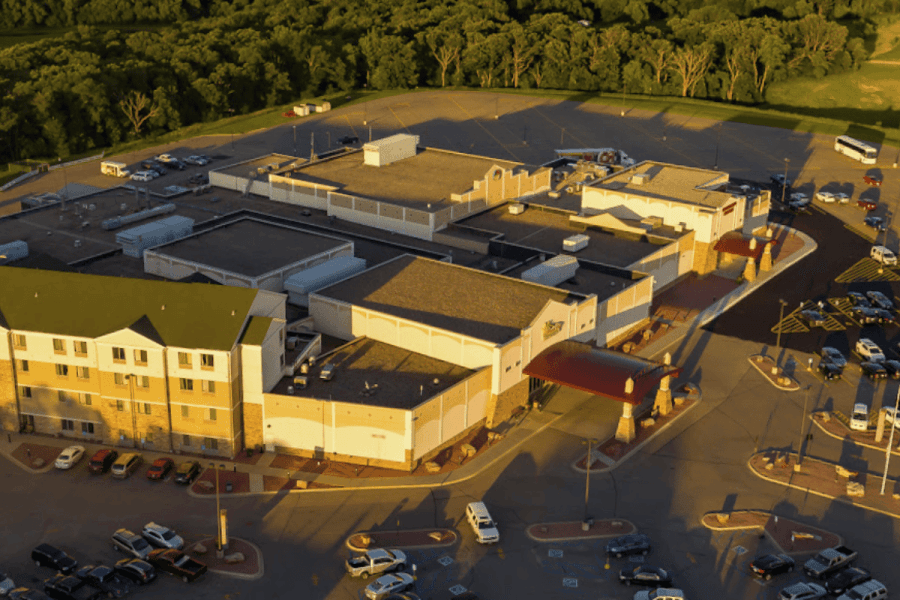
Minnesota Judge Backs Upper Sioux Casino Solar Project While Preserving Cooperative Power Service
A Minnesota administrative law judge has issued a landmark recommendation that strikes a delicate but meaningful balance: allow the Upper Sioux Community to move forward with a major solar-and-battery energy installation at its Prairie's Edge Casino Resort, while also requiring that the Minnesota Valley Cooperative Light & Power Association continue providing electricity to the tribe. The ruling, if adopted, could serve as an important precedent for how tribal nations across the United States pursue energy sovereignty without triggering punitive responses from incumbent utility providers.
Understanding the Dispute at the Heart of the Case
The conflict at the center of this case is one that many tribal communities across the country will recognize. The Upper Sioux Community, a federally recognized Native American tribe in southwestern Minnesota, decided to invest in on-site solar generation and battery storage to reduce its dependence on grid power and lower energy costs at Prairie's Edge Casino Resort, a key economic engine for the community. Rather than viewing this as a cooperative step toward sustainability, the Minnesota Valley Cooperative Light & Power Association — the tribe's existing electricity supplier — reportedly threatened to cut off power service entirely in response to the tribe's solar ambitions.
That threat sparked a regulatory and legal battle that ultimately landed before a Minnesota administrative law judge (ALJ). The central question was whether a cooperative utility could terminate service to a customer simply because that customer chose to invest in its own renewable energy generation. The ALJ's answer, in short, was no.
What the Judge Recommended
The administrative law judge's recommendation is notable on two fronts. First, it affirms the Upper Sioux Community's right to develop and operate its solar-and-battery project without losing access to grid electricity. Second, it mandates that the Minnesota Valley Cooperative Light & Power Association maintain service to the tribe, effectively blocking what critics described as a retaliatory disconnection threat.
This dual outcome is significant. It acknowledges that customers — including tribal nations — have a legitimate interest in developing their own clean energy resources, while also recognizing that continued grid access is essential for reliability and backup power. For a business like Prairie's Edge Casino Resort, even brief outages can translate into substantial financial losses, making uninterrupted utility service a practical necessity alongside any solar installation.
Why This Case Matters for Tribal Energy Sovereignty
Native American tribes have long faced unique and compounded challenges when pursuing energy independence. Many reservations are located in rural areas where grid infrastructure is aging or underdeveloped. At the same time, tribes often face jurisdictional complexities that complicate their ability to regulate or negotiate with state-regulated utilities. This makes cases like the Upper Sioux Community's solar dispute particularly important — they test whether existing utility frameworks will accommodate or obstruct tribal clean energy development.
The Upper Sioux Community's solar project at Prairie's Edge Casino is not merely an environmental statement. It is an economic strategy. Casinos and resort properties consume enormous amounts of electricity, and energy costs are a significant operational expense. By generating their own power through solar panels and storing excess energy in batteries, tribal communities can reduce their monthly utility bills, reinvest those savings into community programs, and build greater long-term financial resilience.
When incumbent utilities respond to such investments with threats of disconnection, they risk not only harming individual tribal economies but also creating a chilling effect on clean energy development across Indian Country more broadly. The judge's recommendation pushes back against that dynamic in a meaningful way.
The Role of Administrative Law in Utility Disputes
Administrative law judges play a critical role in utility regulation in Minnesota and most other states. When disputes arise between customers and energy providers, the state's Public Utilities Commission (PUC) often calls on ALJs to review evidence, hear testimony, and issue recommendations. While these recommendations are not automatically binding, they carry substantial weight and are frequently adopted by the full commission.
In this case, the ALJ's recommendation will likely proceed to the Minnesota Public Utilities Commission for final review. If the commission adopts the recommendation, it will formally establish that the cooperative must maintain service while the tribe's solar project operates — a ruling that could influence how similar cases are handled in the future.
Solar Energy and Battery Storage: A Growing Trend in Tribal Communities
The Upper Sioux Community's project is part of a broader national trend. Across the United States, tribal nations are increasingly investing in solar, wind, and battery storage technologies to reduce energy costs, improve grid resilience, and advance environmental stewardship consistent with indigenous values. Federal programs, including funding through the Inflation Reduction Act and the Department of Energy's Office of Indian Energy, have accelerated this movement by making clean energy financing more accessible to tribes.
Battery storage, in particular, has become a critical component of tribal energy projects. By pairing solar generation with battery systems, communities can store energy produced during daylight hours and draw on it during peak demand periods or at night, reducing their reliance on grid power even further and protecting against outages.
What Comes Next
The Minnesota Public Utilities Commission will have the final say on whether to adopt the administrative law judge's recommendation. In the meantime, the Upper Sioux Community is expected to continue advancing its solar and battery project at Prairie's Edge Casino Resort. The outcome of the commission's review will be closely watched by tribal leaders, utility regulators, renewable energy advocates, and legal experts across the country.
If the commission affirms the judge's recommendation, it will send a clear message: tribes have the right to pursue clean energy development, and utilities cannot use the threat of disconnection as a tool to block that progress. That would be a significant win — not just for the Upper Sioux Community, but for every tribal nation looking to build a more sustainable and self-sufficient energy future.
Conclusion
The Minnesota ALJ's recommendation in the Upper Sioux Community solar dispute represents a carefully balanced and forward-thinking approach to an increasingly common conflict between legacy utility providers and customers who want to generate their own clean energy. By affirming both the tribe's right to solar development and its right to continued grid service, the ruling charts a path toward coexistence — one where renewable energy growth and utility reliability are treated as complementary goals rather than competing ones. As tribal solar projects continue to expand across the country, this case may well become a foundational reference point for how regulators handle similar disputes in the years ahead.