
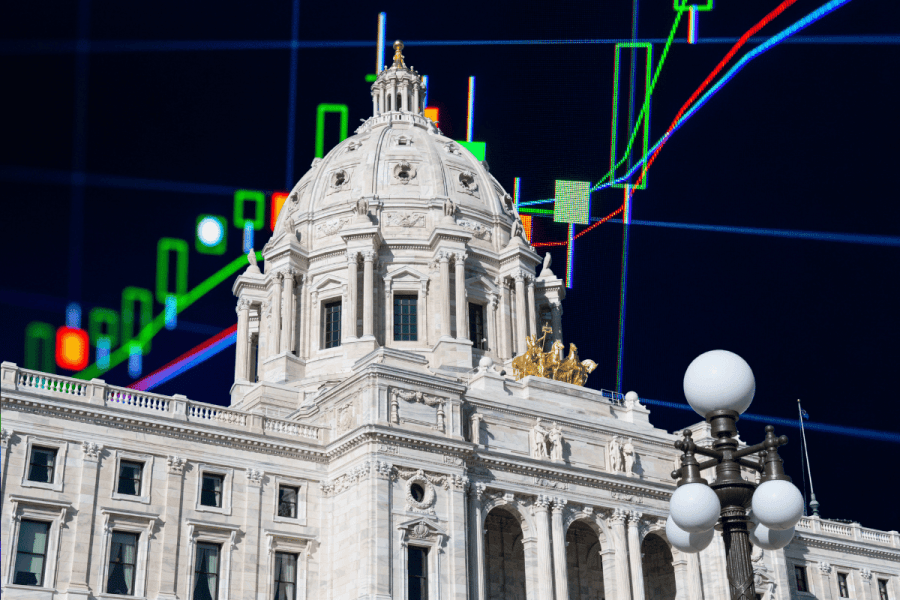
Minnesota Stands Firm on Prediction Market Law as Legal Battle Intensifies
Minnesota is making its case in federal court that prediction markets pose serious public risks — and that the state has every right to regulate them. With a new law set to take effect on August 1, state officials are pushing back hard against legal challenges filed by prominent prediction market platforms Kalshi and Polymarket, as well as the U.S. Commodity Futures Trading Commission (CFTC). The outcome of this case could reshape the future of prediction market regulation across the United States.
What Is Minnesota's Prediction Market Law?
Minnesota's new legislation targets event-based wagering platforms — commonly known as prediction markets — that allow users to bet real money on the outcomes of future events. These events can range from political elections and economic indicators to sports results and even geopolitical developments. Under the state's law, participating in or operating such markets without proper authorization could constitute a felony offense in Minnesota.
The law is part of a broader effort by state legislators to assert control over a rapidly growing financial sector that critics argue operates too closely to traditional gambling while escaping the regulatory oversight applied to both casinos and conventional securities markets. Minnesota officials contend that without firm guardrails, residents are left vulnerable to a range of financial and social harms.
Why Minnesota Says Prediction Markets Are Dangerous
In a memorandum filed June 18 with the U.S. District Court for the District of Minnesota, state attorneys laid out a detailed argument for why prediction markets should remain restricted. The state identified several key risks that justify government intervention:
- Gambling addiction: Minnesota argues that prediction markets function like gambling products and can fuel addictive behavior among users, particularly those who lack financial sophistication or awareness of the risks involved.
- Insider trading concerns: The state raised alarms about the potential for individuals with privileged or non-public information to exploit prediction markets for financial gain, undermining market fairness and integrity.
- Consumer protection gaps: Unlike regulated financial exchanges or licensed gambling establishments, prediction markets may not provide adequate safeguards, dispute resolution mechanisms, or transparency for everyday users.
- Integrity of public events: When large sums of money are wagered on elections, policy decisions, or other civic matters, the risk arises that markets could incentivize manipulation of those very events.
The state's legal team asked the court to reject requests for preliminary injunctions that would block enforcement of the law before it goes into effect. Minnesota maintains that the measure represents a lawful and necessary exercise of state authority to protect residents and serve the public interest.
Who Is Challenging the Law — and Why
The legal challenge comes from two of the most well-known names in the prediction market space: Kalshi and Polymarket. Both platforms have grown rapidly in recent years, attracting millions of users eager to trade contracts tied to real-world outcomes. Their business models depend on operating freely across state lines, and Minnesota's law represents a direct threat to that model.
Kalshi, in particular, holds a designation from the CFTC as a registered Designated Contract Market (DCM), meaning it operates under federal oversight. The company argues that its federal regulatory status should preempt state-level bans — a legal theory that sits at the heart of this dispute. If successful, this argument could effectively strip states of their ability to independently regulate prediction markets within their own borders.
What makes this case especially unusual is the involvement of the CFTC itself as a challenger. The agency has sided with the platforms, arguing that federal law governing commodity futures trading supersedes Minnesota's authority in this area. This puts a federal regulatory body in direct opposition to a state government, creating a constitutional and jurisdictional flashpoint with significant implications for federalism.
The Broader Stakes: Federalism and the Future of Prediction Markets
Minnesota's defense filing includes a pointed assertion that states have "inherent authority" to regulate matters affecting their residents' welfare — a foundational principle of American federalism. If the court sides with Minnesota, it could embolden other states to pass similar restrictions, fragmenting the national prediction market landscape and forcing platforms to navigate a patchwork of state-by-state rules.
On the other hand, a ruling in favor of Kalshi, Polymarket, and the CFTC could effectively establish federal preemption as the dominant framework, limiting state power and allowing federally registered platforms to operate in all states regardless of local opposition. For the prediction market industry, such a ruling would be a landmark victory.
The case arrives at a moment when prediction markets are gaining mainstream attention. Following the 2024 U.S. presidential election cycle — during which platforms like Polymarket attracted widespread media coverage and unprecedented trading volumes — lawmakers at both the state and federal level have been grappling with how to classify and govern these products.
What Happens Next
The court's decision on the preliminary injunction requests will be a critical early indicator of which direction this legal battle is headed. If the injunctions are denied, Minnesota's law will take effect on August 1 as scheduled, forcing platforms to either comply or cease operations targeting Minnesota residents. If the court grants an injunction, the law will be paused pending further proceedings.
Regardless of the immediate outcome, this case is likely headed toward a prolonged legal fight that could ultimately require resolution at the appellate level — and possibly beyond. For prediction market enthusiasts, platform operators, regulators, and state lawmakers alike, the Minnesota dispute is one of the most consequential regulatory battles of 2026.
As the August 1 deadline approaches, all eyes are on the U.S. District Court for the District of Minnesota to see whether state sovereignty or federal preemption will carry the day in the emerging and contested world of prediction markets.