
The Long Shadow of a Legend: Why Vampire Hunter D Still Matters
There are films that entertain, and then there are films that permanently alter the imaginative landscape of an entire medium. Vampire Hunter D, the 1985 animated feature directed by Toyoo Ashida, belongs firmly in the second category. More than four decades after its release, the brooding, half-human, half-vampire wanderer known simply as D continues to cast a long, inescapable shadow over anime — and over the dark fantasy genre as a whole. Alongside its 2000 sequel, Vampire Hunter D: Bloodlust, this franchise represents something rare: a vision so fully realized, so aesthetically uncompromising, that the medium has never quite stopped reaching toward it.
A World Built from Contradiction and Beauty
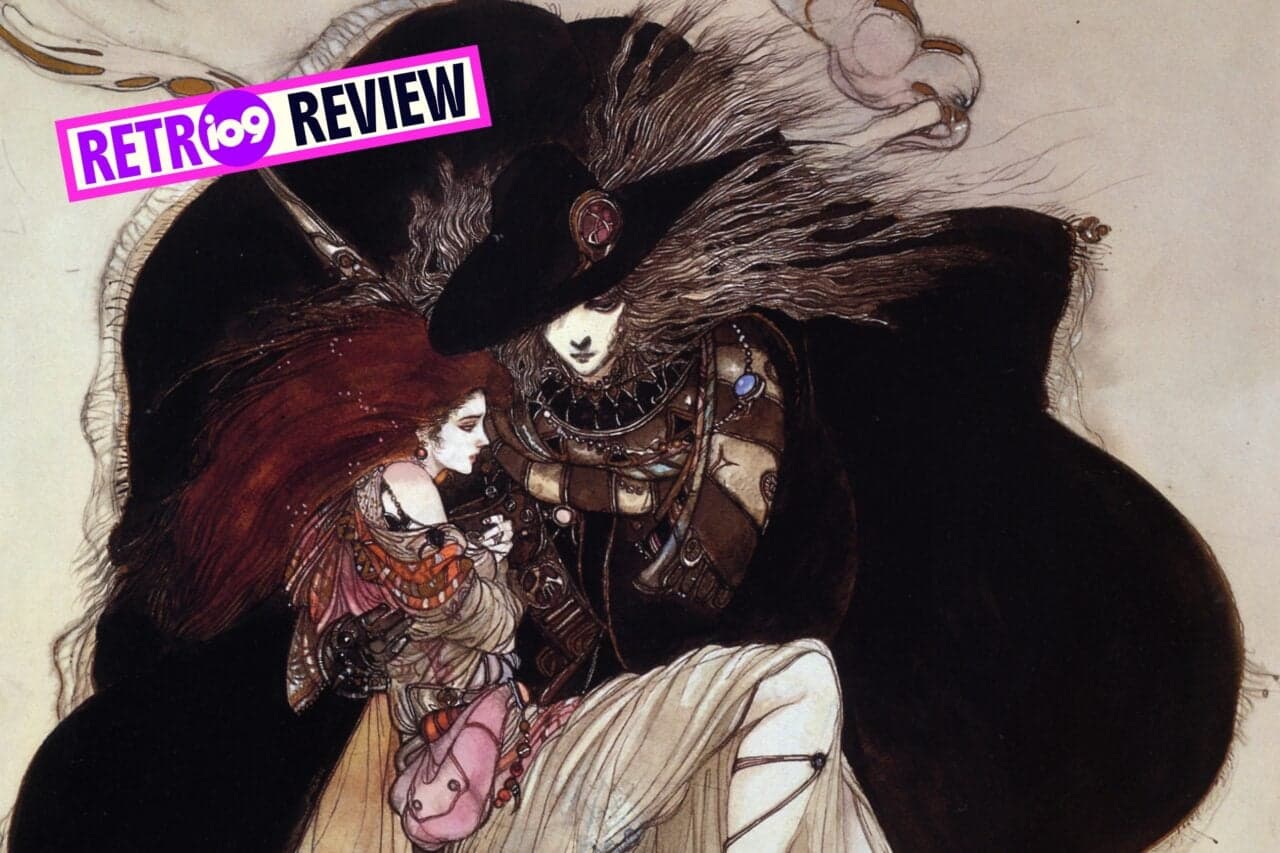
What made the original Vampire Hunter D so striking was its refusal to fit neatly into any single genre box. Set in a far-future Earth where feudal aristocracy and gothic horror coexist with decayed science fiction technology, the film carved out a visual and thematic identity that felt genuinely singular. Yoshitaka Amano's character designs — all elongated limbs, impossibly elegant silhouettes, and melancholy eyes — gave the film a painterly quality that set it apart from the more conventional action anime of its era.
D himself is a walking contradiction: devastatingly powerful yet emotionally remote, revered and feared in equal measure, belonging to neither the human world he protects nor the vampire aristocracy from which he descends. That tension — beauty married to violence, nobility contaminated by monstrousness — became a template that anime has returned to again and again, in protagonists ranging from Alucard in Hellsing to Guts in Berserk to the titular character of Trigun.
Bloodlust and the Art of the Perfect Sequel
If the original film planted the seeds, Vampire Hunter D: Bloodlust showed what could bloom from them. Directed by Yoshiaki Kawajiri — the visionary behind Wicked City and Ninja Scroll — Bloodlust arrived fifteen years after the original and somehow managed to deepen rather than dilute what made its predecessor special. With a larger budget, more fluid animation, and an English dub recorded before the Japanese track, Bloodlust reached audiences worldwide who had never encountered the source material.
The film's storytelling is quietly revolutionary. Rather than positioning D's vampire quarry as a simple monster, Bloodlust complicates the moral architecture of the original, asking genuine questions about love, sacrifice, and the nature of monstrousness. The Markus Brothers — rival hunters hired to find the same quarry — add layers of professional tension and grudging respect that give the narrative real dramatic weight. By the time the film reaches its elegiac final act, it has earned its emotional devastation completely.
Bloodlust also raised the visual bar for action animation in ways that continue to resonate. Its fight sequences are not merely impressive by the standards of their time — they remain among the most beautifully choreographed in the medium's history. Kawajiri's command of shadow, momentum, and negative space transformed violence into something approaching poetry.
The DNA of Darkness: How These Films Shaped Modern Anime
Tracing the influence of Vampire Hunter D and Bloodlust through the subsequent decades of anime is a rewarding exercise. The franchise helped establish several creative instincts that the medium's best dark fantasy work continues to rely on:
- The reluctant, morally ambiguous hero: D's emotional inaccessibility and hybrid nature prefigured a long lineage of protagonists who exist on the margins of the worlds they inhabit — figures like Bleach's Ichigo Kurosaki, Fullmetal Alchemist's Edward Elric, and the Witcher-adjacent hunters that populate contemporary isekai and dark fantasy anime.
- Gothic world-building as atmosphere: The franchise demonstrated that a richly imagined, internally consistent world could function as a character in itself. The dying, aristocratic vampire civilization of D's world is felt in every frame, whether or not it is explicitly described.
- The elevation of villain aesthetics: The vampire nobles of Vampire Hunter D are not simply evil — they are tragic, beautiful, and undeniably compelling. This tradition of making antagonists as visually and emotionally interesting as protagonists is now a hallmark of the genre's best work.
- The power of restraint: D speaks rarely. His backstory is parceled out slowly. This deliberate withholding of information creates mystique rather than frustration, a lesson that the most effective modern anime — from Mushishi to Vinland Saga — have taken to heart.
Why the Franchise Deserves Its Place in the Canon
Critical reassessment of older anime has accelerated in recent years, as streaming platforms have made classic titles accessible to new generations of viewers. Vampire Hunter D and Bloodlust have benefited enormously from this renewed attention, with younger fans discovering — often with genuine surprise — that films made decades ago can feel more cinematically assured than much of what is produced today.
This is not nostalgia talking. It is recognition of genuine craft. Both films were made by artists who understood that atmosphere, pacing, and visual poetry matter as much as narrative momentum. In an era when anime production pipelines are under enormous commercial pressure, that commitment to considered, intentional filmmaking feels almost radical.
The Eternal Wanderer and the Medium He Inspired
D does not age. He does not rest. He moves through a dying world with implacable grace, serving a humanity that will never fully accept him. There is something almost allegorical about the way the franchise itself has persisted — existing outside the mainstream, immune to trends, quietly influencing everything around it without demanding recognition.
May anime continue to drift through the shadow Vampire Hunter D cast. That shadow is not a darkness to escape — it is a standard to chase, a reminder of what the medium looks like when it commits fully to its own coolest, strangest, most beautiful instincts. Every time an anime chooses elegance over spectacle, melancholy over easy resolution, or genuine moral complexity over simple heroism, something of D rides on.