
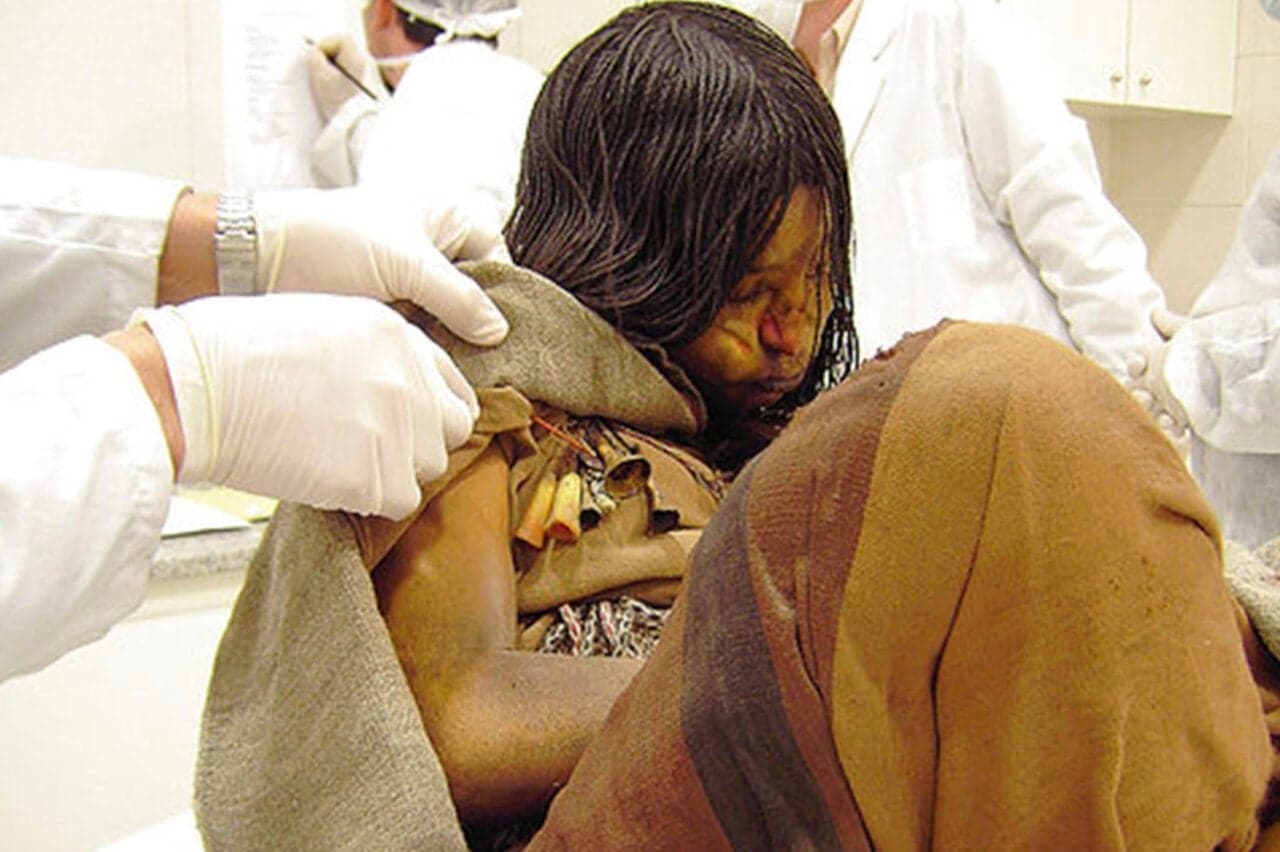
The Llullaillaco Maiden: One of the World's Best-Preserved Ancient Mummies
High in the Argentine Andes, at an altitude of nearly 6,700 meters atop Mount Llullaillaco, three Inca children rested undisturbed for more than 500 years. Discovered in 1999, these mummies — a girl aged around 13 known as the Llullaillaco Maiden, and two younger children — captivated scientists and historians alike. Their extraordinary state of preservation, a product of the freezing mountain conditions, made them among the most scientifically valuable ancient remains ever found. Now, new radiocarbon dating has fundamentally changed our understanding of when and why the Maiden was sacrificed, rewriting a chapter in one of history's most haunting stories.
What Is the Capacocha Ritual?
To understand the significance of the new findings, it helps to understand the ritual context in which these children died. The Inca practiced a sacred ceremony known as capacocha, a form of child sacrifice reserved for the most solemn occasions in the empire. Selected children — often chosen for their physical perfection and social standing — were considered offerings to the gods, elevated to divine status through their deaths. They were fed special diets, dressed in fine garments, given coca leaves and chicha (a fermented maize drink), and ceremonially escorted to high mountain peaks where they were left to die of exposure or, in some cases, killed through other means.
The capacocha was not performed casually. Historically, scholars believed it was triggered by specific, momentous events: the death of an Inca emperor, a major military conquest, or a catastrophic natural disaster such as an earthquake, volcanic eruption, or severe drought. The Llullaillaco children, resting near a volcano in a politically significant region of the empire, seemed to fit neatly into at least two of these categories. But the new radiocarbon evidence suggests the picture is far more complicated.
What the New Radiocarbon Dating Reveals
Researchers applying updated and highly precise radiocarbon dating techniques to the Llullaillaco Maiden's remains have produced a revised timeline that appears to rule out some of the most popular explanations for her sacrifice. The new dates do not align with known episodes of significant volcanic activity in the region, nor do they correspond with documented Inca military campaigns of conquest in the surrounding territories — two explanations that had previously seemed plausible given the geographic and political context of the site.
This finding is significant because it forces archaeologists and historians to reconsider the triggers behind one of the most iconic instances of capacocha ever discovered. If the Maiden's death cannot be reliably linked to a natural disaster or a military campaign, then what prompted it? The honest answer, researchers acknowledge, is that we still do not fully know — and that uncertainty is itself a powerful scientific result.
Why Radiocarbon Dating Matters in This Case
Radiocarbon dating works by measuring the decay of carbon-14 isotopes in organic material, allowing scientists to estimate when a living organism died. Over the decades since the Llullaillaco mummies were first studied, advances in accelerator mass spectrometry and calibration techniques have made radiocarbon dating increasingly precise, particularly for remains from the last few centuries. These improvements mean that dates which were once expressed with wide uncertainty ranges can now be narrowed significantly.
In the case of the Llullaillaco Maiden, this increased precision is what makes the new findings so impactful. Earlier, rougher estimates left enough chronological wiggle room to accommodate multiple historical explanations. The refined dates close that window, eliminating some scenarios that had previously seemed viable and pointing researchers toward a more targeted — if still unresolved — investigation of the true cause.
What We Already Know About the Llullaillaco Maiden's Final Months
Prior scientific work on the Llullaillaco Maiden had already revealed a remarkable amount of detail about her life and the period leading up to her death. Analysis of her hair — which functions as a kind of biological diary, recording chemical changes over time — showed that her diet changed dramatically in the year before her death, shifting toward more elite foods like llama meat and maize. Toxicological studies also detected significantly elevated levels of coca and alcohol in her system, consistent with the ceremonial preparation described in historical accounts of capacocha.
These findings painted a portrait of a young girl who was carefully prepared over an extended period for her role as a divine offering. Her sacrifice was not impulsive; it was deliberate, ritualized, and deeply embedded in Inca cosmology and statecraft. The new radiocarbon work adds another layer to this portrait by clarifying when, with greater confidence than ever before, this preparation and sacrifice took place.
Broader Implications for Understanding Inca Society
The revised dating of the Llullaillaco Maiden has implications well beyond a single archaeological site. It contributes to a broader reassessment of how the Inca state used religion, sacrifice, and ceremony to exercise political power across a vast empire that stretched from modern-day Colombia to Chile. Understanding the specific triggers for capacocha helps historians map the rhythms of Inca imperial life — when the state felt vulnerable, when it sought divine intervention, and how it communicated authority to distant populations.
- It challenges the assumption that high-altitude sacrifices were primarily reactive, tied to crises or conquests.
- It raises the possibility that some capacocha ceremonies were proactive, performed as part of regular imperial or religious cycles.
- It underscores the importance of applying modern scientific tools to previously studied remains, as new techniques continue to yield new insights.
- It highlights the ethical complexity of studying human remains, particularly those of children, and the responsibility researchers carry in how they interpret and communicate their findings.
The Ongoing Debate Over the Mummies' Resting Place
The Llullaillaco children are currently housed at the Museum of High Altitude Archaeology (MAAM) in Salta, Argentina, where they are displayed in specially designed refrigerated chambers that replicate the conditions of the mountain. Their presence there has long been a subject of debate among indigenous communities, archaeologists, and ethicists. Some argue that the children should be returned to the mountain or otherwise repatriated; others contend that their scientific and educational value justifies their current placement. The new radiocarbon findings, by deepening scientific knowledge of who these children were and when they lived, inevitably feed back into that ongoing conversation.
A Story Still Being Written
The Llullaillaco Maiden has been studied for more than two decades, and yet science continues to find new things to say about her. The latest radiocarbon dating is a reminder that archaeology is not a discipline of final answers but of evolving understanding. Each technological advance, each new analytical method applied to ancient remains, has the potential to overturn assumptions that once seemed settled. In this case, the story behind one of history's most famous child sacrifices has not been solved — it has been productively complicated, pushing researchers toward harder and more interesting questions about the nature of Inca ritual, power, and belief.
What the evidence now makes clear is that the Maiden's sacrifice cannot be reduced to a simple cause-and-effect explanation. She was not merely a response to a disaster or a conquest. She was the product of a complex civilization with its own logic, spirituality, and statecraft — a civilization that science is still working to fully understand.