
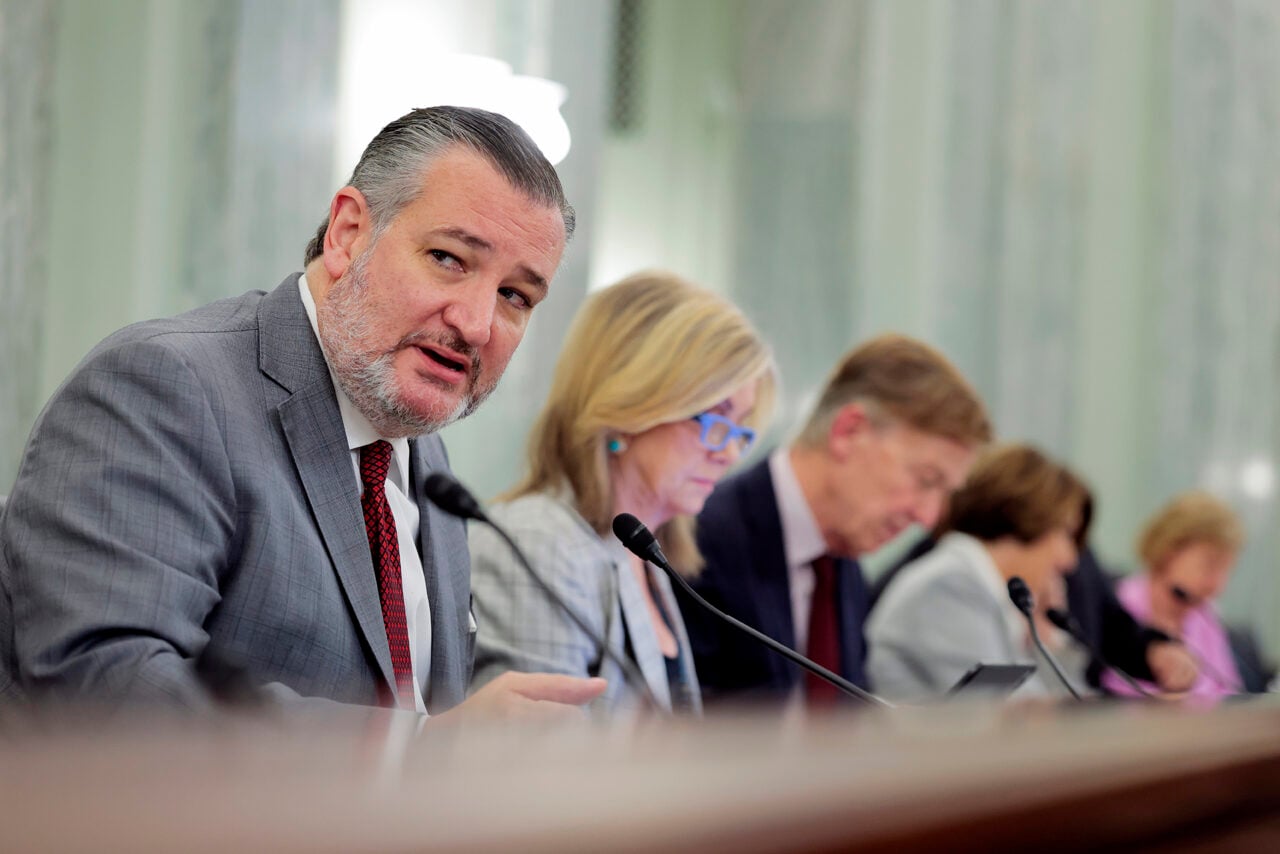
The Future of AI Regulation Is Now in Ted Cruz's Hands
Artificial intelligence is evolving faster than any regulatory framework can keep up with, and the question of who gets to shape the rules of that evolution has never mattered more. As of 2025, a significant portion of that power rests with Senator Ted Cruz, who chairs the Senate Commerce Committee — a body with sweeping jurisdiction over technology policy in the United States. Whether that's reassuring or alarming depends heavily on where you sit in the AI debate, but one thing is certain: the decisions made in the coming months will define the trajectory of AI governance for years, possibly decades, to come.
Why Ted Cruz's Position Matters So Much for AI
The Senate Commerce Committee is the primary legislative body through which major technology and communications bills must pass. That means any federal AI legislation — covering everything from data privacy and algorithmic accountability to autonomous systems and generative AI — needs to clear Cruz's committee before it reaches the Senate floor. In a policy landscape where artificial intelligence touches nearly every sector of the economy, that is an extraordinary amount of gatekeeping power concentrated in one office.
Cruz has long positioned himself as a champion of deregulation and a fierce critic of what he characterizes as government overreach into private industry. His broader philosophy has consistently favored letting markets self-correct rather than imposing top-down mandates. For Big Tech and AI developers, that posture has often been welcome news. For consumer advocates, civil rights organizations, and AI safety researchers, it raises legitimate concerns about whether adequate guardrails will ever be put in place.
The 10-Year Moratorium Proposal: A Flashpoint in AI Policy
One of the most controversial proposals that has circulated in AI policy discussions is the idea of a decade-long moratorium on state-level AI regulation. The argument from proponents is straightforward: a patchwork of 50 different state regulations would create an unworkable compliance environment for AI companies, stifling innovation and putting American businesses at a disadvantage against global competitors, particularly China.
But critics push back hard on this framing. A 10-year pause on regulation, they argue, is not a neutral stance — it is itself a profound policy choice. It effectively grants AI companies a protected window during which they can deploy increasingly powerful systems with minimal legal accountability. In a technology domain where the risks include algorithmic discrimination, deepfake proliferation, autonomous weapons development, and large-scale job displacement, a decade without enforceable rules is a long time for harm to accumulate.
The question many observers are now asking is whether federal legislation under Cruz's stewardship would be a meaningful improvement over that moratorium, or simply a lighter version of the same hands-off approach wearing the costume of governance.
What a Cruz-Led AI Agenda Could Look Like
Based on Cruz's record and public statements, a few contours of his likely AI policy approach are already visible:
- Preemption of state laws: Expect any federal framework to include strong preemption clauses that override state-level AI regulations, consolidating oversight at the federal level while limiting the regulatory ambitions of states like California and Colorado that have pushed for more aggressive rules.
- Industry self-regulation emphasis: Cruz has historically favored voluntary commitments and industry-led standards over binding mandates. AI governance under his watch is more likely to reward companies that adopt best practices voluntarily than to punish those that don't through enforcement mechanisms.
- National security framing: One area where Cruz has shown willingness to apply regulatory pressure is national security. Restrictions on Chinese AI companies, export controls on frontier AI models, and scrutiny of foreign investment in U.S. AI infrastructure are all areas where his committee could act with bipartisan support.
- Opposition to algorithmic liability frameworks: Proposals that would allow individuals to sue AI companies for discriminatory or harmful algorithmic decisions face a difficult path through a Cruz-led committee.
The Stakes for Consumers, Businesses, and Researchers
The outcome of this legislative moment will ripple outward in multiple directions. For AI companies and startups, a light regulatory touch could accelerate investment and deployment cycles. For workers in industries being disrupted by automation, the absence of transition support requirements or liability frameworks could mean fewer protections. For researchers focused on AI safety and alignment, the lack of federally mandated transparency requirements makes it harder to study how powerful models behave in the real world.
Consumers, meanwhile, sit in the most uncertain position of all. Without clear rules around data use, model auditing, or disclosure requirements, the average person interacting with AI-powered products has little visibility into how those systems make decisions that affect their lives — from loan approvals and hiring screens to medical recommendations and content moderation.
Is There a Path to Balanced AI Governance?
Despite ideological differences, there is genuine bipartisan concern about AI — just focused on different risks. Democrats tend to prioritize civil rights, labor protections, and consumer safety. Republicans, including Cruz, tend to prioritize national security, anti-censorship provisions, and deregulation. A workable federal AI framework would need to thread those competing priorities carefully.
Whether that balance is achievable in the current political environment remains an open question. What is not in question is that the moment demands serious engagement. The alternative — legislative paralysis, state-level fragmentation, or a de facto moratorium dressed up as federal action — serves no one particularly well, least of all the millions of people whose daily lives are already being shaped by AI systems operating largely outside any coherent legal framework.
Conclusion: A Critical Inflection Point for American AI Policy
The future of AI regulation in the United States is being written right now, and Ted Cruz holds a significant pen. Whether his committee produces legislation that meaningfully addresses the real risks of advanced AI — or whether it delivers a politically palatable but ultimately toothless framework — will define not just the next few years of tech policy, but the long-term relationship between democratic governance and one of the most transformative technologies in human history. The outcome is far from certain, but the stakes have rarely been higher.