
FCC Eases Drone Rules — But DJI Drones Are Still Left Grounded
In a move that sounds like good news for drone enthusiasts, the Federal Communications Commission (FCC) has quietly eased part of its sweeping crackdown on foreign-manufactured drones. For a moment, it seemed like the long-running effort to restrict Chinese-made drones in the United States might finally be softening. But look a little closer and the reality is far less exciting: the new exemption is so narrow, so restrictive, and so carefully constructed that it excludes virtually every drone that everyday consumers actually want to fly — including the entire lineup of popular DJI models.
So what exactly changed, what does it mean for the drone industry, and why is DJI still locked out of the American market? Here's everything you need to know.
What the FCC Actually Did
The FCC maintains what it calls the "Covered List" — a registry of communications equipment deemed a potential national security risk. Since 2025, that list has included a wide swath of foreign-made drone hardware, effectively cutting off sales and regulatory approvals for many Chinese drone manufacturers operating in the United States.
In its latest update, the FCC removed a narrow subset of foreign-made drones from that Covered List. This marks the first significant exception the agency has made since the crackdown began in earnest, and it signals at least some willingness to distinguish between categories of drones rather than applying a blanket ban across the board.
However, the newly exempted category comes with a laundry list of strict conditions. To qualify for removal from the Covered List, a drone must meet all of the following criteria:
- It must be classified as a lightweight "toy drone" with very limited payload capacity.
- It must have no GPS functionality of any kind.
- It must have no internet connectivity or the ability to transmit data to external servers.
- It must be equipped with no cameras, sensors, or image-capture hardware.
- It must offer a maximum flight time of no more than 10 minutes per charge.
In other words, the only drones that qualify for this new exemption are basic, stripped-down toy devices designed for indoor play — the kind of gadget you might find in the toy aisle of a department store, not something a serious hobbyist, photographer, or commercial operator would ever consider flying.
Why DJI Drones Still Don't Make the Cut
DJI, the Shenzhen-based company that dominates the global consumer and professional drone market, has long been a target of US national security concerns. The company was added to the FCC's Covered List due to fears that its drones — many of which transmit data, connect to the internet, carry high-resolution cameras, and use GPS — could potentially be used for surveillance or espionage by the Chinese government.
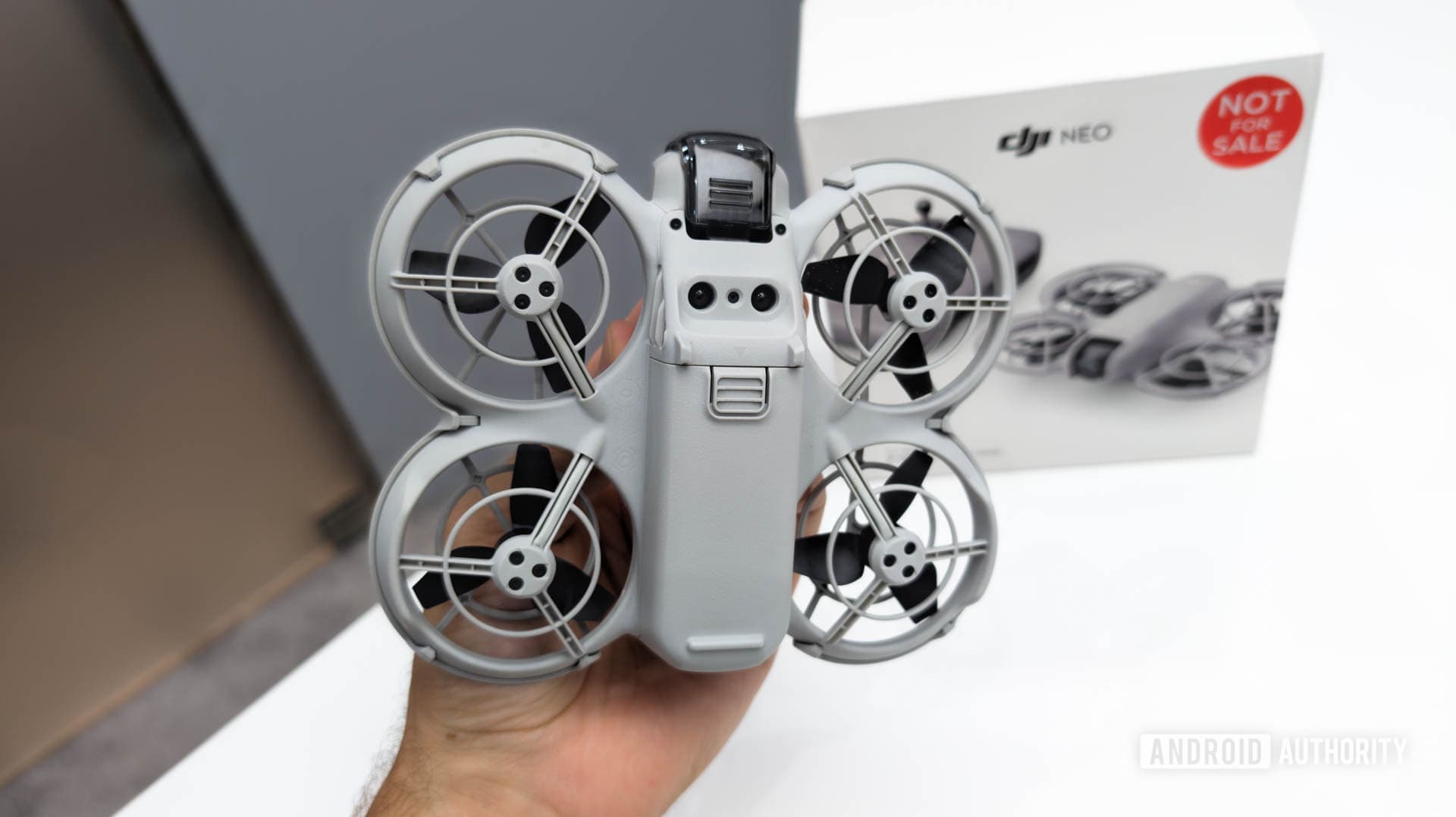
Even DJI's smallest and most entry-level offerings fail to meet the FCC's new exemption criteria. Take the DJI Neo, one of the brand's most compact and affordable consumer drones. It features an integrated camera, GPS positioning, connectivity features, and a flight time that far exceeds the 10-minute threshold. Despite being designed primarily as a beginner-friendly creative tool, it checks none of the boxes required for the new exemption.
The same is true for the DJI Mini series, the Mavic lineup, and every other product DJI currently sells. Until the FCC significantly revises its criteria or removes DJI from its Covered List entirely, DJI drones remain effectively blocked from receiving regulatory approval in the US market.
What This Means for the Broader Drone Industry
The drone industry in the United States has been watching the FCC's regulatory moves closely, and the reaction to this latest update has been one of cautious, if muted, acknowledgment. On one hand, any movement toward a more nuanced approach to drone regulation is welcome. A policy that distinguishes between a simple plastic toy helicopter and a sophisticated aerial imaging platform is more rational than a one-size-fits-all prohibition.
On the other hand, the criteria for exemption are so tight that the practical impact on the market is essentially zero. No commercially significant drone product meets all five conditions simultaneously. A drone without a camera, without GPS, without internet connectivity, and with only 10 minutes of airtime has almost no real-world utility for hobbyists, content creators, surveying professionals, or delivery services.
For retailers, importers, and distributors who have been waiting for relief, this exemption does little to open new doors. The drones that actually drive sales — the ones people search for online, review on YouTube, and fly at parks on weekends — remain firmly on the restricted list.
The Bigger Picture: US–China Tensions and Tech Decoupling
The FCC's treatment of drone manufacturers like DJI is part of a much larger geopolitical story. The United States has been engaged in a sustained effort to reduce its dependence on Chinese technology across multiple sectors, from semiconductors and smartphones to surveillance equipment and now consumer drones. Concerns about data privacy, hardware backdoors, and the potential for Chinese-manufactured devices to serve as intelligence-gathering tools have driven increasingly aggressive regulatory action.
DJI has repeatedly denied that its products pose any security risk and has pushed back against its inclusion on restricted lists. The company has lobbied for reconsideration, argued that no credible evidence of wrongdoing has been presented, and pointed out that its drones are used extensively by US law enforcement, fire departments, and emergency responders who are now facing supply challenges as a result of the restrictions.
Despite those arguments, the regulatory environment has only tightened over the past several years, and this latest FCC update does nothing to change DJI's standing.
What Drone Buyers Should Know Right Now
If you are in the market for a new drone and were hoping this FCC announcement would mean more options at your local electronics store, temper your expectations. The practical situation for consumers remains largely unchanged. DJI products continue to be sold through various channels in the US — the regulatory restrictions primarily affect new FCC authorizations and federal procurement rather than retail sales outright — but the long-term trajectory is one of increasing restriction, not relaxation.
Buyers should also be aware that the regulatory landscape is still evolving. Legislation targeting foreign drone manufacturers has been introduced in Congress multiple times, and additional restrictions could arrive with little warning. If you rely on DJI hardware for professional work, it may be worth exploring domestic or allied-nation alternatives to future-proof your operations.
The Bottom Line
The FCC's decision to exempt a narrow category of lightweight, featureless toy drones from its Covered List is a small step toward a more differentiated drone policy, but it is not the opening that the industry was hoping for. DJI and every other maker of capable, camera-equipped, GPS-enabled consumer drones remain exactly where they were before this announcement: grounded by US regulatory restrictions. Until the FCC broadens its criteria substantially, or until the broader US–China tech relationship shifts in a meaningful way, drone enthusiasts and professionals alike will continue to navigate a constrained and uncertain market.