
Faraday Future Is Now Selling Robots — After Barely Selling Any Cars
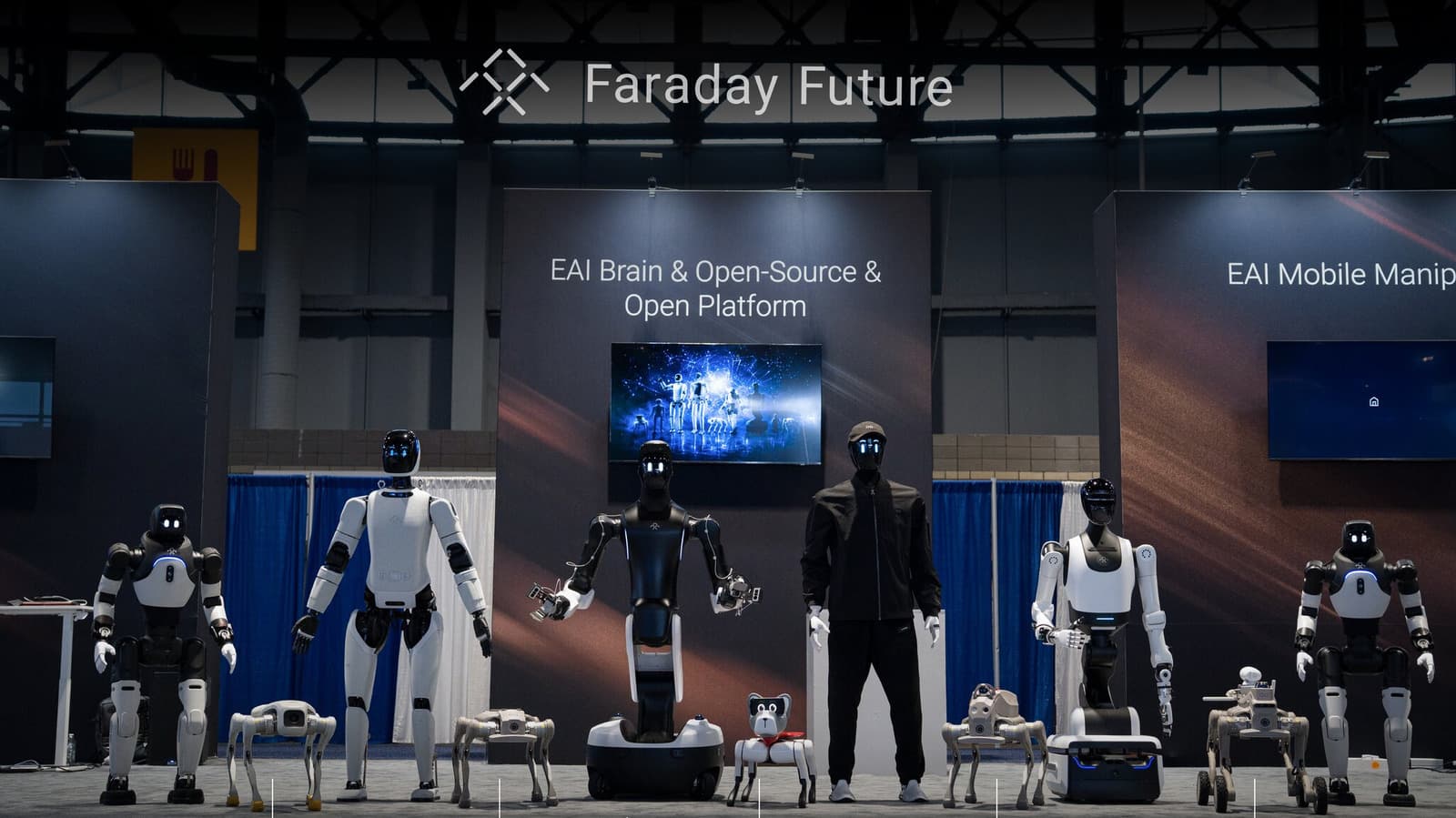
If you've been following the electric vehicle industry for more than a few years, the name Faraday Future probably rings a bell — though perhaps not for the most flattering reasons. The California-based EV startup has spent the better part of a decade promising revolutionary electric vehicles, burning through investor capital, cycling through executive leadership, and repeatedly teetering on the edge of collapse. Now, in what may be its most audacious move yet, Faraday Future is pivoting — at least partially — into the world of robotics, announcing a lineup that includes humanoid robots and a quadrupedal robot with an optional canine-style head.
Yes, you read that correctly. A company that has managed to sell just over 15 cars in its entire commercial history now wants to sell you a robot dog.
A Brief (and Troubled) History of Faraday Future
To understand why this pivot is so striking, it helps to appreciate just how bumpy Faraday Future's road has been. Founded in 2014, the company generated enormous buzz with flashy concept cars and bold claims about out-innovating Tesla. Its flagship vehicle, the FF 91, was teased for years before it finally began extremely limited deliveries in 2023 — a milestone that arrived after multiple rounds of near-bankruptcy, a delisting warning from Nasdaq, and significant leadership turmoil including the departure and return of its controversial founder, Yueting Jia.
Despite all the fanfare, actual consumer sales of the FF 91 have been astonishingly low. Reports and public filings have confirmed that the company has sold somewhere in the range of 15 vehicles or fewer since commercial deliveries began. For context, Tesla delivered over 1.8 million cars in 2023 alone. Faraday Future, by comparison, has struggled to move units even in the double digits. The FF 91 remains one of the most expensive and least purchased luxury EVs in recent automotive history.
Rather than quietly shutting the lights off, however, the company has chosen to swing even bigger — this time into robotics.
What Faraday Future's Robot Lineup Actually Looks Like
The newly announced robotics portfolio from Faraday Future includes both humanoid robots and a quadruped. The humanoid segment positions FF squarely in the middle of one of tech's hottest ongoing races, alongside players like Figure AI, Agility Robotics, Boston Dynamics, and Tesla's own Optimus project. Humanoid robots have attracted billions in investment over the past two years as companies bet that general-purpose bipedal machines could transform warehousing, manufacturing, elder care, and a wide range of other industries.
The quadruped offering is perhaps the more eye-catching product from a novelty standpoint. Faraday Future's version reportedly comes with an optional canine head, allowing the robotic dog to take on a more approachable, pet-like aesthetic. This design choice echoes moves made by companies like Boston Dynamics with Spot and Unitree Robotics, both of which have worked to make quadruped robots more commercially accessible. The optional dog head, however, adds a consumer-friendly twist that could appeal to buyers beyond the industrial and research markets where quadruped robots have traditionally found their footing.
Faraday Future has been careful not to entirely abandon its EV ambitions. The company has indicated it hasn't given up on electric vehicles, suggesting the robotics play is an expansion of its business rather than a full replacement. Whether that framing reflects genuine strategic intent or is simply a way to preserve brand identity remains to be seen.
Why the Robotics Pivot Makes a Certain Kind of Sense
As improbable as it sounds, there is a logic to Faraday Future's move into robotics — even if execution remains an enormous question mark.
The robotics market, particularly for humanoids, is experiencing a gold rush moment. Major manufacturers, logistics companies, and technology firms are actively seeking robotics partners and suppliers, and the category has attracted some of the most aggressive venture capital interest in recent memory. For a company that has struggled to sell premium EVs in a brutally competitive market dominated by Tesla, BYD, and legacy automakers, pivoting toward robotics offers a potential reset — a chance to compete in a space where the playing field is somewhat less established.
Additionally, some of the core competencies involved in building sophisticated electric vehicles — battery management, electric motors, embedded software, and sensor integration — do translate meaningfully to robotics. If Faraday Future has retained engineering talent with these skills, the leap is at least technically coherent.
The Enormous Challenges Still Ahead
Skepticism, however, is entirely warranted. The robotics market is not a refuge for underfunded companies. Building reliable, safe, and commercially viable robots — whether humanoid or quadruped — requires deep capital reserves, world-class engineering, and sustained long-term development cycles. The companies currently leading the humanoid race have raised hundreds of millions or even billions of dollars and still have not achieved mass commercial deployment.
Faraday Future enters this arena with a battered balance sheet, a credibility deficit earned through years of missed promises, and a product history that, so far, amounts to roughly 15 sold vehicles. That is a very thin foundation on which to build a competitive robotics business.
What to Watch Going Forward
For industry watchers, Faraday Future's robotics announcement is worth monitoring — not necessarily because success is likely, but because it represents a broader pattern playing out across the tech landscape. As the initial EV boom consolidates around a handful of dominant players, companies that failed to establish themselves in that market are increasingly looking sideways at robotics, AI hardware, and autonomous systems for their next act.
- Will Faraday Future secure meaningful investment to develop its robotics lineup beyond the announcement stage?
- Can the company attract or retain the engineering talent necessary to compete with well-funded robotics startups?
- Will the optional canine head on the quadruped become an unlikely viral marketing moment that translates into actual sales?
- And perhaps most importantly — will Faraday Future sell more robots in its first year than it has managed to sell cars in its entire commercial history?
The bar, admittedly, is not very high. But in the strange, sometimes surreal world of Faraday Future, clearing even a low bar has historically proven difficult. The robotics pivot is bold, attention-grabbing, and not entirely without strategic merit — but whether it represents a genuine reinvention or simply the latest chapter in a long-running story of overpromising remains to be seen. Either way, the company has once again made sure the world is watching.