
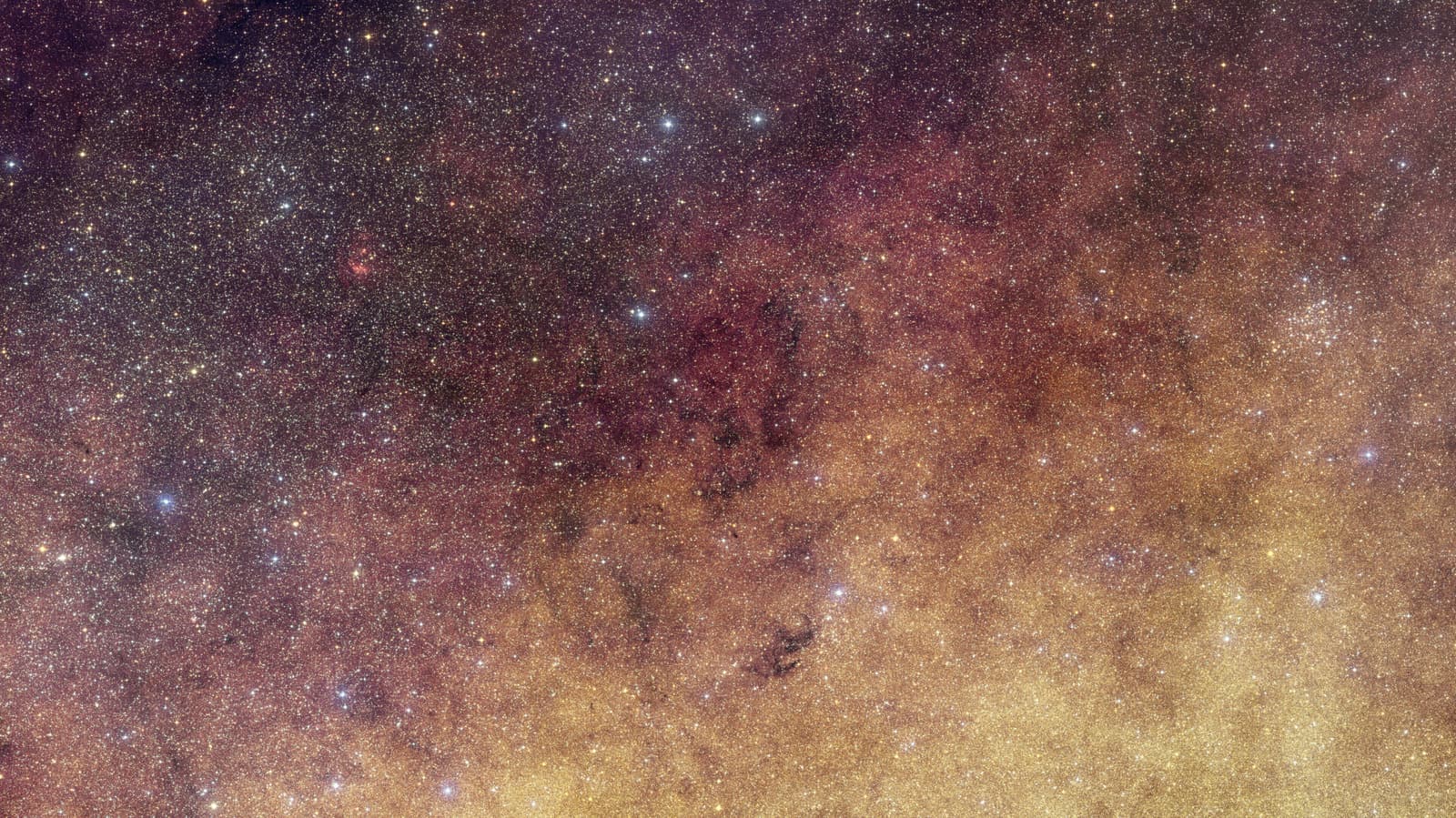
ESA's Euclid Space Telescope Reveals the Milky Way's Stellar Heart
The universe just got a little more familiar. The European Space Agency's (ESA) Euclid space telescope has captured a breathtaking new view of the Milky Way's galactic center — a densely packed, star-filled region at the very core of our home galaxy. The images represent one of the most detailed observations of this region to date, offering astronomers and space enthusiasts alike a rare, awe-inspiring glimpse into the heart of our cosmic neighborhood. And as if that weren't enough, NASA is preparing to launch its own mission later this summer to begin systematic mapping of the same galactic bulge. The age of galactic core exploration is officially here.
What Is the Galactic Bulge and Why Does It Matter?
Before diving into what Euclid captured, it's worth understanding just what the galactic bulge is and why scientists are so eager to study it. The galactic bulge is the bright, rounded region at the center of the Milky Way, roughly 26,000 light-years from Earth. It is home to hundreds of billions of stars, ancient stellar populations, vast clouds of gas and dust, and — at its very core — a supermassive black hole known as Sagittarius A*, which contains the mass of approximately four million suns.
This region is scientifically invaluable for several reasons. The stars packed into the bulge are among the oldest in the galaxy, offering a fossil record of the Milky Way's earliest formation and evolution. Studying the density, composition, and distribution of these stars helps astronomers understand how spiral galaxies like ours grow, change, and develop over billions of years. The bulge also serves as a natural laboratory for testing theories of stellar physics, gravitational dynamics, and even dark matter distribution.
Despite its importance, the galactic center is notoriously difficult to observe. Thick clouds of interstellar dust block much of the visible light emanating from the region, making optical telescopes largely ineffective. That's where instruments like Euclid come in, with capabilities designed specifically to cut through those cosmic curtains.
How Euclid Captured What Others Couldn't
Launched in July 2023, ESA's Euclid telescope was originally designed with an ambitious cosmological goal: to map the large-scale structure of the universe and investigate the mysterious forces of dark energy and dark matter. However, its powerful near-infrared and visible-light instruments have proven remarkably versatile, enabling observations of targets much closer to home — including the Milky Way's own core.
Near-infrared imaging is particularly effective for peering through the dense dust lanes that obscure the galactic center at shorter wavelengths. By observing in this part of the electromagnetic spectrum, Euclid can detect the light of stars that would otherwise be completely hidden from view. The resulting images are not only visually stunning but scientifically rich, packed with data about stellar populations, spatial distributions, and structural features of the bulge.
The level of detail Euclid achieves is made possible by its wide field of view combined with its high angular resolution — a combination that allows it to resolve individual stars in an environment so crowded that earlier telescopes could only detect a blurry smear of light. This makes Euclid an extraordinarily powerful tool for performing star counts and identifying specific classes of stars that serve as cosmic distance markers or tracers of galactic history.
What the Images Tell Us About Our Galaxy
The new imagery from Euclid provides several scientifically significant insights:
- Stellar density mapping: The images allow researchers to map how densely stars are packed across different zones of the bulge, providing clues about the gravitational dynamics shaping the region.
- Old stellar populations: Many of the stars visible in Euclid's frames are ancient red giants and other evolved stars, offering a window into the Milky Way's early history.
- Structural features: The data helps confirm and refine models of the galactic bar — a elongated structure of stars running through the center of the Milky Way that connects the two main spiral arms.
- Dust mapping: By comparing infrared brightness across the field, scientists can build more accurate maps of where interstellar dust is concentrated, which in turn improves future observations of the region.
Each of these data points contributes to a growing, more complete picture of how the Milky Way formed and how it continues to evolve today.
NASA Enters the Picture: A New Galactic Mapping Mission
Euclid isn't working alone for long. NASA has announced plans to begin its own mapping campaign of the galactic bulge later this summer, further expanding humanity's observational reach into this complex and fascinating region. While specific mission details continue to be refined, the initiative represents a significant commitment from NASA to complement and build upon the data already being gathered by ESA.
The two agencies' parallel efforts could prove enormously productive. When data from multiple telescopes and instruments is combined, scientists gain a multi-wavelength perspective that no single mission can provide on its own. Cross-referencing observations across different parts of the electromagnetic spectrum allows researchers to identify features, confirm findings, and resolve ambiguities that would otherwise remain unsolved for years.
The Bigger Picture: A New Era of Galactic Science
The Euclid images of the Milky Way's center are more than a visual spectacle — they mark a meaningful step forward in humanity's ability to study and understand the galaxy we call home. For decades, the galactic center remained one of the most frustratingly opaque regions of the sky, tantalizingly close yet effectively hidden. Advanced observational technology is finally beginning to pull back that veil.
With ESA's Euclid already delivering groundbreaking imagery and NASA preparing to join the effort, the coming months and years promise a surge in new knowledge about the Milky Way's structure, history, and future. For astronomers, space scientists, and anyone fascinated by the cosmos, the view from the heart of the galaxy has never looked so clear — or so compelling.