
Elon Musk Says No One Has Died From USAID's Destruction. Here's What the Headlines Say.
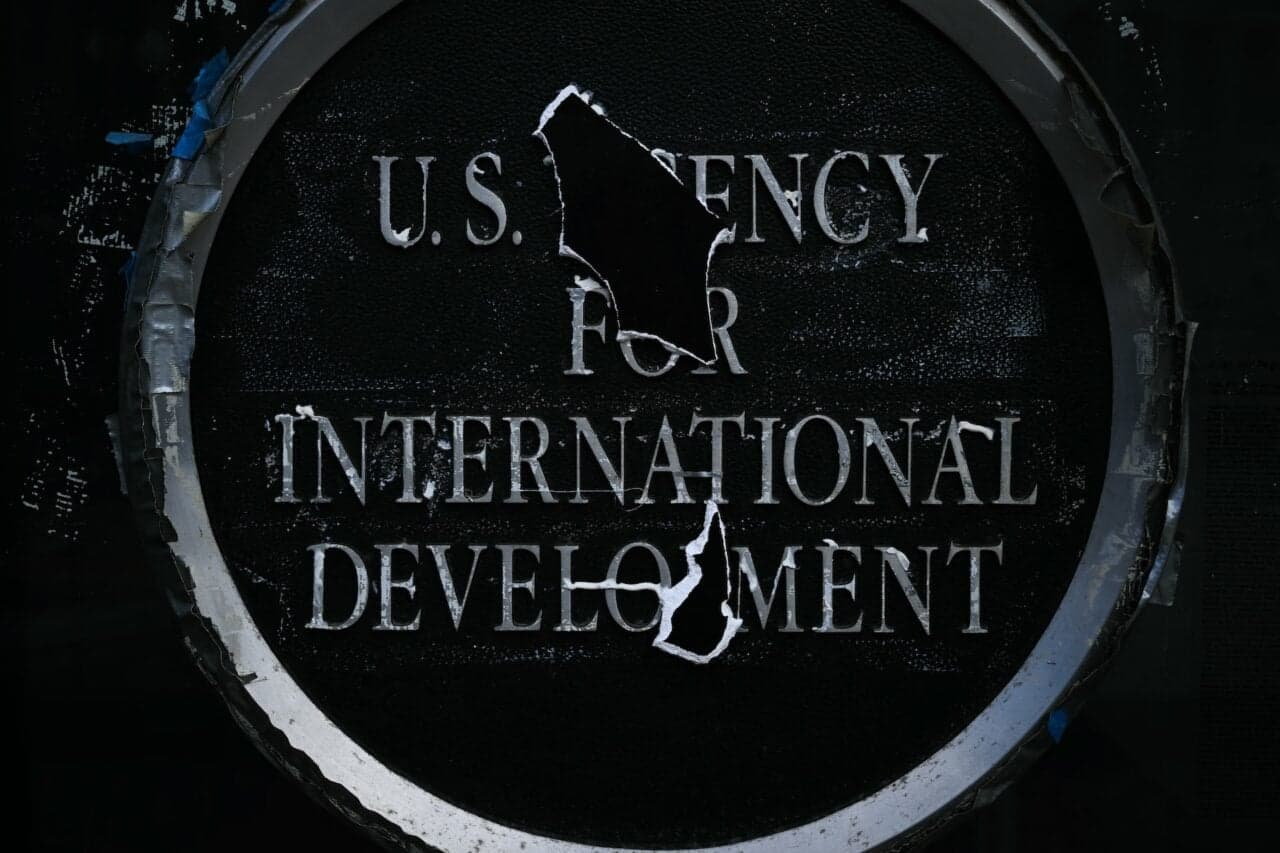
When the world's first trillionaire makes a claim, the world tends to pay attention. But when that claim runs directly counter to a growing body of documented evidence, the scrutiny becomes unavoidable. Elon Musk, serving as the de facto leader of the Department of Government Efficiency (DOGE), has repeatedly insisted that the gutting of the United States Agency for International Development (USAID) has claimed no lives. The problem? The headlines he says don't exist are piling up in plain sight.
What Exactly Did Musk Say About USAID?
Musk has been vocal — and unapologetic — about his role in dismantling USAID, the federal agency responsible for administering civilian foreign aid and development assistance across more than 100 countries. In a series of posts on his own social media platform, X, and in public statements, Musk framed the agency as wasteful, fraudulent, and expendable. He has gone further to assert that the shutdown of its programs has not resulted in a single death — a claim he has offered without accompanying evidence or data.
This is not a minor rhetorical flourish. It is a sweeping empirical claim about the real-world consequences of dismantling an agency that, at its operational peak, delivered life-saving food, medicine, HIV treatment, maternal healthcare, and emergency disaster relief to tens of millions of vulnerable people across the developing world. And it is a claim that public health experts, humanitarian organizations, and investigative journalists have spent months working to scrutinize and, in many cases, directly contradict.
The Headlines Musk Says Don't Exist
Outlets from across the political spectrum have reported on the human cost of the USAID shutdown in specific, documented terms. These are not vague projections or partisan speculation. They are reported stories with named sources, on-the-ground accounts, and in some cases, death certificates.
Reports have described patients in sub-Saharan Africa losing access to antiretroviral HIV medications after USAID-funded clinics shuttered. In conflict zones where USAID was coordinating emergency food pipelines, aid workers have reported acute spikes in malnutrition among children. Maternal health programs in South Asia and Latin America — programs funded entirely through USAID mechanisms — have gone dark, leaving pregnant women without prenatal care in regions where such care is the difference between life and death.
Global health organizations, including those with long-standing partnerships with the U.S. government, have sounded alarms. Some have used unusually direct language, stating publicly that people will die — and in some documented cases, already have — as a direct consequence of the funding freeze and operational collapse that followed DOGE's intervention in the agency.
Why This Matters Beyond the Headlines
The debate over USAID is not simply a political one. It sits at the intersection of American foreign policy, global public health infrastructure, and the ethical responsibilities that come with being the world's historically largest provider of humanitarian assistance. For decades, USAID served as both a diplomatic instrument and a lifeline, building goodwill while delivering measurable reductions in child mortality, infectious disease spread, and famine-related deaths.
When Musk dismisses the documented consequences of its dismantling as fictional — as headlines that "don't exist" — he is not merely expressing a policy preference. He is asking the public to disbelieve its own press, its own aid workers, and in some cases, the testimony of the people directly affected. That is a significant ask, and it deserves serious pushback.
The Credibility Gap and Its Consequences
Part of what makes Musk's claim so striking is the context in which it is made. He is not a disinterested observer. As the architect of DOGE's aggressive expansion into federal agencies, Musk has a significant personal and political stake in the narrative that the cuts were clean, necessary, and consequence-free. Acknowledging that people have died as a result of program shutdowns he championed would fundamentally alter the public accounting of DOGE's record.
This creates what analysts sometimes call a credibility gap — a growing distance between official assertions and documented reality. The wider that gap grows, the more damaging it becomes, both for Musk's personal credibility and for the broader project of convincing the American public that radical government downsizing can be achieved without human cost.
What Accountability Looks Like in This Moment
The role of journalism, public health reporting, and open civic discourse is precisely to close that gap. The headlines that Musk says don't exist are doing exactly the work they are supposed to do: documenting, questioning, and holding power accountable. They are not the product of bad faith. They are the product of reporters talking to doctors in Nairobi, aid coordinators in Dhaka, and health officials in countries that relied on USAID not as a luxury but as a structural pillar of their public health systems.
Accountability does not require agreement. It requires engagement with evidence. And the evidence, as reported across dozens of credible outlets, does not support the claim that the destruction of USAID has been a consequence-free exercise in government efficiency.
The Bottom Line
Elon Musk may be the world's wealthiest individual, and his influence over U.S. federal policy is, for now, enormous. But wealth and influence do not determine what is true. The headlines about USAID's human toll exist. The people those headlines describe existed. Asserting otherwise is not a correction of the record. It is a challenge to it — and one that the documented facts are not prepared to let stand unchallenged.