
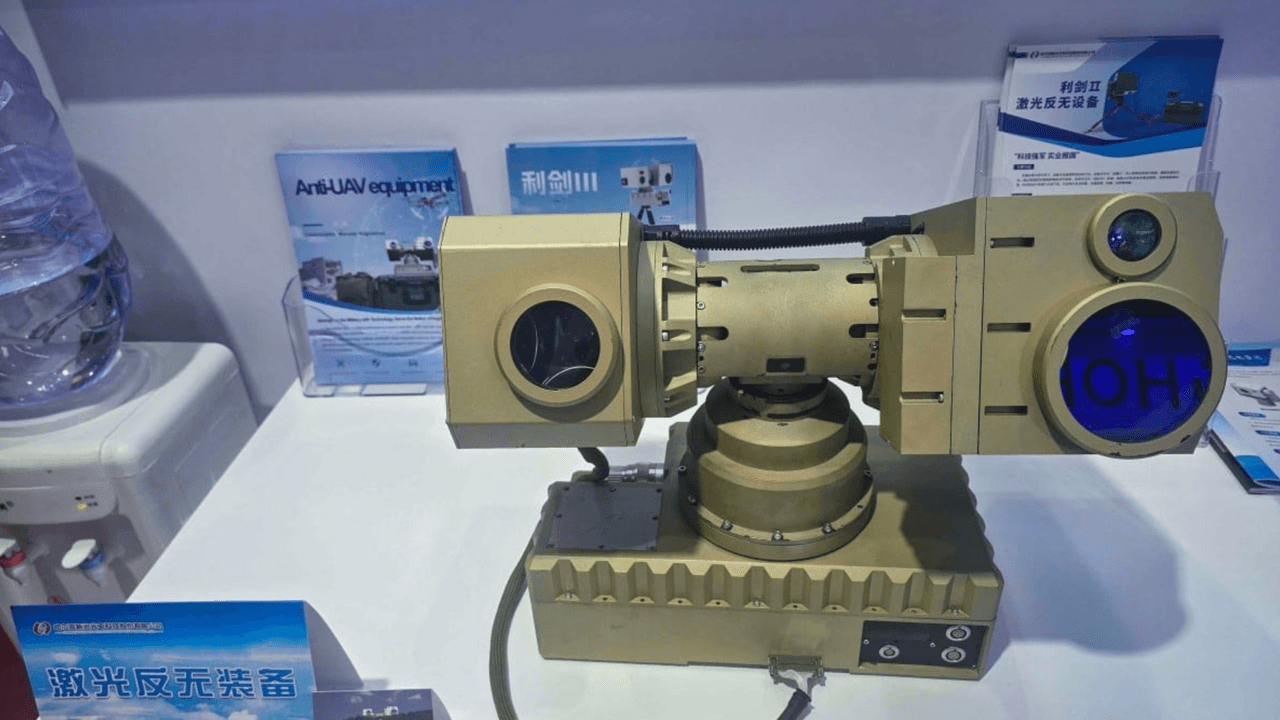
China Reveals a Backpack-Sized Laser That Can Take Down Drones in Seconds
The battlefield of the future is arriving faster than most defense analysts predicted. China has officially unveiled a man-portable, AI-guided laser weapon capable of burning through a drone at a distance of 1,600 feet in just four seconds. Compact enough to be carried in a backpack and operated by a single soldier, the 2-kilowatt directed energy system marks a significant leap forward in counter-unmanned aerial vehicle (counter-UAV) technology. As drone warfare continues to reshape military conflicts around the world, this development signals that the arms race in anti-drone defense has entered a powerful new phase.
What Is the Chinese Anti-Drone Laser and How Does It Work?
At its core, the weapon is a high-powered laser system designed specifically to neutralize small unmanned aerial vehicles — the kind of low-cost drones that have proven devastatingly effective in recent conflicts. The system outputs 2 kilowatts of laser energy, which is enough to heat and structurally compromise a drone's airframe or disable its electronics within seconds of sustained contact.
What makes this weapon particularly noteworthy is its combination of portability and precision. Weighing in at approximately 55 pounds, the entire system fits into a backpack-style configuration that a single soldier can carry and deploy in the field. This is a remarkable engineering achievement, as most directed energy weapons of comparable output have historically required vehicle mounting or stationary installation due to their size and power demands.
The integration of artificial intelligence for targeting is another headline feature. The AI-assisted targeting system enables the weapon to rapidly identify, track, and lock onto aerial threats without relying solely on manual operator input. This dramatically reduces the reaction time needed to engage fast-moving targets, a critical advantage when dealing with swarms or rapidly maneuvering drones.
The Tactical Advantage of Man-Portability
In modern combat environments, mobility is everything. Vehicle-mounted or fixed-position anti-drone systems have their place, but they cannot follow infantry into every terrain. A soldier-carried laser system changes the tactical calculus entirely. Small infantry units operating in urban environments, mountainous terrain, or forward positions far from logistical support can now carry their own anti-drone umbrella into any operational zone.
The speed of engagement is equally critical. Traditional kinetic responses to drone threats — missiles, bullets, or shotgun-style projectile systems — require ammunition resupply, generate noise and signature, and carry a risk of collateral damage. A laser weapon produces none of those drawbacks. It fires at the speed of light, generates no ballistic projectile, and can be re-engaged almost immediately. The four-second burn time reported for the Chinese system suggests a clean, reliable kill mechanism against most commercially available or military-grade small drones.
Why Drones Have Made Weapons Like This Necessary
The urgency behind anti-drone laser development is directly tied to how dramatically unmanned aerial vehicles have transformed warfare over the past several years. Conflicts in Ukraine, the Middle East, and various regional flashpoints have demonstrated that even inexpensive consumer-grade drones can be converted into lethal reconnaissance or strike assets. State and non-state actors alike have embraced drone warfare because of its low cost, high impact, and the asymmetric pressure it places on conventional forces.
A single FPV (first-person view) drone costing a few hundred dollars can destroy millions of dollars' worth of military equipment. Scaling a kinetic response to that economic equation is simply not sustainable. Directed energy weapons offer a compelling alternative: the cost per engagement is measured in electricity rather than expensive missiles or shells, making them economically viable for high-volume drone threats over sustained operations.
Where China's System Fits in the Global Directed Energy Landscape
China is not the only nation investing heavily in directed energy anti-drone technology, but this latest unveiling demonstrates that Beijing is moving aggressively to field practical, soldier-level solutions rather than laboratory prototypes. The United States, Israel, the United Kingdom, and several other nations have active directed energy weapons programs, with systems ranging from vehicle-mounted high-energy lasers to ground-based counter-drone towers. However, achieving genuine man-portability at the 2-kilowatt threshold while incorporating AI targeting puts China's new system in a class of its own in terms of deployment flexibility.
Israel's Iron Beam and the U.S. Army's High Energy Laser Mobile Demonstrator (HEL MD) are powerful systems, but they are designed for larger-scale platform integration. China's backpack laser appears specifically optimized for the decentralized, infantry-forward threat environment that defines contemporary conflict.
Limitations and Open Questions
No weapon system is without its constraints, and the Chinese anti-drone laser is unlikely to be an exception. Key questions remain around battery life and power supply — sustaining 2 kilowatts of output in a portable package demands significant energy storage, which may limit the number of engagements per charge in the field. Weather conditions such as fog, rain, and atmospheric dust can attenuate laser effectiveness, reducing operational range and burn time. Thermal management is another concern; sustained laser firing generates substantial heat that must be dissipated without adding excessive weight or creating a thermal signature.
Additionally, while the system excels against small drones, its utility against larger, armored, or high-altitude threats remains unclear. Military observers will be watching closely to see how the system performs under real operational conditions rather than controlled demonstrations.
The Bigger Picture: A New Era in Counter-Drone Defense
China's man-portable anti-drone laser is more than a single weapon system — it is a signal of where military technology is heading. As drones become smaller, faster, and more autonomous, the defenses against them must evolve at the same pace. Directed energy weapons, guided by artificial intelligence, represent the most scalable and cost-effective response available to modern militaries.
For defense planners, allied nations, and military technology observers around the world, this announcement demands serious attention. The integration of AI targeting, high-energy output, and genuine field portability into a single soldier-carried package is a milestone that will accelerate similar programs globally. The drone war has reshaped the battlefield — and weapons like this are reshaping it again.