
Chinese Investors Secretly Acquired SpaceX Stakes Before IPO, Raising National Security Alarms
Long before SpaceX made headlines with its highly anticipated initial public offering, a quiet and controversial chapter was unfolding behind closed doors. According to a private investor list obtained by ProPublica, a businessman with documented ties to Chinese military contractors was among a group of overseas investors who acquired stakes in SpaceX while the company was still privately held. The revelations have ignited fresh debate about foreign investment in sensitive US technology companies and the national security risks that may come with it.
What the Private Investor List Reveals
The investor list, obtained and analyzed by ProPublica, sheds significant light on one of the most sensitive questions surrounding Elon Musk's rocket company: who exactly bought into SpaceX, and through what channels, before it became a publicly traded entity. The findings are striking not only because of the identities involved, but because of the broader implications for how private US defense contractors manage foreign investment.
Among the most notable revelations is the involvement of a Chinese businessman with known connections to Chinese military contractors. While his name has not been made fully public in all reports, his link to entities tied to China's defense-industrial complex raises serious questions about what access, if any, he may have gained to proprietary information through his stake in SpaceX.
Adding another layer of geopolitical complexity, an entity linked to the Qatari royal family also reportedly acquired a stake in the company during this same private period. While Qatar is a US ally, the presence of foreign sovereign-linked capital in a company deeply embedded in American defense infrastructure is a matter regulators and policymakers are watching closely.
Why SpaceX Is Considered a Sensitive Asset
To understand why these revelations matter, it is important to recognize just how central SpaceX has become to US national security infrastructure. SpaceX is not simply a commercial space company. It is a critical contractor for the United States government, including the Department of Defense and intelligence agencies.
Among its most sensitive projects, SpaceX has been contracted to manufacture and launch spy satellites for the Pentagon. The company's Starlink satellite network has also proven to be a strategically important communications tool, most visibly demonstrated during the conflict in Ukraine. These projects place SpaceX squarely within the most sensitive tier of American defense and intelligence operations.
Given this context, any foreign investment in SpaceX — particularly from individuals or entities with ties to adversarial governments — carries significant implications. Access to equity stakes in private companies can sometimes provide investors with visibility into internal financials, strategic plans, or even technology roadmaps that would not be available to the general public.
The Regulatory Gray Zone Around Foreign Investment
One of the more surprising aspects of this story is that, as of the time of these investments, there was no outright ban on Chinese investment in US military contractors. However, such investment is heavily regulated under frameworks overseen by the Committee on Foreign Investment in the United States, more commonly known as CFIUS. CFIUS has the authority to review and block foreign investments that pose a risk to national security.
The fact that these investments occurred at all — and in a private company with limited public disclosure requirements — highlights a significant gap in the regulatory landscape. Private companies are under far less scrutiny than public ones when it comes to disclosing their investor bases. This creates an environment in which foreign capital can quietly accumulate stakes in sensitive US firms without triggering immediate regulatory oversight.
Experts and lawmakers have increasingly pointed to this gap as a vulnerability that needs to be addressed, particularly as competition between the United States and China in advanced technology sectors — including space — intensifies.
SpaceX's Response: Barring Chinese Investors From Its IPO
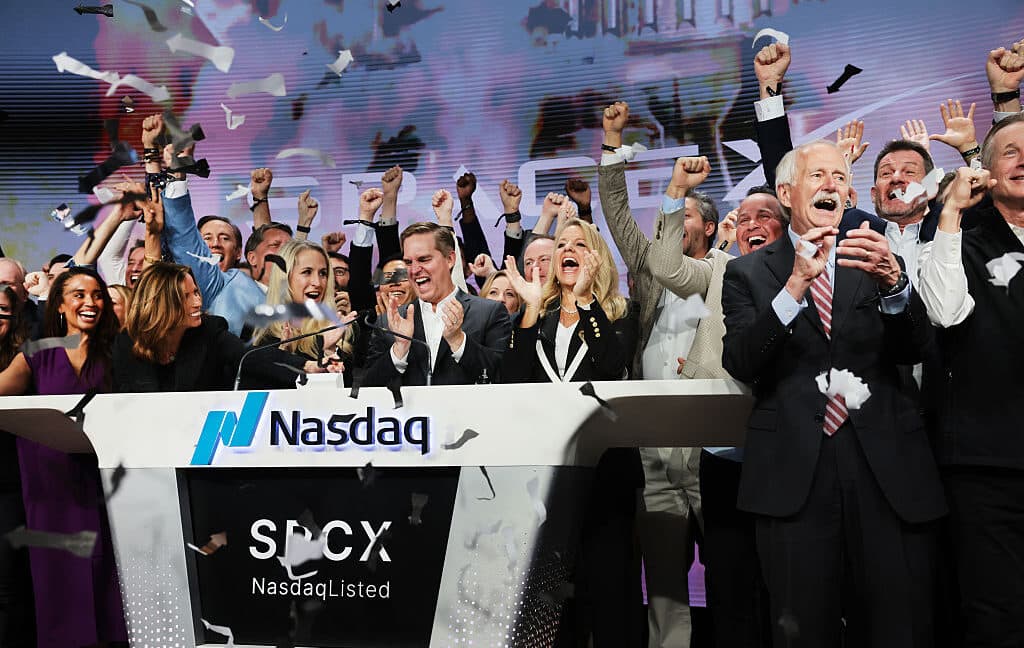
In what many analysts interpret as a direct acknowledgment of the sensitivity surrounding this issue, SpaceX took a notable step when it launched its initial public offering. According to a report by Bloomberg, SpaceX explicitly barred investors from China and Hong Kong from participating in the IPO, citing "regulatory and compliance risks" as the reason for the exclusion.
This decision signals that SpaceX's leadership — and likely its legal and compliance teams — were acutely aware of the scrutiny that Chinese investment in the company would attract. By drawing a clear line at the IPO stage, SpaceX sought to insulate itself from criticism and potential regulatory action going forward. However, the move also implicitly draws attention to the investments that occurred before this boundary was established.
The Broader US Government Concern About Chinese Investment Strategy
The United States government has been increasingly vocal about what it describes as a deliberate Chinese strategy to use investments in sensitive American industries as tools for espionage and technology acquisition. Intelligence officials have testified before Congress about how Chinese entities — sometimes operating through intermediaries or shell structures — seek to gain access to cutting-edge technologies in fields like aerospace, semiconductors, artificial intelligence, and biotechnology.
The SpaceX case fits neatly into this pattern of concern. A privately held company, operating largely outside the public eye, developing some of the most advanced rocket and satellite technology in the world, received investment from individuals with ties to the Chinese military-industrial complex. Whether or not any sensitive information was actually transferred, the structural opportunity for it to occur is precisely what concerns national security officials.
What Happens Next: Policy and Oversight Implications
The ProPublica revelations are likely to add momentum to ongoing legislative and regulatory efforts to tighten oversight of foreign investment in private US companies with national security relevance. Several proposals have already been introduced in Congress that would expand CFIUS's mandate to cover a broader range of investment structures, including those used in private equity and venture capital markets where foreign capital often flows with less scrutiny.
For SpaceX specifically, the revelations may prompt additional review of historical investment records by federal regulators. For the broader technology and defense contracting ecosystem, the case serves as a cautionary tale about the risks of allowing private market dynamics to outpace national security regulations.
As SpaceX transitions into its new chapter as a publicly traded company, the questions raised by these secretive pre-IPO investments will not disappear. If anything, they will continue to shape how policymakers, regulators, and the public think about the intersection of private capital markets, advanced technology, and American national security in an era of intensifying great-power competition.